Chlorine taste or smell
Activated carbon. Whole-house if you want it gone from showers as well as taps, point-of-use if it’s only about drinking water. Straightforward, effective, and needs replacing on schedule.
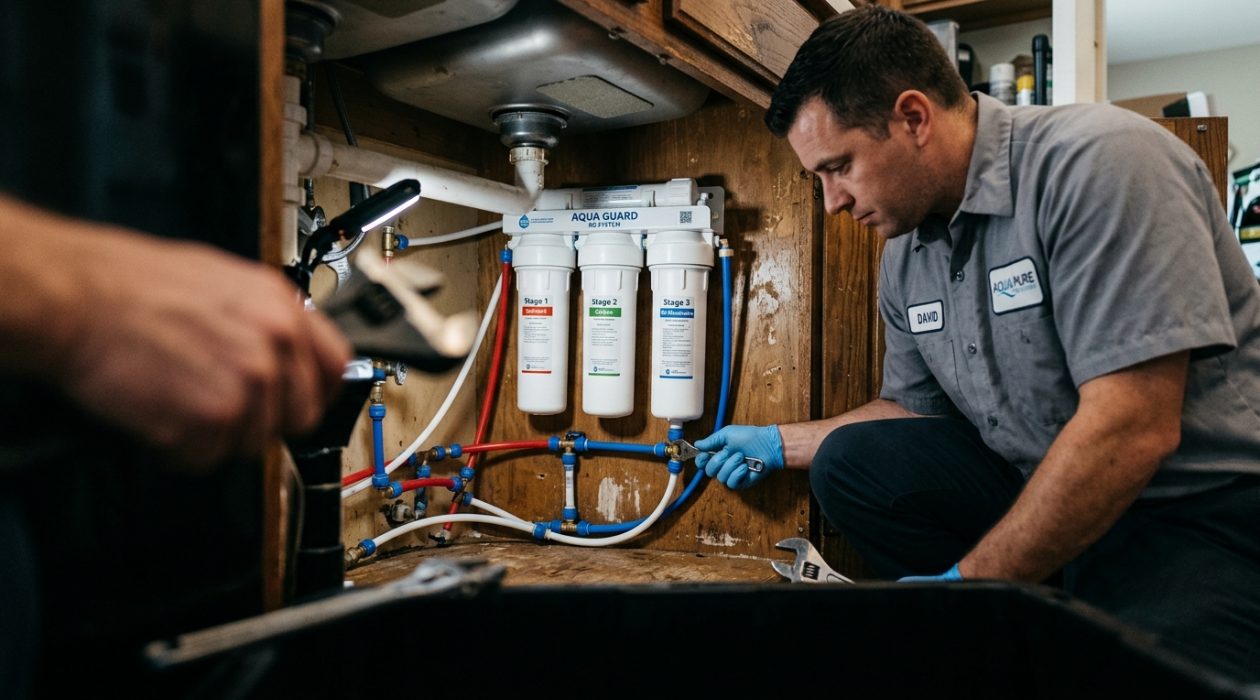
Chlorine taste, sediment after main work, iron staining on a rural well. Filtration solves specific, identifiable problems, which is why it should start with a test rather than a catalogue.
(970) 973-0235Water treatment is one of the easiest areas to over-buy, because every technology sounds beneficial in isolation. Matching the symptom to the method keeps it honest.
Activated carbon. Whole-house if you want it gone from showers as well as taps, point-of-use if it’s only about drinking water. Straightforward, effective, and needs replacing on schedule.
Sediment filtration, sized to the particle load. Common after municipal main work or hydrant flushing, and routine on wells. Also protects fixture cartridges and appliance valves from abrasion.
Iron and manganese, largely a well-water issue here. Treated with oxidising filtration or specialized media, and the right choice depends on the form and concentration the test reveals.
Hydrogen sulphide, again mostly on wells, occasionally a reaction inside a water heater. Aeration or oxidising media for the supply; an anode change and sanitising flush where the heater is the source.
Reverse osmosis or a high-grade carbon block at the kitchen tap. This is where fine treatment belongs, targeted at the few gallons a day you actually drink and cook with.
Not a filtration problem at all. That’s hardness, and it needs softening. Any filter sold as a cure for scale is being oversold.
On city water, filtration is generally about preference rather than safety. Municipal supply is treated and monitored to meet drinking water standards, so the sensible reasons to add treatment are taste, odour, sediment, and protecting equipment from grit. The most common installation is simply carbon for chlorine plus a sediment cartridge: modest, effective, and easy to maintain. If you have a specific concern such as lead from older service piping or interior plumbing, test for that specifically and target it; a general-purpose filter is not an answer to a specific contaminant.
On a private well, everything changes. Nobody is treating or monitoring your water but you, and what’s in it is a function of your particular geology, depth and surroundings. Across rural Weld County the recurring issues are hardness well beyond city levels, iron and manganese staining fixtures and laundry, sulfur odour, sediment, and, in agricultural areas, nitrates. Bacteriological testing matters too, particularly after well work, flooding or any period the system sat unused.
Well treatment is often a sequence rather than a single unit, and the order is not arbitrary: oxidation and iron removal generally precede softening, because iron fouls softener resin; sediment removal precedes finer stages so they don’t clog; and disinfection, where needed, sits at a particular point in the chain. Getting that order wrong is how expensive equipment underperforms or fails early.
Which is why every honest well recommendation begins with a comprehensive test, not a hardness strip, but a proper analysis covering hardness, iron, manganese, pH, dissolved solids, nitrates and bacteria. That result is the specification document for everything that follows.
Tell us whether you’re on city water or a well, it’s the first thing that changes the answer.
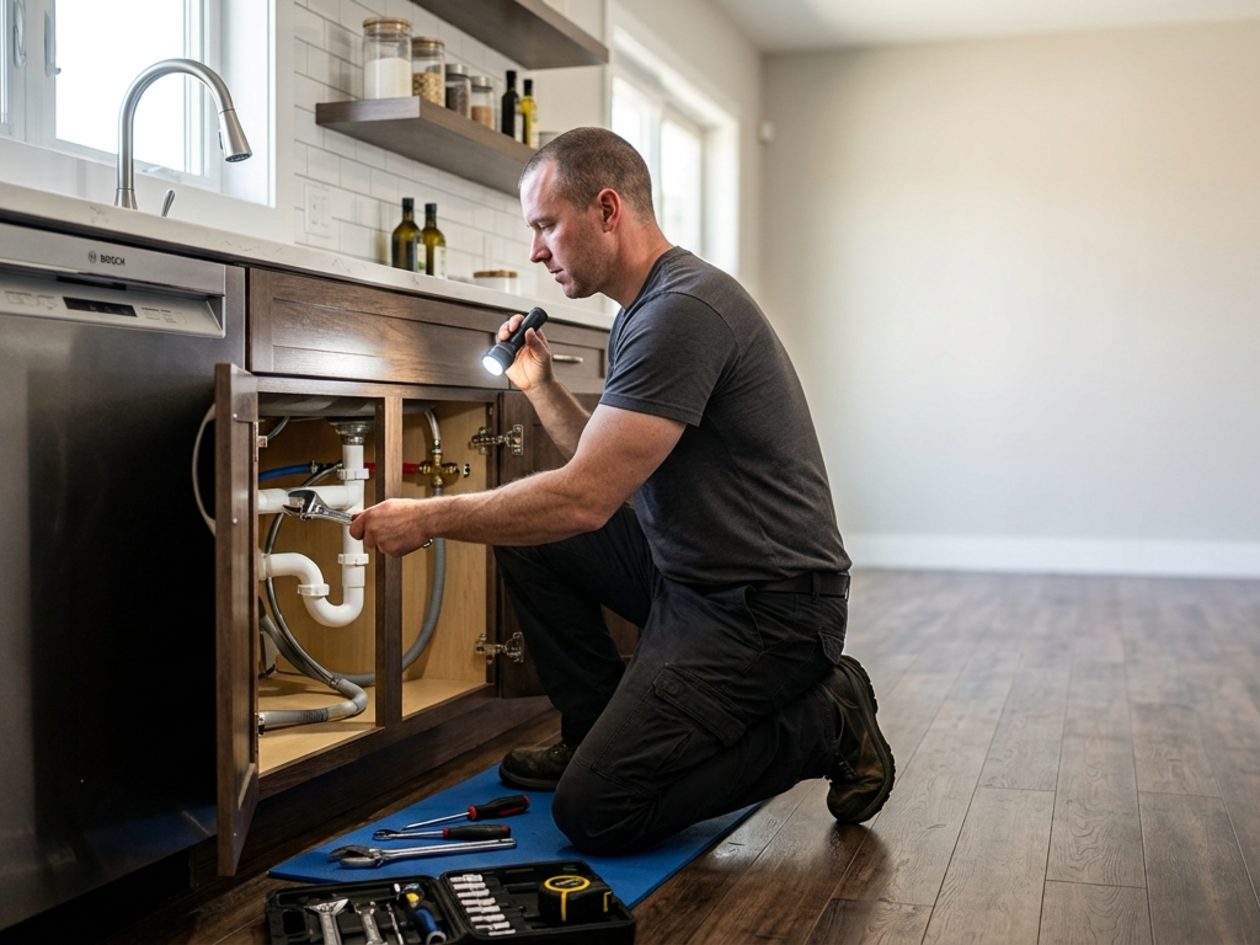 Test, then specifyEquipment chosen against a result, not a worry
The most common complaint about whole-house filtration is lost pressure, and it’s nearly always an undersized housing. Specify against your real flow rate, not the cheapest cartridge.
So the unit can be isolated and serviced without shutting water off to the house. Cheap at installation, invaluable every time afterwards.
A spent filter doesn’t signal: it just stops working, and eventually restricts flow. Put it in the calendar rather than trusting memory.
Retest after installation. That’s how you know the equipment is doing what it was bought for, and it gives you a benchmark for later.
A word on what we won’t do: recommend equipment for a problem you don’t have. Whole-house reverse osmosis for a house with good municipal water. A five-stage system where a carbon cartridge would fix the actual complaint. Softening sold as filtration or filtration sold as softening. If a test shows your water is fine and your only issue is a chlorine taste at the kitchen tap, the right recommendation is a small filter at that tap, and we’d rather say so.
New well work, flooding, a season with the house unoccupied, or a change in taste, color or smell. Well water can change, and unlike municipal supply nobody else is watching it for you.
Sequence matters on wells. Iron before softening, sediment before anything fine, disinfection at the right point in the chain. A well-specified system in the wrong order underperforms and wears out early.
Water treatment is the corner of plumbing with the most aggressive selling, and the tactics are consistent enough to recognize. Knowing them is most of what protects you, because the equipment itself is often perfectly good; it is the diagnosis and the pricing that go wrong.
Be wary of the free in-home test that immediately becomes a proposal. A dissolved-solids meter or a soap-shake demonstration measures something real but tells you almost nothing about whether your water is unsafe or what treatment it needs. Precipitation demonstrations in particular are theatre, they produce an alarming cloud of harmless mineral. A genuine assessment starts with a laboratory analysis of a properly collected sample, and the results come back as named contaminants at measured concentrations against a published limit.
Ask which specific contaminant the equipment reduces, and by how much. Marketing language about purity and wellness is not a specification. A real answer names the substance, states the reduction, and cites an independent listing, NSF/ANSI standards exist precisely so claims can be verified rather than asserted. If a system is listed, the seller will be glad to tell you against which standard and for which contaminants; those are different questions and the second one is where vague answers appear.
Treat health claims with real suspicion. Water treatment equipment reduces contaminants. It does not treat conditions, and any pitch drifting toward what it will do for your health has left the territory of things anybody can substantiate.
Refuse to decide on the day. A discount that expires when the salesperson leaves your kitchen exists to prevent you comparing quotes. Legitimate companies will hold a price for a week without drama.
Start with the utility's own report. On city water you are entitled to an annual water quality report showing what has actually been tested and found in the supply. It is free, it is specific to your system, and reading it first means you arrive at any sales conversation already knowing what is and is not in your water. On a private well nothing is monitored for you, which is exactly why independent testing matters more there, and where an independent laboratory, rather than the company selling the equipment, should be doing the testing.
Start with a lab test and your utility’s annual report, then buy only what those name.
The hardness half of the problem, a different technology.
See details →Properties on private supply.
See details →Where discolored water points at the service line instead.
See details →Smells and discoloration originating in the tank.
See details →Rusty water from corroding interior pipe.
See details →Grit and scale reaching fixture cartridges.
See details →Private wells with a real test result behind the decision.
Area details →Rural supply where sediment is the first thing to deal with.
Area details →Well water with iron and hardness together, which needs sequencing right.
Area details →Properties where a test, not a sales pitch, decides what gets installed.
Area details →Not on the list? We cover Greeley, Weld County and the northern Front Range, see every service area.
Municipal supply is treated to meet drinking water standards, so filtration here is usually about preference and specifics rather than safety. The common reasons people add it: removing the chlorine taste and smell, dealing with sediment that arrives after main work or a hydrant flush, improving how water tastes for drinking and coffee, and protecting fixtures from grit. If you have a specific concern: lead from old service lines or interior plumbing, for example: the right move is to test for it and target that, not to install everything available.
Whole-house filtration treats water where it enters the building, so every tap, shower and appliance receives it. That suits sediment, chlorine, iron and odour, problems you want handled everywhere. Point-of-use treats one location, usually a kitchen tap or the refrigerator line, and it’s where the finer and more expensive technologies make sense: reverse osmosis, specialty contaminant reduction, drinking water polishing. Many houses sensibly do both: broad protection at the entry, fine treatment where you drink.
No, and confusing them is the most common mistake in this category. Softening removes calcium and magnesium: hardness: through ion exchange, which is what stops scale, restores lather and ends spotting. Filtration removes particles, chlorine, odours, tastes and specific contaminants, and does essentially nothing about hardness. A filter will not stop your water heater scaling and will not make soap lather. In hard-water areas like this one, houses that want both problems solved need both technologies.
It forces water through a semi-permeable membrane that rejects a very high proportion of dissolved solids, producing notably pure water. It’s the strongest common residential treatment for dissolved contaminants and it’s excellent for drinking and cooking. The trade-offs are real: it works slowly, so it needs a small storage tank, it sends some water to drain in the process, and it removes beneficial minerals along with everything else. It’s a point-of-use technology, whole-house RO is rarely sensible for a home.
Easily, and it’s one of the most satisfying improvements available. Activated carbon: either a whole-house cartridge or backwashing tank, or a point-of-use filter at the kitchen tap, removes chlorine taste and odour very effectively. Whole-house treatment has the additional benefit of removing it before it reaches showers, which matters to people who notice it on skin and hair. Carbon needs periodic replacement on a schedule, because spent carbon quietly stops working rather than announcing it.
Different problem entirely, and it needs testing first: private wells aren’t covered by municipal treatment or monitoring, so what’s in yours is specific to your property. Common issues on rural Weld County wells include hardness well above city levels, iron and manganese producing orange or black staining, sulfur giving a rotten-egg smell, sediment, nitrates in agricultural areas, and bacteriological concerns. Each has its own treatment, sometimes in sequence, and the order matters. Test, then specify, never the reverse.
It depends on the technology and your water. Sediment cartridges may want changing every few months in dirty water, longer in clean. Carbon blocks typically run six to twelve months. Reverse osmosis membranes last a few years with pre-filters changed more often. Backwashing media beds go many years before the media is replaced. The important principle: a spent filter doesn’t warn you: it simply stops working, and a badly neglected cartridge can restrict flow or become a place where things grow. Set a calendar reminder.
A correctly sized one, barely noticeably. An undersized or neglected one, significantly, and that’s the most common complaint about whole-house filtration. Every filter creates some pressure drop, which increases as it loads with material. Sizing for your actual flow rate rather than the cheapest cartridge, and changing filters on schedule, keeps it in the range where you wouldn’t notice. If pressure has dropped since a filter was fitted, the filter is usually the first thing to check.
Yes, and this is the single most useful piece of advice on the page. Treatment equipment should be specified against a test result, not against a sales conversation or a general worry. A test tells you hardness, iron, pH, dissolved solids and anything specific you’re concerned about, and it frequently reveals that the problem you assumed needs one technology actually needs another. It also gives you a baseline to prove the equipment is working after installation.
Look for three things. First, a diagnosis based on a laboratory analysis of your water rather than an in-home meter reading or a precipitation demonstration, those measure something real but say nothing about safety or what treatment you need. Second, claims stated as a named contaminant with a measured reduction and an independent listing against a published NSF/ANSI standard, not language about purity or wellness. Third, a quote that holds for a week. High-pressure discounts that expire when the salesperson leaves exist to stop you comparing prices. If you are on city water, read your utility's annual water quality report first; it is free and tells you what is actually in your supply.
Describe what you taste, smell or see, that points at the technology.
Water testing and filtration across Greeley, Evans, Windsor, Kersey, Platteville and rural Weld County.
(970) 973-0235Answered 24 hours a day, seven days a week, every week of the year.