Frozen Pipe Repair
Freeze repair across houses, shops, barns, hydrants and stock lines.
See details →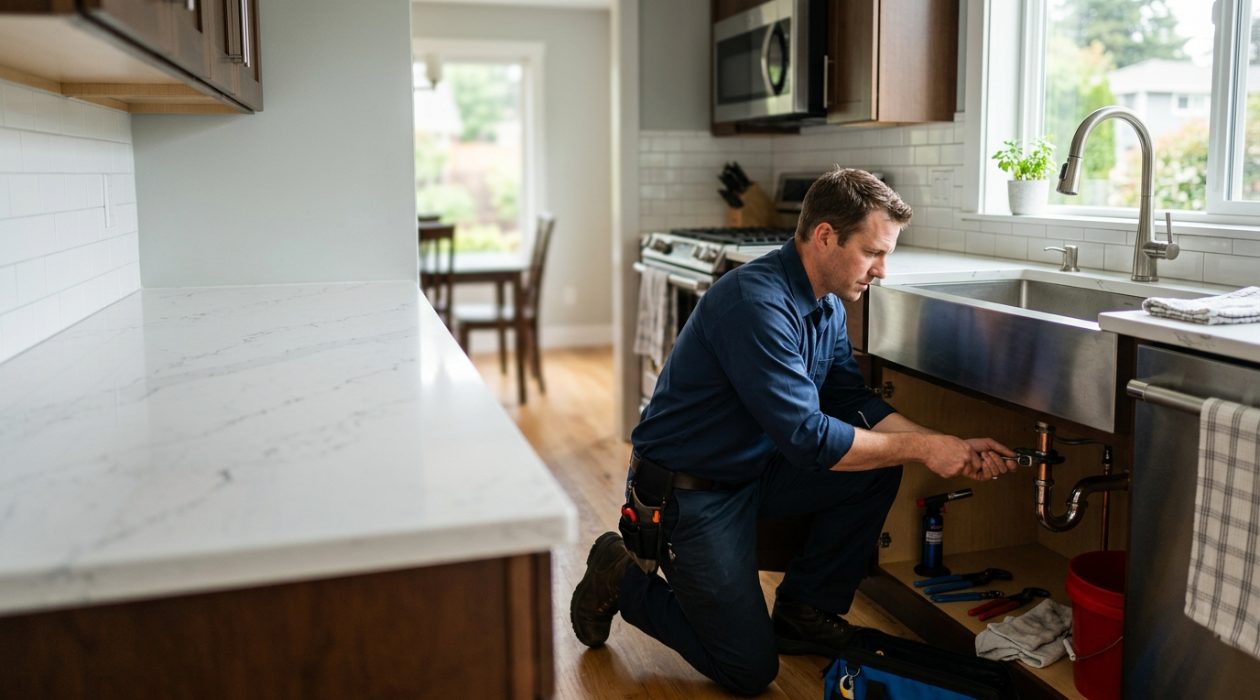
Agricultural land east of Greeley along Highway 34. On a working property the plumbing does not stop at the back door.
(970) 973-0235Residential plumbing assumes one heated building. A working agricultural property has a house, a shop, a barn, possibly a second dwelling, stock water in several locations, and pipe running between all of them: most of it outside conditioned space, some of it buried, some of it exposed.
That changes the risk profile completely. The house is the safest place on the property because it is occupied and heated. Everything else is a candidate, and the failures cluster in predictable places: unheated shop bathrooms and utility sinks, stock tank supply lines and their heaters, hydrants in yards and pens, well house plumbing in barely-heated enclosures, and any run that depends on heat tape somebody installed years ago.
It also changes the stakes. A frozen line in a house is inconvenient. A frozen stock water line in January is a welfare problem with a clock on it, and it is worth treating as urgent in a way an indoor plumbing fault is not.
We work on the whole property, not just the dwelling. Tell us what buildings are involved when you call, because it changes the parts and the time we allow.
Tell us which buildings. We bring accordingly.
The tall standing hydrant in a yard or pen is one of the most useful and most misunderstood pieces of plumbing on any rural property.
It works like a frost-free hose bib on a much larger scale: the actual valve sits at the bottom of the standpipe, below the frost line, and when you close the handle the water in the pipe above drains out through a weep hole at the base into a gravel bed. That is what makes it frost-free, and it depends entirely on that drainage working.
The failures follow from that. If the gravel drainage bed has silted up over the years, the standpipe cannot drain, water sits in it, and it freezes and splits, the most common yard hydrant failure there is. If the plunger seal at the bottom wears, the hydrant drips continuously underground, which shows up as a permanently soft patch and a water bill nobody can explain. If a hose is left attached, the standpipe cannot drain at all, exactly like a sillcock.
The repair depends on which it is. Seals and plungers are serviceable from above on most designs. A silted drainage bed or a split standpipe means excavating to the base, which is why fitting them properly with adequate gravel in the first place matters so much.
Seals, plungers and full replacements.
 It drains, or it splitsA silted gravel bed stops the standpipe draining. That is the most common yard hydrant failure.
Rural winterization is a walk with a list, not a memory exercise. Every year we repair things that were on somebody’s mental checklist and got missed.
Disconnect every hose, on every building, including the one on the far side of the shop nobody uses. This single act prevents the majority of freeze damage we repair anywhere.
Drain rather than insulate any supply in an unheated building. Insulation slows heat loss; it does not add heat. A drained line cannot freeze, and that is a categorically better protection than any amount of wrapping.
Verify heat tape draws current. It has a finite life and fails silently. Working last winter proves nothing about this winter.
Check insulation for rodent damage. Nesting in pipe insulation is extremely common on working properties and it defeats the insulation completely while looking intact from a distance.
Service stock tank heaters before you need them, and check the supply line to each tank, which is the highest-failure item on the property.
Test yard hydrants by running each one and listening for it draining afterwards. A hydrant that does not drain is next winter’s repair.
Whole property, with a written list of what was found.
Highest-failure item Stock tank supply lines and their heaters fail more than anything else on a working property.
Kersey is east along Highway 34 and the run is straightforward in fair weather, longer in winter. We will give you an honest window rather than an optimistic one.
For anything involving livestock water in freezing conditions, say so when you call. We treat that as urgent, because it is.
Freeze repair across houses, shops, barns, hydrants and stock lines.
See details →Pumps, pressure tanks and switches on private water systems.
See details →Yard hydrants, sillcocks and everything outdoors that holds water.
See details →Long buried runs between buildings, located and repaired.
See details →Heater replacement including propane and outbuilding installations.
See details →Split lines that have already let go, isolated and repaired.
See details →West into the city, with a high water table and municipal service.
Plumbers here →South-west along the Platte, older housing and rural acreage.
Plumbers here →North-west, rural properties a short run from Greeley.
Plumbers here →Yes, and on the whole property rather than just the dwelling: shops, barns, second dwellings, yard hydrants, stock water lines and the runs between buildings. Tell us which buildings are involved when you call, because it changes the parts and the time we allow.
Almost certainly because it could not drain. A frost-free yard hydrant has its valve below the frost line and drains the standpipe through a weep hole into a gravel bed. If that gravel has silted up over the years, or a hose was left attached, the standpipe holds water and splits. It is the most common yard hydrant failure there is.
Usually yes. A continuous underground drip is normally a worn plunger or seal at the base of the standpipe, and on most designs those are serviceable from above without excavating. The tell is a permanently soft patch around the hydrant and a water bill nobody can account for.
Drain it rather than insulate it. Insulation slows heat loss but adds no heat, so a line in an unheated building will eventually reach ambient temperature no matter how well it is wrapped. A drained line cannot freeze, and that is categorically better protection than any amount of insulation.
Verify it actually draws current rather than assuming. Heat tape has a finite service life and fails silently, the fact it worked last winter is not evidence about this winter. Also check that the insulation over it has not sagged or been nested in by rodents, which is extremely common on working properties.
We treat it as urgent, because livestock without water in freezing weather is a welfare problem with a clock on it. Say so on the phone. Stock tank supply lines and their heaters are the highest-failure plumbing item on any working property, and they fail in the worst weather by definition.
Yes. Long buried runs between a well head, a house and outbuildings can be traced and, where there is a leak, located before excavating. A wet patch or a pressure drop with no visible source on a property this size is exactly the situation proper leak location is for.
Possibly. A frozen pipe leaks nothing because the ice is plugging the split; everything releases when it thaws. If a section froze hard, treat it as potentially damaged, isolate that line if you can, and get it looked at before it warms rather than after.
Yes, including propane units and installations needing non-standard venting. A shop or barn heater has different requirements from a house heater: combustion air, venting, freeze protection and often propane rather than natural gas, and it is not a place to improvise.
Straightforward east along Highway 34 in fair weather, and longer in winter conditions. We will give you an honest window rather than guessing low. Because the trip takes time either way, it is worth batching several jobs into one visit.
Livestock water frozen? Say so, we treat that as urgent.
Yard hydrants, stock lines, wells and freeze work around Kersey.
(970) 973-0235Answered 24 hours a day, seven days a week, every week of the year.