Roots at clay joints
Cottonwood, elm and silver maple roots find the moisture at every joint of a clay-tile lateral and grow into it as a fine mat that catches everything passing. The dominant cause in Greeley’s pre-1960s neighborhoods.
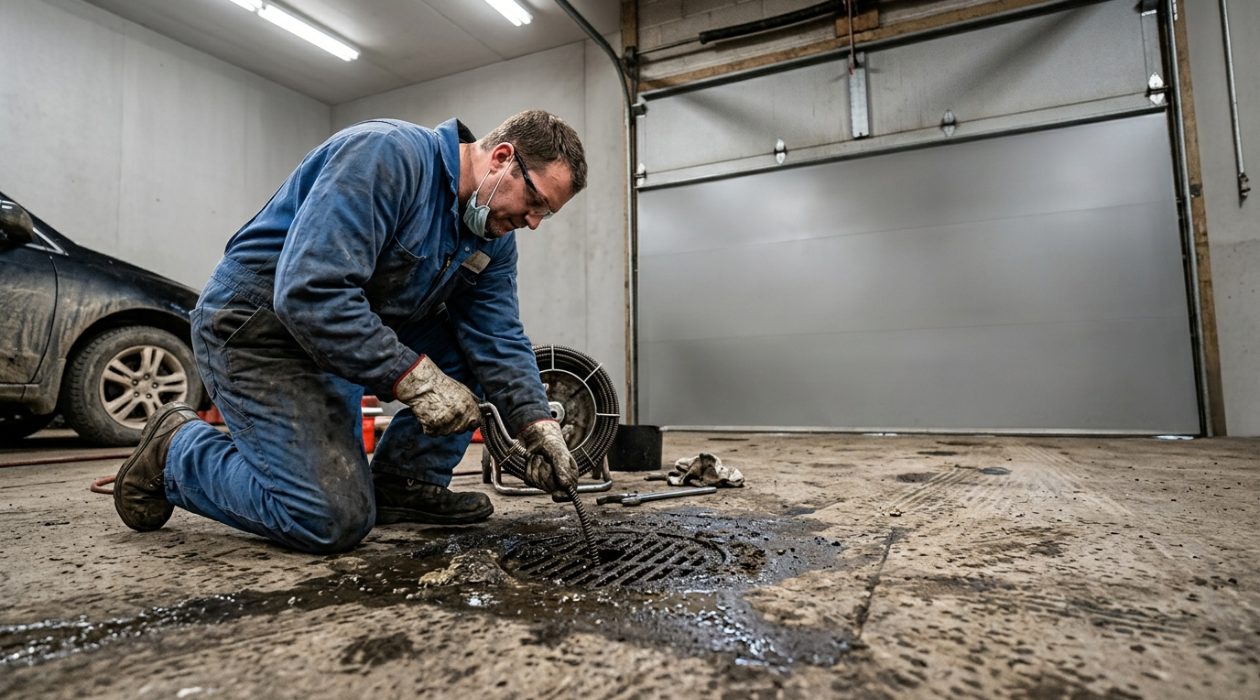
Water rising at the lowest fixture in the house means your lateral can’t take what the house is sending. We route clearing, camera inspection and repair to plumbing pros who work Greeley’s clay-tile lines every week.
(970) 973-0235Every flush and every load of laundry lands on the basement floor. Tell the whole house. Stop any running appliance.
Treat it as contaminated even if it looks clean. People and pets out of the area, nothing tracked through the house.
If water is near outlets, the furnace or the panel: from a dry position only, never from standing water.
A record of the water level before cleanup is worth having. Then get a plumbing pro on the way.
Everything in the house drains by gravity into one pipe, the lateral, which runs out under the yard to the city main. Kitchen, baths, laundry, floor drains: all of it converges. When that single pipe is restricted, the water has to go somewhere, and it goes to the first opening below the restriction. In a house with a basement, that’s the floor drain, the basement shower, or a lower-level toilet.
Which is why the upstairs bathroom still works while the basement floods, and why clearing the basement fixture achieves nothing. The blockage is typically twenty to sixty feet away, out under the front lawn, in a section of pipe nobody has looked at since the house was built.
The pattern tells you a lot before anyone opens a cleanout. Multiple fixtures slow at once means a main-line problem rather than a fixture problem. Gurgling in a floor drain when the washing machine empties means the line is partly restricted and struggling with volume. A backup that happens only during heavy rain or spring melt points at groundwater loading and infiltration into the lateral. A backup that’s getting steadily worse over months points at roots or a settled joint accumulating solids.
And the timing is seasonal here. Spring is the peak, because snowmelt raises the water table, saturates the clay, and adds infiltration volume to a line that was coping in December. Late summer storms produce a second smaller peak. If your basement has backed up twice, and both times the ground was saturated, that is a diagnostic clue rather than bad luck.
Usually out in the yard Clay joints, roots and ground movement
Cottonwood, elm and silver maple roots find the moisture at every joint of a clay-tile lateral and grow into it as a fine mat that catches everything passing. The dominant cause in Greeley’s pre-1960s neighborhoods.
Expansive clay soil swelling and shrinking pulls joints out of line and creates low spots. Solids settle in the belly, water passes over them, and the restriction builds until one bad week finishes it.
Cooking fat congeals on pipe walls, narrowing the bore year by year and catching everything fibrous. Runs from the kitchen line out into the lateral, and hot water only moves the problem further along.
“Flushable” wipes do not break down. They snag on a root or an offset joint and build a dam remarkably fast. One of the few causes entirely within a household’s control.
Cracked joints let groundwater in, so during melt or heavy rain the lateral carries far more than the house is sending. A line that’s adequate in winter is overwhelmed in April.
Cast iron corroding through from the inside, Orangeburg deforming into an oval, or a section crushed by settlement or old excavation work. Cabling won’t solve this and shouldn’t be sold as if it will.
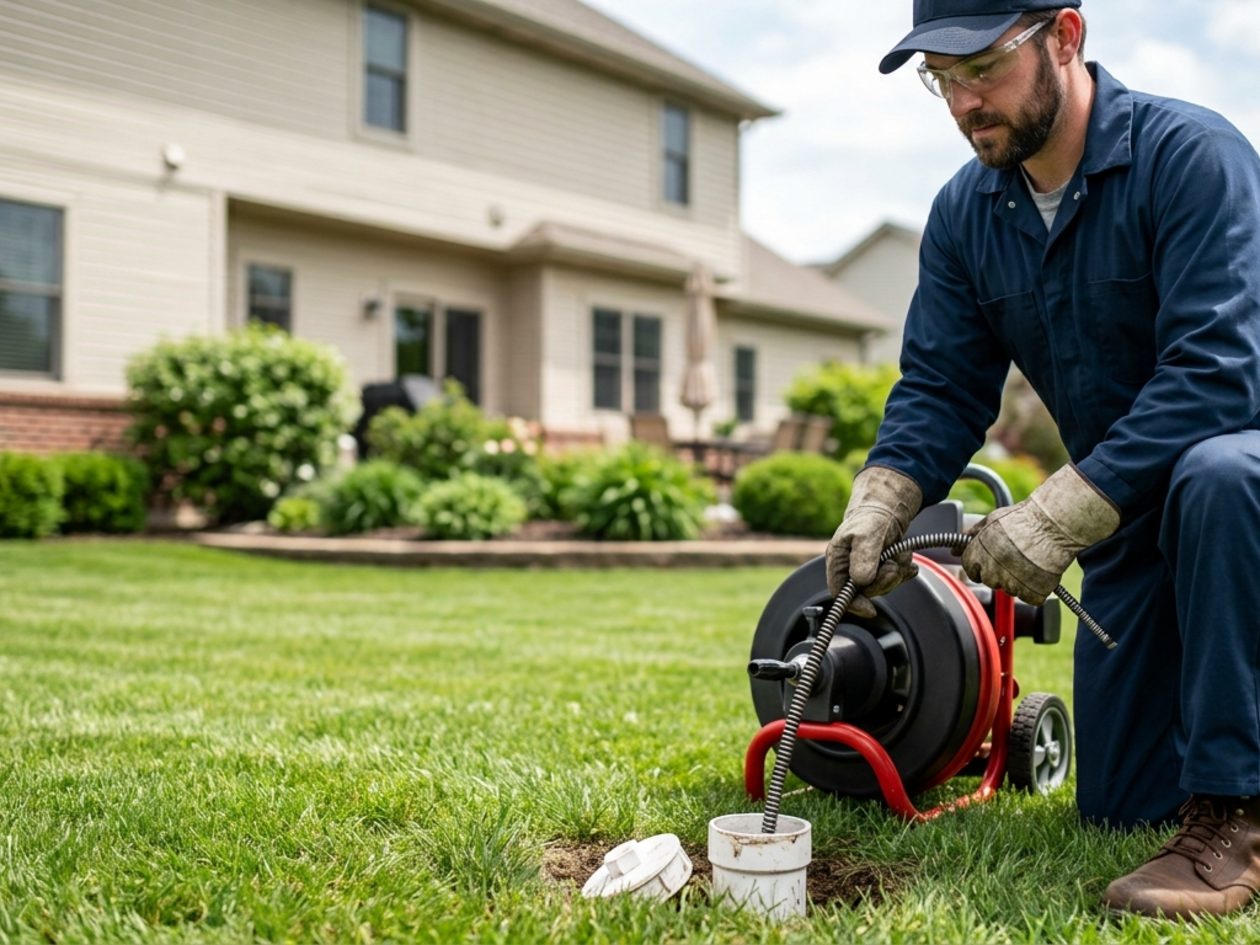
A backup call has two halves, and conflating them is how homeowners end up paying for the same blockage four times.
Ask for the camera footage. A plumber who’s confident in the diagnosis will happily show you.
One camera inspection tells you the material, the condition and the trouble spots. From that point on you’re making decisions with information instead of reacting to floods.
Where roots or grease are established, scheduled jetting every one to three years is far cheaper than emergency clearing plus remediation. Set it as a calendar item.
A backwater valve where surcharge is the cause. Nothing valuable stored on the floor. And an honest look at grading and downspouts, which decide how much water reaches your foundation in the first place.
One thing worth doing this week: find your cleanout and make sure you can get to it. It’s usually a capped four-inch pipe in the basement floor or wall near where the lateral leaves the house, sometimes outside near the foundation. Buried under a deck, paved over, or hidden behind finished basement framing, it turns a straightforward clearing job into a much larger one, at the worst possible moment.
Clay laterals with root-prone joints running under mature street trees.
Area details →High water table and older laterals in the same houses.
Area details →Long runs to the main, with a shallow fall that holds solids.
Area details →Flat ground and older infrastructure, a combination that shows up after storms.
Area details →Not on the list? We cover Greeley, Weld County and the northern Front Range, see every service area.
See the line, get footage and distances, then decide with information.
See details →Scouring the pipe wall rather than punching a hole through the blockage.
See details →Spot repairs and full replacements for failed laterals.
See details →Lining and bursting that spare the driveway and the mature trees.
See details →Single slow fixtures, before they become main-line problems.
See details →The other reason a basement floor gets wet in spring.
See details →Stop using water anywhere in the house, that’s the whole of it. Every flush, every load of laundry, every shower upstairs adds volume to a line that already can’t take it, and it all arrives at the lowest opening, which is your basement. Tell everyone in the house. Keep people and pets away from the water: a sewer backup is contaminated regardless of how clear it looks. Then call. If the washing machine or a water softener is mid-cycle, stopping it is the single most useful thing you can do while you wait.
Because water finds the lowest exit. Your house drains by gravity into a single lateral running out to the city main, and every fixture connects to it. When that lateral is restricted, the wastewater backs up the pipe until it finds the first opening below the blockage, and that is almost always a basement floor drain, a lower-level shower, or a basement toilet. The upstairs fixtures keep working normally, which is exactly why people assume the problem is in the basement. It usually isn’t; the basement is just where the evidence appears.
The general rule across Colorado municipalities is that the property owner is responsible for the lateral, the pipe from the house to the connection at the main, while the city maintains the main itself. That means most backups are the homeowner’s to fix, including the buried section under the front yard and often under the sidewalk. If several houses on your street are backing up at once, that points at the main and is worth reporting immediately. Greeley’s water and sewer department can confirm where your responsibility ends for your specific address, and it is also the number to call if you suspect the main rather than your own line.
Four things, in rough order. Root intrusion: mature cottonwoods, elms and silver maples send roots into clay-tile joints, which is why the older neighborhoods see this most. Ground movement: expansive clay soil swells and shrinks seasonally, pulling joints apart and creating bellies where solids settle. Grease and wipes: the modern classic, and the reason “flushable” is a marketing term rather than a plumbing one. Groundwater volume: snowmelt and heavy rain raising the water table and loading the whole system at once, which is why backups cluster in spring.
Not for this, and chemical drain cleaner can make it worse. Those products are formulated for a soft clog in a small fixture line a few feet away; in a main lateral they sit in standing water doing nothing useful and create a hazard for whoever has to open the line. A plunger can’t generate the volume needed for a four-inch pipe. If a cleanout is accessible outside, opening it can relieve pressure and send the overflow outside rather than into the basement, but do that knowing it will spill, and only if you can do it safely.
A cable, a drain snake, is a rotating steel auger that bores through or cuts a blockage. It restores flow quickly and it’s the right first move in an active backup. Hydro jetting uses high-pressure water to scour the full inside diameter of the pipe, removing grease film, scale and root hair rather than just punching a hole through them. Cabling gets your house working tonight; jetting is what stops the same blockage returning next quarter. On a root-infested clay line, jetting plus a camera is the difference between a repeat customer and a solved problem.
After a genuine backup, yes, it’s the only way to know whether you had a soft blockage or a structural defect. A camera shows root masses and where they enter, offset joints where the pipe has shifted, bellies holding standing water, cracks, and collapsed sections, with distance readings so any repair can be dug in the right place rather than exploratory. It also tells you what your pipe is made of, which matters: clay tile, cast iron and Orangeburg all have very different futures. Without it, you’re paying to clear the same blockage repeatedly and calling it maintenance.
It’s a one-way valve fitted into the building drain that lets waste flow out and closes if flow tries to come back in. For a basement that has flooded from the sewer more than once, particularly during heavy rain when the municipal system is surcharged: it’s the most direct protection available, and it’s often worth more than any amount of drain cleaning. It requires proper installation, an accessible cover for maintenance, and periodic checking; a valve nobody has looked at in ten years can jam open or closed. Permits typically apply.
Not until the line is clear. This is the most common mistake in a backup: the upstairs fixtures still drain, so people keep using them, and every gallon ends up on the basement floor. That includes appliances: dishwashers and washing machines discharge a large volume quickly, and a water softener regenerating overnight can flood a basement that had stopped backing up hours earlier. Treat the whole house as out of service until someone has confirmed flow is restored.
The plumbing work: clearing the line, camera inspection, any repair, is one job. Cleaning up contaminated water is remediation, and for anything beyond a small area on sealed concrete it genuinely should be professional. Sewage soaks into porous materials and doesn’t simply dry out: carpet, pad, drywall bottoms, insulation and stored cardboard are usually losses. Photograph the water level before anything is moved, keep the plumber’s written diagnosis, and check whether your policy includes a sewer backup endorsement, it’s frequently a separate add-on rather than standard cover.
Describe which fixtures are affected and whether the ground is saturated, that narrows it quickly.
Sewer backup clearing, camera inspection and repair across Greeley, Evans, La Salle, Kersey and Weld County.
(970) 973-0235Answered 24 hours a day, seven days a week, every week of the year.