Rapid cycling
Pump starting and stopping every few seconds. Failed bladder or lost air charge, almost always. Damaging while it continues, worth shutting the pump off until it’s addressed.
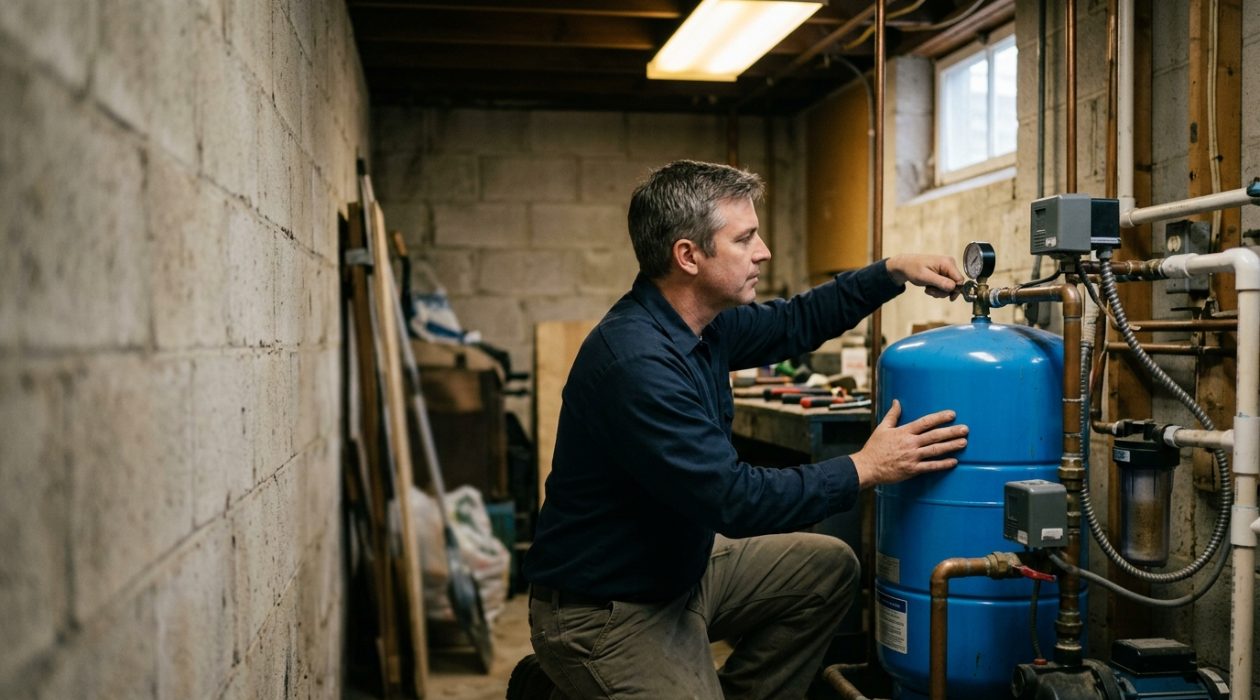
Short cycling, lost pressure, sand in the water. On a private well you are the utility, and the pressure tank is usually the part that has quietly failed.
(970) 973-0235A pressure tank isn’t a storage vessel so much as a shock absorber. Inside is a bladder separating water from a charge of compressed air, and that air cushion is what lets you draw a glass of water, flush a toilet or run a tap briefly without the pump starting.
When the bladder tears or the air charge escapes, the tank fills with water and loses almost all of its useful capacity. Now every small draw drops pressure immediately, so the pump starts, and stops seconds later when pressure recovers. That’s short cycling, and it is genuinely destructive: motor starts are what wear a pump out, pressure switch contacts pit and burn, and a pump rated for a decade can be finished in a small fraction of that.
The diagnostic is simple. Tap the side of the tank. Hollow above, solid below, with a clear transition, means a healthy air cushion. Solid all the way up means the bladder has almost certainly failed. Water emerging from the air valve on top confirms it beyond doubt. Replacing the tank is straightforward work, and doing it promptly is the cheapest possible way to protect the far more expensive pump down the well.
It’s also worth checking the air charge is correct rather than merely present, a tank charged to the wrong pressure for the pump’s cut-in setting cycles more than it should even with an intact bladder.
Hearing the pump start every few seconds? Turn it off at the breaker and call, that cycling is doing damage now.
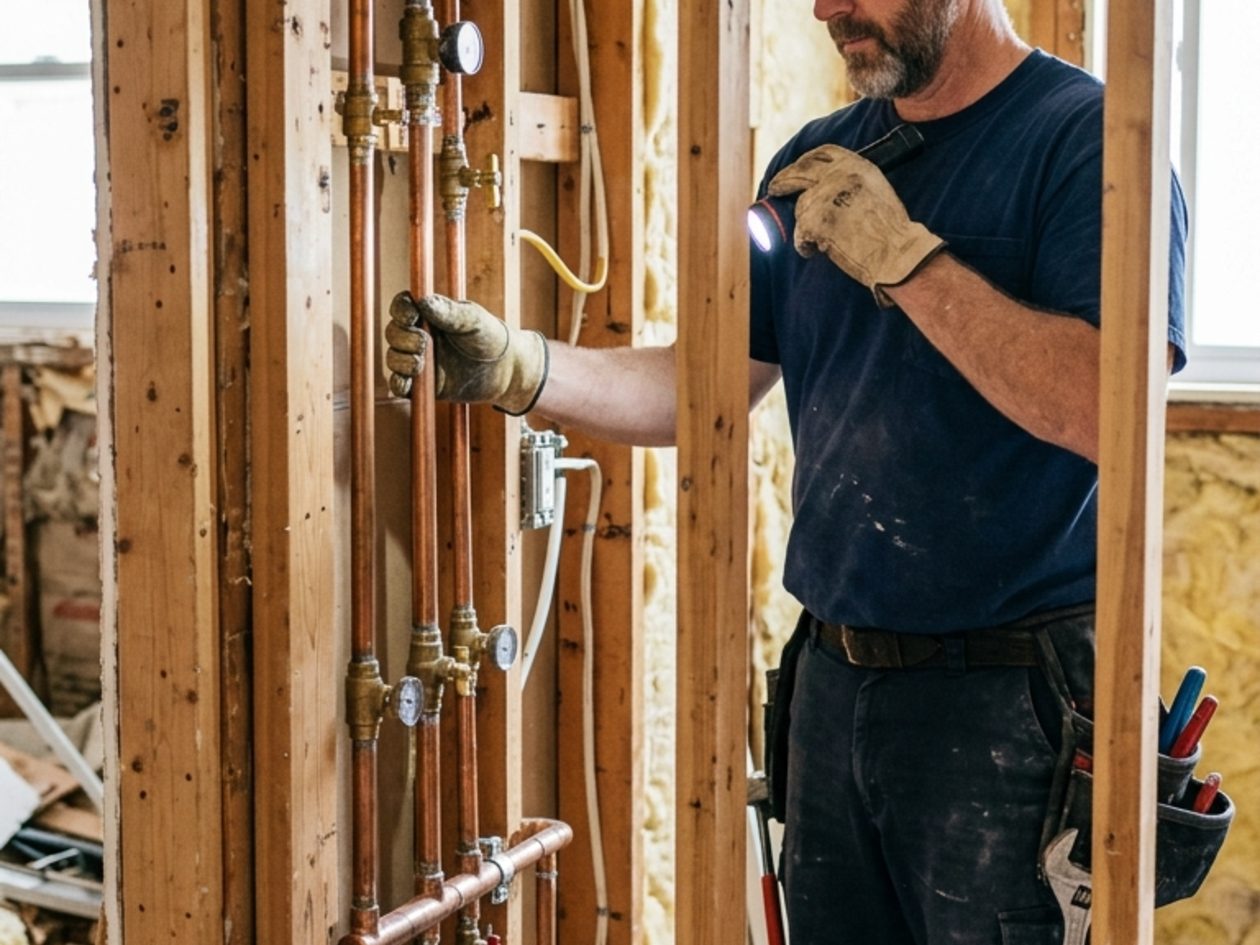 Tap the sideHollow above, solid below, that’s a healthy tank
Pump starting and stopping every few seconds. Failed bladder or lost air charge, almost always. Damaging while it continues, worth shutting the pump off until it’s addressed.
Never reaching cut-out pressure. A leak in the system, a worn pump losing performance, a stuck pressure switch, or a well struggling to supply what’s being drawn.
Electrical, pressure switch, control box, or the pump itself. Sometimes a dropped water level. Repeatedly resetting a tripped breaker is not a diagnosis.
Air being drawn into the system: a dropping water level, a leak on the suction side, or a failed check valve letting the column drain back.
A failing well screen, a dropping level drawing from nearer the bottom, or a pump that has shifted. Abrasive, and hard on everything downstream.
Classic symptom of a tank with insufficient air cushion, pressure swings between cut-in and cut-out with nothing smoothing the transition.
This distinction saves rural homeowners time and money, and it’s worth understanding before you make the first call.
Plumbing work covers the pressure tank, the pressure switch and controls, the piping from the wellhead into the building, the shut-offs and fittings, any treatment equipment, and everything downstream through the house. That’s the majority of well-system faults by count: tanks, switches, leaks and pressure problems.
Well contracting covers the well itself: drilling, casing, screens, deepening, and in Colorado typically the submersible pump and its drop pipe as well. That work is permitted separately, with reporting obligations attached, and it exists as a distinct trade for good reason.
In practice the two overlap constantly, and the useful thing about calling a local plumbing pro first is triage: most “my well isn’t working” calls turn out to be a failed pressure tank or switch, which is plumbing work and can be resolved in a single visit. Where the fault genuinely lies in the well or the pump, you get told that plainly along with who should handle it, rather than paying for a diagnosis twice.
One local note. Everything above ground is exposed to Weld County winters. Pressure tanks in unheated well houses, the pitless adapter area, and any above-grade piping need insulation and sometimes a safe heat source. That’s autumn work, and it is much cheaper than a burst tank line in January on a property where the nearest neighbor is half a mile away.
Serving rural properties around Kersey, Platteville, La Salle, Eaton, Gill and the wider county.
Nobody tests your water, monitors your pressure or maintains your equipment. Annual bacteria and nitrate testing, a pressure tank check, and a look at the wellhead and any above-ground piping before winter is the whole program, and it prevents most of what we get called out for.
Test after anything unusual. New pump work, flooding or heavy runoff, a season with the house empty, or any change in taste, smell or color. Well water can change, and on agricultural land, nitrates deserve particular attention.
The difference between city water and a well shows up most sharply in a power cut. A municipal supply is pressurized by the utility and keeps flowing when your lights go out. A well has no pressure without a pump, and a pump has no pressure without electricity. In a county that gets serious winter storms, that is worth planning for before it is tested.
What you have in reserve is whatever is in the pressure tank, and that is far less than the tank's nominal size suggests. A tank rated in the dozens of gallons holds only its drawdown volume as usable water, often a fraction of the total, with the rest being the air charge that does the pressurizing. In practice, expect a handful of toilet flushes. Knowing that number for your own system is genuinely useful information.
Fill containers early, not late. When a storm is forecast, fill a few jugs for drinking and a bathtub for flushing. It costs nothing and it is the difference between an inconvenient outage and an unpleasant one. Households on wells learn this quickly; new owners often have not thought about it.
Generator sizing is the part that catches people. Submersible pumps draw substantially more current starting than running, and a generator sized to the running figure will stall on start-up or trip repeatedly. If you intend to back up the pump, have the starting requirement checked and size for that with margin. A pump circuit also needs to be connected through a proper transfer switch or interlock, back-feeding a house through an outlet endangers utility crews and is not legal.
Consider what freezes. An outage in a hard freeze means no water and no heat at once. The pressure tank, the pressure switch and any above-ground pipework in an unheated well house or crawl space are the vulnerable points, and they are worth insulating before winter rather than thawing in January.
Know your restart sequence. When power returns, pressure should rebuild within a few minutes. If it does not, or the pump runs without building pressure, switch it off at the breaker rather than leaving it running dry, a submersible pump running dry damages itself quickly. Check the pressure switch contacts and the tank's air charge before assuming the pump itself has failed. That order of checks resolves the majority of post-outage callouts, and it is the same order we would work through on site.
Know your tank’s drawdown volume and your pump’s starting current, both matter before an outage.
Iron, sulfur, sediment and nitrate treatment for well supply.
See details →Well water is often harder than city supply.
See details →Pressure problems on the house side of the system.
See details →Buried lines between wellhead and building.
See details →Exposed well-house piping in a hard freeze.
See details →No water on a rural property, at any hour.
See details →Rural properties where the pressure tank is the whole water supply.
Area details →Farm systems with stock demand as well as household demand.
Area details →Pressure switches and tanks on wells with no service record.
Area details →Power-outage backup planning on properties a long way from the grid.
Area details →Not on the list? We cover Greeley, Weld County and the northern Front Range, see every service area.
That’s short cycling, and the usual culprit is the pressure tank rather than the pump. A pressure tank holds a cushion of air that stores water under pressure so small draws don’t start the pump. When the bladder fails or the air charge is lost, the tank becomes a plain vessel of water with almost no storage capacity, so the pump starts and stops every few seconds. It’s the most common well fault we see and one of the most damaging: rapid cycling destroys pumps, pressure switches and motor contacts quickly.
Tap the side. A healthy bladder tank sounds hollow above the water line and solid below, with a clear transition. If it sounds full of water all the way up, the bladder has likely failed. Then check the air charge at the valve on top with the system depressurized; it should be a couple of psi below the pump’s cut-in pressure. Water coming out of that air valve is a definitive failed bladder. It’s a straightforward replacement and a very worthwhile one.
Check the obvious in order. Is the breaker for the pump on, and if it tripped, don’t simply keep resetting it, because it tripped for a reason. Is the pressure switch reading anything at all. Is there any water in the pressure tank. If the pump runs but delivers nothing, possibilities include a dropped water level in the well, a failed check valve, a broken drop pipe, or air locking. If the pump doesn’t run at all, it’s electrical, the switch, the control box, or the pump itself. Either way, stop cycling it and call.
A submersible pump in reasonable conditions typically runs somewhere in the range of eight to fifteen years, and the main variable isn’t age, it’s cycle count and water quality. A pump paired with a failed pressure tank can wear out in a fraction of that, because it starts thousands of times more often than it should. Sediment and sand are the other big factor, abrading impellers and seals. Which makes tank health the cheapest way to extend pump life.
It’s the component that senses system pressure and tells the pump to start and stop. Failures come from contacts pitted by arcing over thousands of cycles, from sediment or insects blocking the small sensing port, or from corrosion in the housing. It’s an inexpensive part and a common cause of “no water” or of a pump that runs continuously without shutting off. Because it involves line voltage and a pressurized system, it isn’t a comfortable homeowner repair.
It’s worth investigating promptly. Sand can mean a failing well screen, a dropping water level drawing the pump closer to the bottom of the well, or a pump that has shifted position. Beyond staining fixtures and clogging aerators, abrasive sediment wears pump components and fouls any treatment equipment downstream. A sudden change in what comes out of the tap: sand, cloudiness, color, smell, is a signal from the well and merits both a test and a look at the system.
Yes, because nobody else is doing it. Annual testing for bacteria and nitrates is a common recommendation, with a broader analysis periodically and specifically after any of these: well work or pump replacement, flooding or heavy runoff nearby, a long period with the property unoccupied, or any noticeable change in taste, smell or appearance. In agricultural areas nitrates deserve particular attention. Test results are also what any treatment equipment should be specified from.
The pump itself sits deep and stays well below frost, but everything between the wellhead and the house is exposed. Pressure tanks in unheated well houses or outbuildings, the pitless adapter area, exposed piping and the wellhead itself are all vulnerable in a Weld County cold snap. Insulating the well house, keeping a safe heat source where appropriate, and making sure any above-ground piping is properly insulated is autumn work worth doing before the first hard freeze.
Steady low pressure suggests the system is working but delivering less than it should, which points at the pressure switch settings, a pump losing performance, a clogged filter or screen, a partially closed valve, or a well whose yield has declined. That last one matters most: a dropping static level or reduced recovery rate is a well problem rather than an equipment problem, and it changes the conversation entirely. Measuring pressure at the tank and at fixtures locates the restriction quickly.
Partly, and the boundary is worth knowing. The pressure tank, pressure switch, piping from the wellhead into the house, treatment equipment and everything downstream is plumbing work. The well itself: drilling, casing, well screens, deepening, and often the submersible pump and its drop pipe: is well contractor territory in Colorado, with its own permitting and reporting requirements. A good local plumber knows exactly where that line sits and who to bring in. Colorado’s Division of Water Resources holds the permit record for your well, which is where to start if you are unsure what has already been done to it.
Tell us what the pump is doing and what the pressure gauge reads.
Pressure tank, switch and well-system plumbing across rural Weld County: Kersey, Platteville, La Salle, Eaton and beyond.
(970) 973-0235Answered 24 hours a day, seven days a week, every week of the year.