Well Pump & Pressure Tank Service
Pressure tanks, pumps, switches and the cycling faults that wear pumps out.
See details →
Barely north of Greeley, yet most properties here run their own water. Short drive, rural plumbing.
(970) 973-0235Lucerne sits just north of Greeley on Highway 85, close enough that residents shop and work in the city, and that proximity produces a specific misunderstanding: people assume that being minutes from a city means being on city systems. Most Lucerne properties are not.
That means the water arriving at your tap comes from a well on your land, pushed by a pump you own, buffered by a pressure tank you are responsible for, and treated, or not, according to what the aquifer under you contains. And in many cases the wastewater goes to a septic system on the same property.
The good news is that our response time here is genuinely short. This is one of the closest rural areas we cover, which means the usual trade-off between rural systems and slow arrival does not really apply.
The thing to be clear about is what you have. A surprising number of people who call us do not know whether they are on a well or a shared water system, or when their septic tank was last pumped. Both facts are worth establishing on a calm afternoon rather than during a failure.
Short run from Greeley. Rural systems, city response times.
A well system has a small number of components and a small number of characteristic failures, which makes it more diagnosable than people expect.
The pressure tank is the usual culprit. It holds an air cushion so the pump does not start for every tap. When the bladder fails, the tank waterlogs, the reserve disappears, and the pump cycles on and off every few seconds under load. That is the classic symptom and it is hard on an expensive pump.
Your pressure switch sets the cut-in and cut-out points, commonly around thirty and fifty PSI, or forty and sixty. Knowing your own numbers matters, because the tank air charge should be set to match cut-in, and a mismatch causes cycling that looks like a failed tank.
The pump itself is usually the last suspect rather than the first. No water at all is more often a switch, a breaker, a corroded connection or a failed start capacitor than a dead pump.
If you can tell us your cut-in and cut-out pressures and whether the cycling happens under load or at rest, we can usually narrow the fault before arriving.
Tell us your cut-in and cut-out numbers if you know them.
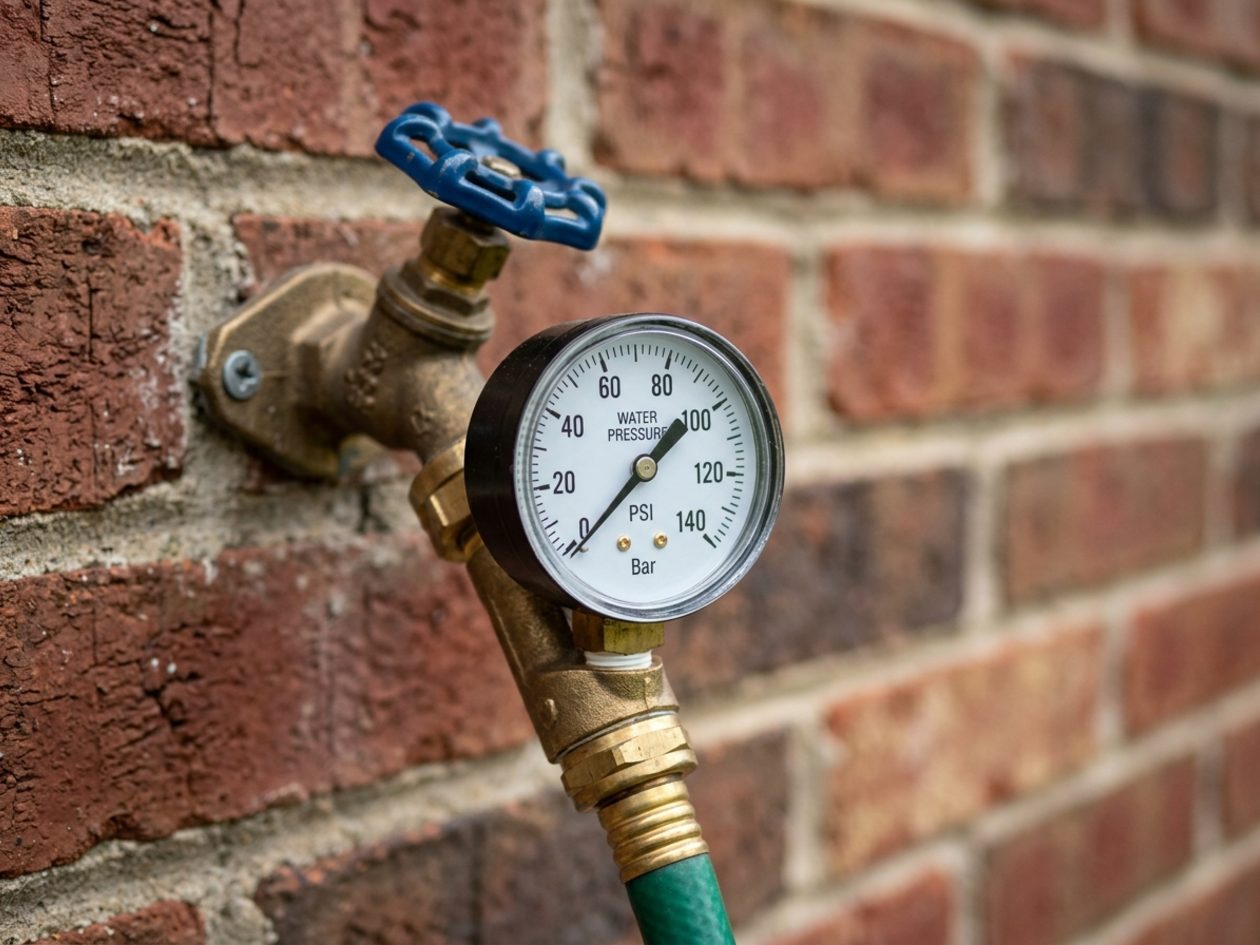 Know your two numbersCut-in and cut-out. The tank air charge should match cut-in, and a mismatch mimics a failed tank.
Aquifer water in agricultural Weld County is generally good but not uniform, and testing is the only way to know what you have rather than what your neighbor has.
Hardness is near-universal and is what scales heaters and fixtures. It is a nuisance and a cost rather than a health matter, and softening addresses it.
Iron and manganese produce staining on fixtures and laundry, and a metallic taste. These need specific filtration media rather than a softener, though some softeners handle low levels of iron.
Nitrates matter more here than in most places, because agricultural land use and fertiliser application can raise them in shallow aquifers. Elevated nitrate is a genuine health concern, particularly for infants, and it is not removed by a softener or a carbon filter, it needs reverse osmosis or a specific anion exchange system. Anyone selling you treatment without asking about nitrates in this county is not doing the job properly.
Bacteria testing is worth doing periodically on any well, and especially after any work on the well, flooding, or a change in taste or clarity.
We can arrange testing and specify treatment against the actual results rather than a generic package.
Treatment specified against results, not assumptions.
Ask about nitrates Agricultural county, shallow aquifers. No softener or carbon filter removes them.
Even on a short run, it makes sense to do everything at once: the well system checked, the water tested, the heater looked at, outbuildings winterized, and any fixture work you have been putting off.
One visit, one set of travel, and a clear picture of the whole property rather than one component of it.
Pressure tanks, pumps, switches and the cycling faults that wear pumps out.
See details →Iron, sediment and nitrate treatment specified against a real water test.
See details →Hardness treatment where the numbers justify it.
See details →Freeze work on houses, outbuildings and long exposed runs.
See details →Heater replacement on rural properties, including propane installations.
See details →House-side blockages, cleared and honestly diagnosed against septic causes.
See details →North, with a municipal town center and acreages around it.
Plumbers here →Further north into rural Weld, almost entirely on wells.
Plumbers here →South into the city, on municipal water and sewer.
Plumbers here →It is one of the closest rural areas we cover, a short run north from Greeley on Highway 85. Response here is comparable to parts of the city, which means you get rural-systems expertise without the usual rural wait.
Most Lucerne properties are on private wells rather than a municipal system, but there are shared systems in the area too. If you are unsure, look for a pressure tank in a utility room, basement or well house; that is the giveaway. We can establish it quickly on a visit.
Almost certainly a failed pressure tank bladder. The tank has waterlogged and lost the air cushion that buffers the pump, so the pump starts and stops every few seconds. It is the most common well fault, it is hard on an expensive pump, and it is a relatively cheap repair.
Commonly a thirty to fifty PSI or forty to sixty PSI cut-in and cut-out range, set by your pressure switch. Knowing your own two numbers is genuinely useful, because the tank air charge should be set to match the cut-in pressure, and a mismatch causes cycling that looks exactly like a failed tank.
Yes, and it matters more here than most places. Agricultural land use and fertiliser application can raise nitrate levels in shallow aquifers, and elevated nitrate is a genuine health concern, particularly for infants. Critically, neither a softener nor a carbon filter removes it, that needs reverse osmosis or specific anion exchange.
Annually for bacteria and nitrates is a sensible baseline, and additionally after any work on the well, after flooding, or whenever the taste, smell or clarity changes. Testing is inexpensive relative to what it tells you.
Iron, and sometimes manganese. It stains fixtures and laundry and gives water a metallic taste. It needs specific filtration media rather than a softener, although some softeners cope with low iron levels. A water test tells you the concentration, which determines what media is appropriate.
We handle the house side: the building drain, the line to the tank, blockages and backups. Tank pumping and drainfield work belong to a septic contractor, and we will say so plainly rather than charging you to find out. Knowing when your tank was last pumped helps enormously.
Yes. Propane installations are common on rural properties and need the correct unit and orifice for the fuel, plus venting appropriate to the installation. It is not a place to improvise, and it is ordinary work for us.
Beyond the house: drain and isolate any outbuilding supply rather than just insulating it, verify heat tape actually draws current, insulate stock tank lines, disconnect all hoses, and check that insulation has not sagged or been nested in by rodents. Walk it with a list in October rather than trusting memory.
Not sure if you are on a well? We can establish that quickly.
Well pumps, water testing, treatment and freeze work in Lucerne.
(970) 973-0235Answered 24 hours a day, seven days a week, every week of the year.