Copper: longevity
A properly installed copper system commonly outlasts the owner. It is rigid, it does not sag, it tolerates high temperatures, and it holds resale value in the eyes of buyers and inspectors.
Galvanized steel supply pipe rusts from the inside until the bore closes and the water discolors. Patching one section moves the failure along rather than ending it. At some point replacement is the cheaper answer.
(970) 973-0235Homeowners usually arrive at repiping after a run of small failures rather than one dramatic one. The question is whether those failures are coincidence or a system telling you it is finished. There are a handful of signs that distinguish the two, and most of them you can check yourself in ten minutes.
Discolored water at first draw. Turn on a tap that has been unused overnight and watch the first few seconds. Rusty or yellow-brown water that clears after running is corrosion product that settled inside the pipe overnight. Water that is discolored continuously points elsewhere, often the water heater. The first-draw pattern is the classic galvanized signature.
Pressure that has faded rather than dropped. Galvanized pipe closes gradually as rust builds inward, so nobody notices a day when the shower got worse. What people notice is that two fixtures can no longer run at once, or that the upstairs shower fails when someone starts the washing machine. If your measured static pressure at the hose bib is healthy but flow inside the house is poor, the restriction is in the pipe.
Repeated pinhole leaks. One pinhole is an event. Three in eighteen months, in different places, is a pattern, and it means the wall thickness across the whole system has reached the point where the next one is a matter of when.
Age and material. Galvanized steel supply pipe in this region typically gives forty to seventy years depending on water chemistry, and much of Greeley’s older housing stock is at or past that. Polybutylene, common in construction from the late seventies into the mid-nineties, has its own well-documented failure record. Knowing which you have is the single most useful fact in this whole decision, and any plumber can tell you in a minute by looking at an exposed section.
Threaded joints that weep. Galvanized systems fail at the threads first, because that is where the wall is thinnest. Dry white or rusty staining at a fitting is an early warning, not a cosmetic issue.
One or two of these means monitor. Four or five together means the arithmetic of patching has already stopped working, even if nothing has flooded yet.
Send a photo of an exposed pipe and we can usually identify the material.
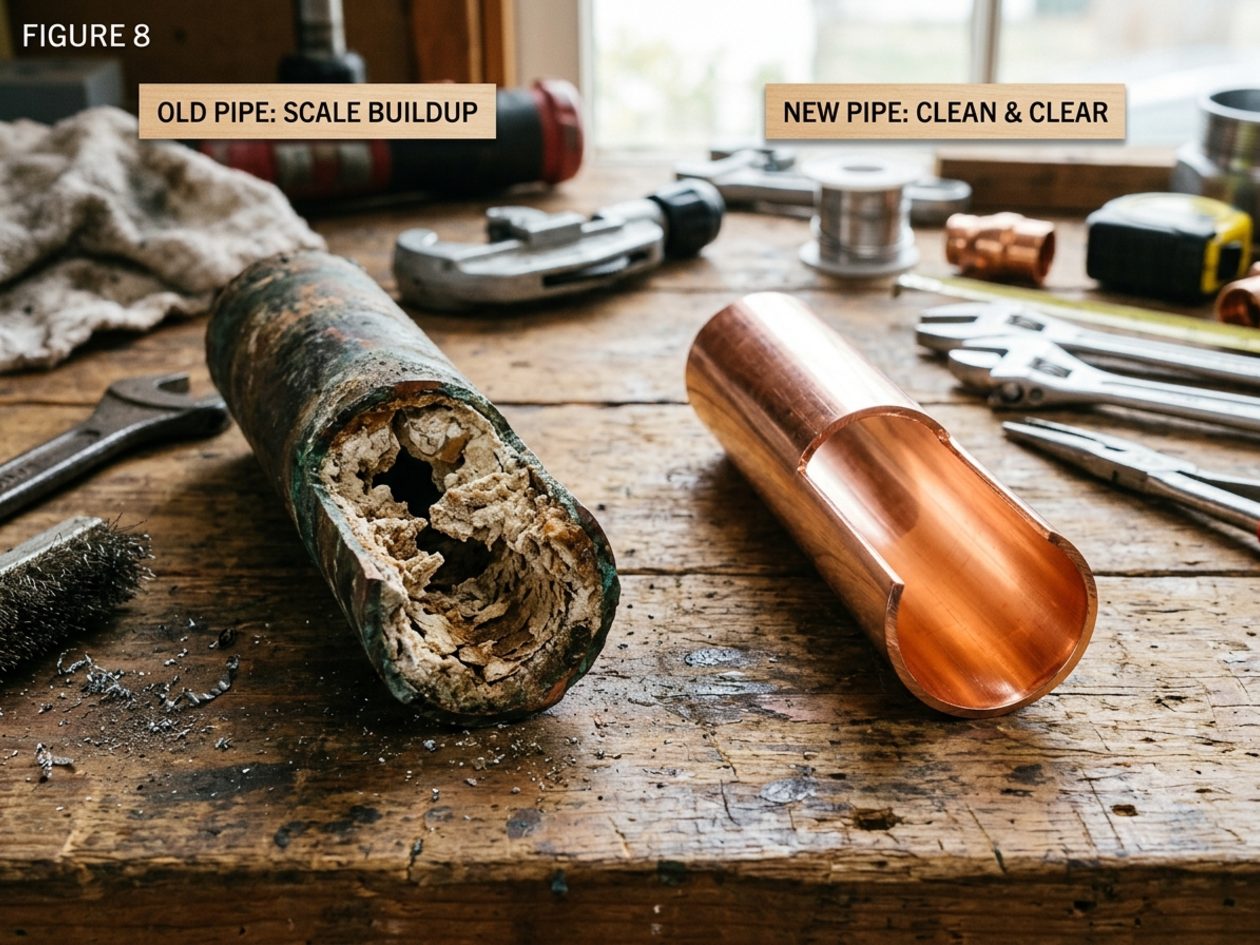 The bore closes from the insideWhich is why pressure fades instead of dropping
There is no universally correct answer here, and anyone who insists otherwise is selling what they prefer to install. Both are code-compliant, both last decades, and the right choice depends on your house and how long you plan to be in it.
A properly installed copper system commonly outlasts the owner. It is rigid, it does not sag, it tolerates high temperatures, and it holds resale value in the eyes of buyers and inspectors.
Material costs more and installation takes longer, since every joint is soldered. Rigid pipe also means more wall opening to route it, which raises the restoration bill.
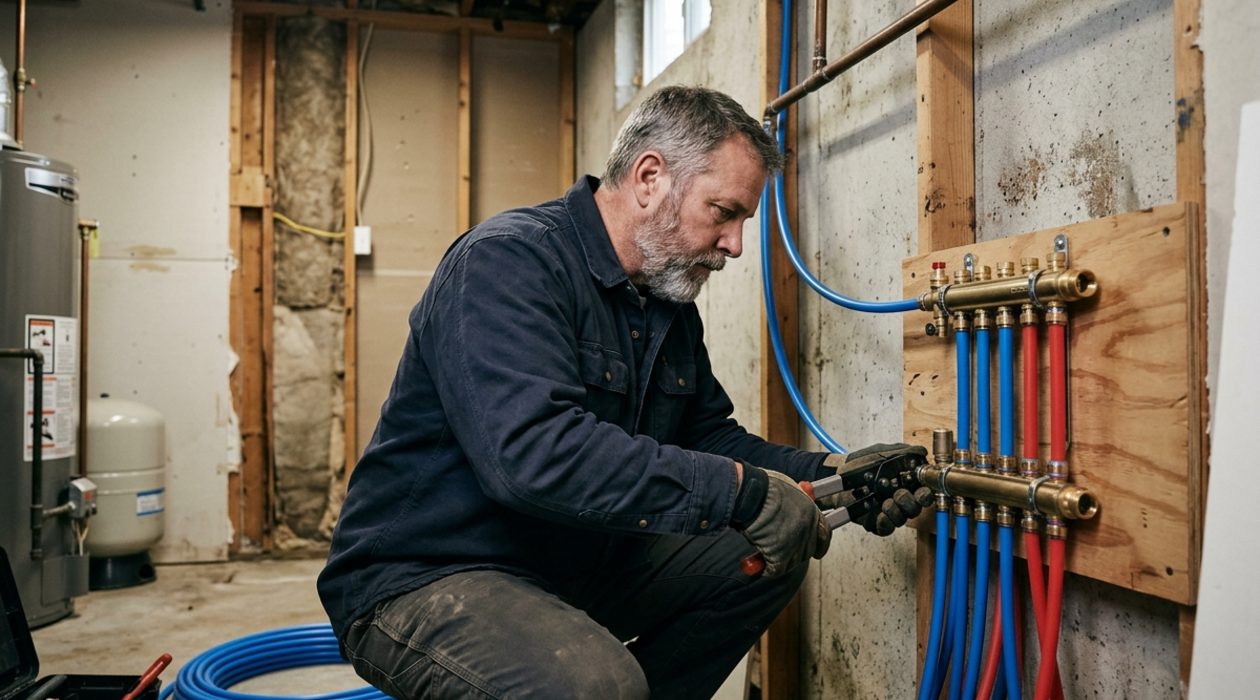
Flexible tubing can often be pulled through existing cavities from a manifold, which means dramatically fewer holes. On a finished, occupied house that difference frequently dominates the whole comparison.
It must be protected from sunlight, kept away from certain heat sources, and it needs correct fittings and support. Rodents can damage it in accessible spaces. Not every inspector treats every fitting system alike.
Aggressive or very soft water can be hard on copper over decades; hard water is hard on everything. Worth a conversation about your actual supply rather than a general rule.
Copper for exposed basement mains and anything near a heat source, PEX for the runs that have to snake through finished walls. Most sensible repipes we scope end up mixed.
A whole-house repipe is a significant project, and the instinct to split it into affordable stages is reasonable. Sometimes it is the right call. Often it costs more in total, and it is worth understanding why before you decide.
The argument for doing it in one go is that most of the cost is not pipe. It is access, labor mobilisation, permitting and restoration. Opening a wall once and closing it once is cheaper than opening it twice. A crew that is already set up, with the water off and the house dust-sheeted, adds a bathroom for far less than the same bathroom would cost as its own project next year. If you can finance the whole job, doing it once is almost always the better value.
The argument for phasing is real too. If the failures are concentrated: one bathroom, one accessible run, and the rest of the system is genuinely sound, replacing only the failing section is not a compromise, it is correct scoping. Phasing also makes sense when the house is occupied and losing water for several days is not workable, or when a kitchen or bathroom remodel is already planned and the pipes serving it can ride along with that work.
What does not work is phasing by budget without a plan. Replacing scattered sections as they fail leaves you with a hybrid system, several transition fittings, and no clear picture of what has been done. That is the situation where homeowners spend more than a full repipe would have cost and still do not know what is behind the drywall.
If you are phasing deliberately, ask for a written sequence: which sections, in what order, over what period, and with what left connecting them. A plumber who will map that out is scoping the job properly. One who simply quotes what is in front of them today is not thinking about the house.
Ask for the phased sequence in writing, which sections, in what order.
People imagine repiping as more disruptive than it usually is, and worry about the wrong parts. The realistic picture helps with planning.
Duration. A modest single-story house with accessible framing can be repiped in a couple of days. A larger two-story with finished walls throughout and multiple bathrooms runs most of a week. Add time for inspection, and for drywall repair and paint afterwards, which is usually a separate trade following behind.
Water. You will lose water during working hours, but a competent crew restores service at the end of most days. Ask directly whether you will have water overnight, because the answer changes whether you need to stay elsewhere. Plan for at least one day with no water at all, typically the changeover.
Dust and access. Cutting drywall makes fine dust that travels. Expect furniture moved away from walls, floors covered, and plastic sheeting at doorways. Clear access to walls, the water heater and the main shut-off before the crew arrives, it genuinely speeds the job.
The wall repair question. Establish before signing whether the quote includes drywall patching, texture matching and paint, or whether it stops at the pipe. Both are legitimate, but the difference is a meaningful sum, and matching existing texture is skilled work.
Permit and inspection. Repiping is permitted work and it is pressure-tested and inspected before walls close. That inspection is your protection, so do not let anyone talk you past it, and do not let walls be closed up before it happens.
Afterwards. Expect discolored water briefly as the new system flushes, and run every fixture. Then note where the new shut-offs are, because a repipe usually improves them, and label the main.
Fewer holes, same result Flexible tubing pulled through existing cavities
Locating what is failing before deciding how much to replace.
See details →The buried service line, which is a separate question from the pipes inside.
See details →Worth checking on a new system, since high pressure shortens any pipe’s life.
See details →When a section fails now and the bigger decision comes after.
See details →Frequently done alongside, since the crew is already at the connections.
See details →Fixtures and stops, often replaced at the same time.
See details →Pre-1950 houses on original galvanized supply, closing up from the inside.
Area details →Rental stock where low flow has been tolerated for decades.
Area details →Partial repipes from the 1970s that left the buried section untouched.
Area details →Houses where the pressure complaint is the pipe, not the regulator.
Area details →Not on the list? We cover Greeley, Weld County and the northern Front Range, see every service area.
Look for a pattern rather than a single failure. Rusty or yellow water in the first few seconds from a tap unused overnight, flow that has faded to the point where two fixtures cannot run together, three or more pinhole leaks in different places within a couple of years, and staining at threaded joints all point at the pipe itself rather than at any one fitting. Combine that with material and age: galvanized steel typically gives forty to seventy years here, and much of Greeley’s older stock is past that. One or two signs means monitor. Four or five together means patching has already stopped being the cheaper option.
Both are code-compliant and both last decades, so the honest answer depends on your house. Copper is rigid, tolerates heat, commonly outlasts the owner and reassures buyers and inspectors, but it costs more, takes longer to install and needs more wall opened to route it. PEX is flexible, can often be pulled through existing cavities from a manifold with far fewer holes, and on a finished occupied house that access advantage frequently decides the whole comparison. Most repipes we scope end up mixed: copper for exposed basement mains and anything near heat, PEX for runs that must snake through finished walls.
A modest single-story house with accessible framing can be done in a couple of days. A larger two-story with finished walls and several bathrooms runs most of a week. Then add the inspection, and add drywall patching and paint afterwards, which is usually a separate trade following the plumbers. Ask specifically whether you will have water overnight during the work, because a good crew restores service at the end of most days but you should still plan for at least one day without water, typically the changeover.
Less than people expect, and how much depends on the material. PEX can often be routed through existing cavities and around framing, so access is a series of strategic openings rather than continuous demolition. Copper is rigid and needs a straighter path, which means more openings. Either way the openings are planned, cut cleanly, and concentrated where the routing requires them. Ask to walk the house with the plumber before work starts so you know roughly where they will be, and settle in the same conversation whether patching and paint are in the quote.
Sometimes, and you must establish which before signing. Some companies quote to the pipe and leave you to arrange drywall, texture and paint. Others include patching, and a few include a full finish match. All three are legitimate business models, but the difference between them is a substantial sum, and matching existing wall texture is genuinely skilled work rather than a formality. Get it itemized as its own line so you can compare quotes on the same basis, and ask who is responsible if a patch cracks in the first year.
Yes, and sometimes that is the correct scope rather than a compromise. If the failures are concentrated in one accessible area and the rest of the system is genuinely sound, replacing only that section is proper scoping. What does not work is phasing by budget with no plan, replacing scattered sections as they fail. That leaves a hybrid system with several transition fittings and no clear record of what has been done, and homeowners routinely spend more that way than a full repipe would have cost. If you phase, get a written sequence: which sections, in what order, over what period.
Galvanized steel is protected by a zinc coating, and once that coating is consumed the steel beneath corrodes. Because the corrosion grows inward, the bore closes over decades while the outside still looks sound, which is why pressure fades so gradually that nobody notices a bad day. The rust that flakes off is what discolors the first water drawn each morning. Failure concentrates at threaded joints, where the wall is thinnest to begin with. None of it is reversible, and cleaning or lining a residential galvanized system is not a practical fix.
It has a well-documented failure record, particularly at fittings, and it was widely installed from the late seventies into the mid-nineties before being withdrawn. If your house is from that era it is worth identifying what you have, because failures tend to be sudden rather than gradual: the opposite of galvanized, which warns you for years. Some insurers ask about it, and some buyers’ inspectors flag it, so it can affect a sale as well as your risk. That combination is why polybutylene is one of the more common reasons for a planned rather than emergency repipe.
Yes. Repiping is permitted work, the new system is pressure-tested, and it is inspected before the walls are closed up. That inspection is protection for you rather than a bureaucratic step, so do not let anyone suggest skipping it and do not allow drywall to go back on before it has happened. Unpermitted plumbing work also has a way of surfacing at resale, when a buyer’s inspector notices work that has no record. The permit fee is a small fraction of the project.
If the cause of poor flow was corroded pipe closing off the bore, yes, and the difference is usually dramatic. What repiping cannot do is raise the pressure arriving from the street, so if the supply pressure itself is low or a failing regulator is throttling the house, new pipes will not fix that. This is why measuring static pressure at a hose bib before the project matters: it separates a restriction inside the house from a supply or regulator problem, and it means nobody is surprised afterwards. A good scoping visit takes that reading as a matter of course.
Tell us the age of the house and what an exposed pipe looks like; that starts the conversation.
Whole-house repiping and galvanized replacement across Greeley, Evans, Windsor and Weld County.
(970) 973-0235Answered 24 hours a day, seven days a week, every week of the year.