Sprinkler Blowout & Winterization
Autumn winterization that drains the backflow assembly, not just the laterals.
See details →
Newer construction, big lots and heavy irrigation. The work here is maintenance and system management far more than it is decay.
(970) 973-0235Windsor grew fast and recently. A large share of the housing stock dates from the last twenty-five years, which means PEX supply, plastic drainage, modern venting and pressure regulators fitted as standard. The classic Greeley calls: galvanized supply, clay laterals, cast iron stacks, are comparatively rare here.
What replaces them is a maintenance profile. Modern plumbing does not rot; it wears on a schedule and it depends on equipment that needs servicing. The characteristic Windsor problem is a ten- or fifteen-year-old house where nothing has ever been looked at because nothing feels old.
The items that come due in that window are predictable: the pressure reducing valve, which fails silently and leaves the house on full street pressure; the water heater, which is at the back half of its life; builder-grade fixtures, which all reach the end together; the expansion tank, which waterlogs; and the irrigation backflow assembly, which needs testing every single year regardless.
Knowing that list turns most Windsor plumbing from emergencies into appointments.
Pressure, heater, expansion tank and fixtures in one visit.
Windsor lots are generous and almost all of them are irrigated, which makes the sprinkler system the largest plumbing installation on most properties. It also makes it the most exposed.
The autumn blowout is not optional here. A system left charged over winter loses its backflow assembly to the first hard freeze: brass, outdoors, full of water, split. That is the most common and most expensive spring failure in the whole town, and it is entirely preventable. Critically, the blowout has to drain the backflow body itself, not just the lateral lines, which is the step most often skipped.
The spring side is a slow, controlled charge-up. Opening the main isolation valve wide on an empty system slams water into closed zone valves and cracks fittings. Cracked open a fraction of a turn and left for several minutes, it fills quietly.
And every irrigation connection to municipal water needs a backflow test annually, filed with the town before the deadline on the notice. We test, repair on the spot where we can, and file for you, and doing it at spring startup means one visit rather than two.
Backflow testing and filing on the same visit.
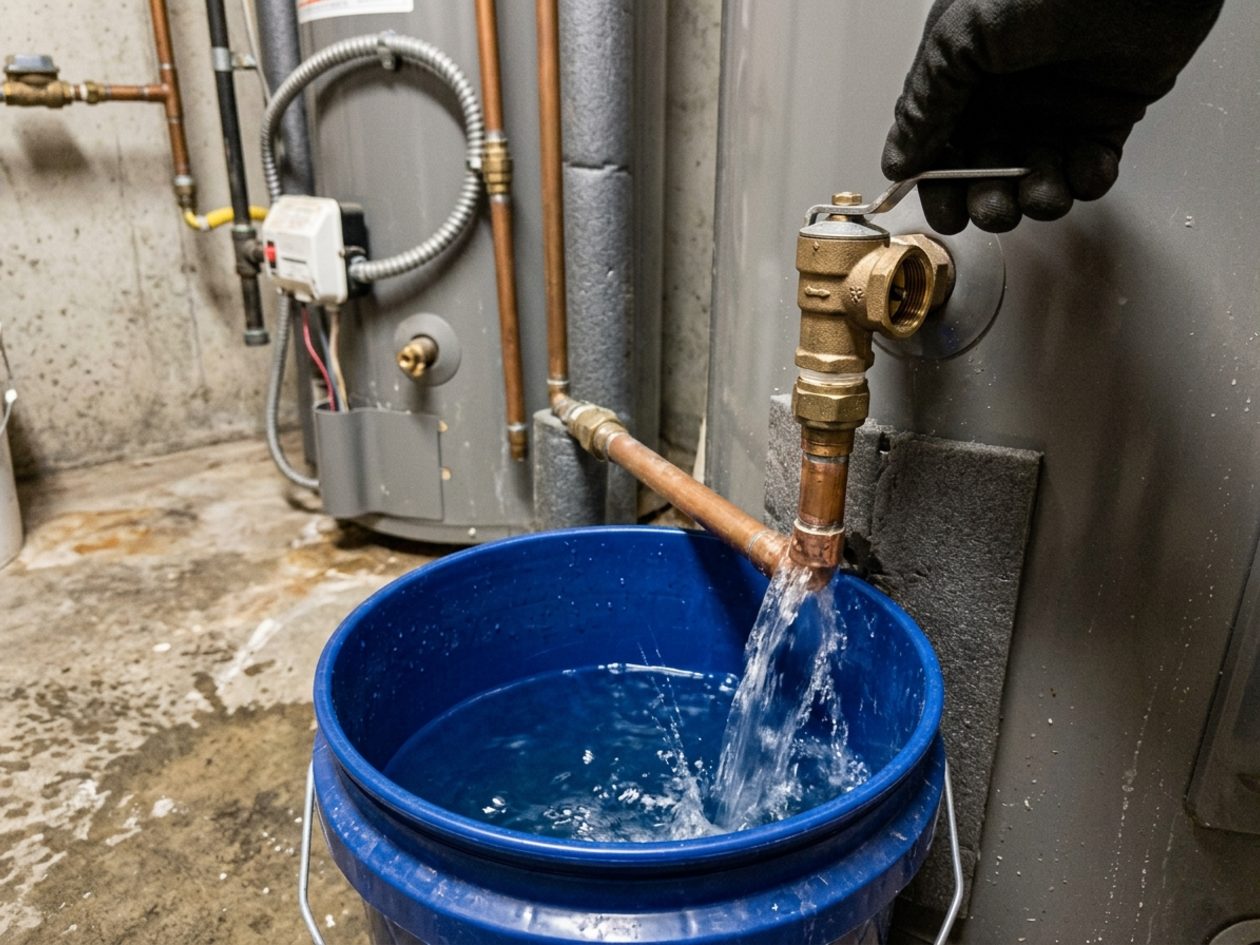 Drain the assemblyBlowing the laterals is not enough. Water left in the backflow body is what splits it.
The failure list for post-2000 construction is short and specific, and worth knowing because it is so different from what older houses do.
PEX fittings, not PEX tubing. The tubing is excellent and tolerates freezing better than copper. Crimp fittings, particularly from certain early production runs, can develop pinholes inside walls, a slow leak that reaches a ceiling before anyone sees it.
Pressure reducing valves, which have a diaphragm and a spring and fail silently after ten to fifteen years. A Windsor house of that age is worth a five-minute gauge check.
Expansion tanks, which waterlog and stop absorbing thermal expansion. The symptom is pressure that is fine in the morning and high in the evening, plus a relief valve that starts weeping.
Builder-grade fixtures, which were the cheapest thing that met spec and all reach the end of their life within the same couple of years. That is why so many houses here need several small repairs at once.
None of it is alarming. All of it is cheaper to schedule than to react to.
Five minutes with a gauge, written on the paperwork.
Know your manifold Every fixture has its own shutoff here. Most owners have never opened the panel.
Spring: irrigation startup, the backflow test, a pressure reading. Autumn: sprinkler blowout, hose bibs disconnected and drained, water heater flush. That is the whole maintenance program for a typical Windsor house.
It costs less than one emergency and it catches the failures while they are still cheap.
Autumn winterization that drains the backflow assembly, not just the laterals.
See details →Slow controlled spring charge-up with zone-by-zone repairs.
See details →Annual testing, filed with the town before your deadline.
See details →The regulator that has probably stopped regulating without telling you.
See details →Ten-year-old heaters installed with the house, replaced before they choose the date.
See details →Pinhole leaks at PEX fittings, found without opening walls on a guess.
See details →Newer still, just north, with the same irrigation-heavy profile.
Plumbers here →West towards I-25, large lots and extensive sprinkler systems.
Plumbers here →Comparable construction era a short drive east.
Plumbers here →Yes, regularly; it is one of our closer areas and dispatch is answered around the clock. Travel time varies with the hour but Windsor is a comfortable run from central Greeley, and we will give you a realistic window on the phone rather than an optimistic one.
Before the first hard freeze, which usually means the second half of October, though it varies year to year. Book earlier rather than later: every irrigation crew in the county is solid in the last fortnight, and the year you leave it late is the year the freeze comes early.
Yes, and specifically one that drains the backflow assembly rather than just clearing the lateral lines. Water left in the brass body of a backflow preventer splits it on the first hard freeze, and that is the single most common and most expensive spring failure we see in Windsor.
If your irrigation is connected to the municipal supply, yes, a test every twelve months with the report filed with the town by the deadline on their notice. The tester we send can repair a failed assembly on the same visit in most cases, and files the paperwork for you.
Slowly. Crack the main isolation valve open a fraction of a turn and leave it there for several minutes while air escapes, then open fully. Opening it wide on an empty system slams water into closed zone valves and is what cracks fittings and blows heads off risers. Bleed the backflow test cocks as it fills.
The pressure reducing valve, which fails silently around that age. The expansion tank, which waterlogs. The water heater, which is into the back half of its life. And builder-grade fixtures, which tend to reach the end all together. A single check visit covers all four.
The tank absorbs the expansion of heated water in a closed system using an air bladder. When the bladder fails the tank fills with water and stops absorbing anything, so pressure climbs whenever the heater runs. The symptoms are a relief valve that weeps and pressure that reads higher in the evening than the morning.
The tubing is very good and handles freezing better than copper. The fittings are where issues arise, particularly some crimp systems from the early rollout years, which can develop pinholes inside walls. If you have an unexplained ceiling stain in a newer house, a fitting is the first suspect.
Municipal supply pressure in this area frequently exceeds what a house is designed for, which is why builders fit a pressure reducing valve. When that valve fails, and they do, silently, the house runs at full street pressure and every seal in it starts wearing out early. A gauge on a hose bib settles it in five minutes.
Yes, including drip zones in planting beds, which are the most neglected part of any system because a failed emitter produces no visible symptom. Startup, zone-by-zone repairs, nozzle and arc correction, controller programming, the backflow test and the autumn blowout are all handled.
Windsor runs its own backflow program. We file to the right place.
Blowouts, startups, backflow testing and whole-home checks.
(970) 973-0235Answered 24 hours a day, seven days a week, every week of the year.