Pressure Regulator Repair
The most under-diagnosed issue on this side of town. Tested, adjusted or replaced.
See details →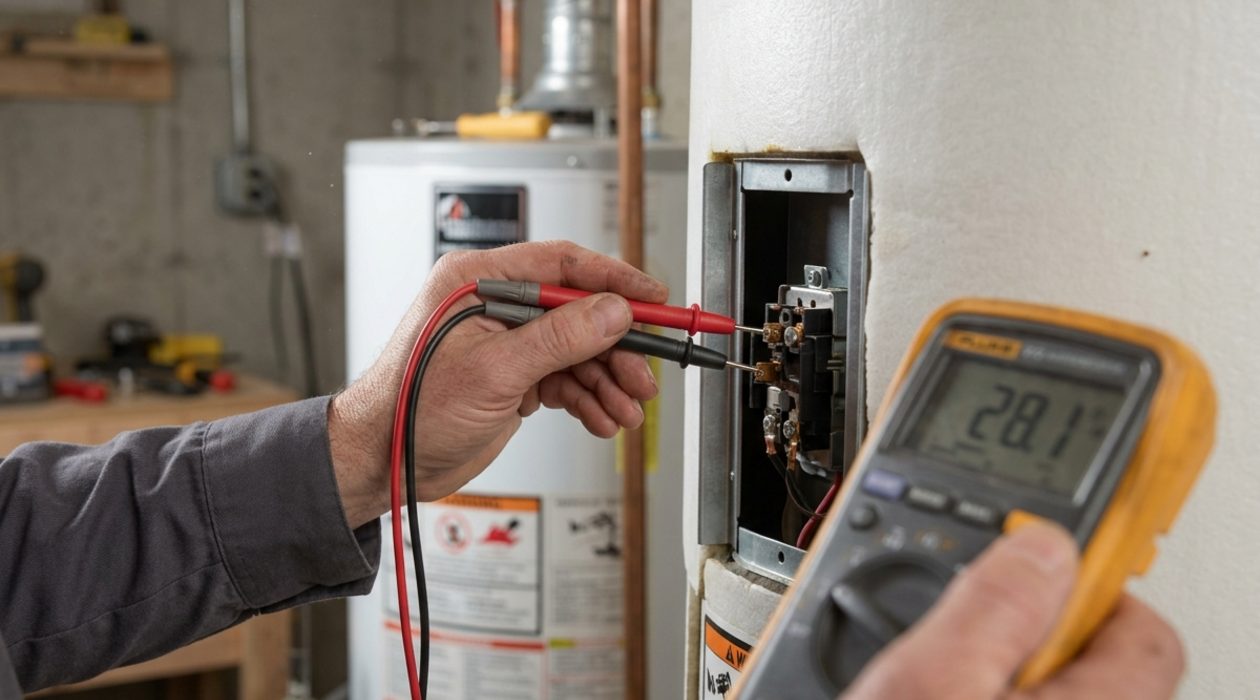
Modern subdivisions do not fail like old houses do. Out here it is street pressure, irrigation, water hardness and appliances working harder than the spec sheet expected.
(970) 973-0235Water pressure in parts of West Greeley arrives at the house considerably higher than any fixture in it was designed for. Code generally wants a house at eighty PSI or below; we routinely measure well above that on the west side, and in some pockets substantially above.
High pressure does not announce itself. The shower feels great. What it does instead is quietly shorten the life of everything with a seal in it: faucet cartridges, toilet fill valves, washing machine hoses, dishwasher inlet valves, the water heater’s temperature and pressure relief valve, and every supply riser in the house. A homeowner replacing a cartridge every couple of years usually assumes they bought a bad faucet. They did not; they have a pressure problem.
It also causes water hammer, the bang in the walls when a washing machine or dishwasher valve snaps shut, and it makes any small leak substantially worse than it would otherwise be.
The fix is a pressure reducing valve at the service entry, and a functioning one. Many West Greeley houses have a PRV already, fitted when the house was built, and a PRV is a mechanical device with a diaphragm and a spring that fails silently after ten or fifteen years. A house with a dead PRV is running at full street pressure and nobody has noticed.
Testing takes five minutes with a gauge on a hose bib. It is worth doing before you replace another cartridge.
Five minutes with a gauge. It explains a lot of recurring problems.
West Greeley has more irrigated turf per household than anywhere else in the city, and irrigation is the largest single plumbing system on most of these properties: more pipe, more valves and more failure points than everything inside the house combined.
The annual cycle here is unforgiving. A system that is not blown out properly in autumn breaks in spring, and the most expensive casualty is always the backflow assembly: brass, outdoors, full of water, and split by the first hard freeze. Every spring we replace assemblies that would have cost nothing to protect.
The second thing that matters here is the annual backflow test. Every irrigation connection to municipal water needs a test each year, filed with the water district. It is a legal requirement with a real deadline, and the notices land in the same few weeks that every tester in the county is booked solid.
Doing startup, repairs and the backflow test on one visit in spring, and the blowout on one visit in autumn, is the whole maintenance program. Two appointments a year keeps a large system alive; skipping one costs more than both.
Backflow testing and filing handled on the same visit.
 Two visits a yearSpring startup with the backflow test, autumn blowout. Skip either and you pay for both.
Newer construction does not protect you from water chemistry. The mineral content here is high enough that a house built in 2010 can have a water heater full of sediment, scaled fixture cartridges and a dishwasher struggling by 2026.
The water heater goes first and most expensively. Dissolved minerals precipitate out when water is heated and settle as a hard layer on the tank bottom, directly over the burner in a gas unit. That layer insulates the water from the flame, so the burner runs longer for the same output, the steel above it overheats, and the tank fails years early. The rumbling or popping sound from a heater is that sediment layer, and it is a countdown.
Annual flushing genuinely helps and is cheap. Softening helps more, and out here the arithmetic is more favourable than people expect once you count the heater, the fixtures, the dishwasher, the washing machine and the shower doors together.
Filtration is a separate question from softening and gets conflated constantly. A softener addresses hardness: scale, spotting, soap performance. A filter addresses taste, chlorine and sediment. Plenty of West Greeley homes want both, some want one, and a salesperson who does not draw that distinction clearly is not being straight with you.
The rumble is a countdown That sound is sediment insulating the tank bottom from the burner and cooking the steel above it.
Modern plumbing is better than what it replaced, but it has its own characteristic failures and they are worth knowing.
PEX fittings. The tubing itself is excellent and forgiving of freezing. The fittings are where problems occur, particularly on some crimp systems from the early rollout years. A pinhole at a fitting inside a wall is a slow leak that shows on the ceiling below.
Manifold systems. Many newer houses run a home-run manifold with a separate line to each fixture. It is a good system and it means an individual fixture can be isolated at the manifold. Most homeowners have never opened the panel and do not know it exists.
Tankless heaters. Increasingly common out here and genuinely good, but they need annual descaling on this water. A tankless unit that has never been serviced will start throwing temperature errors somewhere around year five, and owners often think the unit is defective.
Builder-grade fixtures. The faucets, toilets and disposals fitted at build are frequently the cheapest fixture that met spec. They reach the end of their life at about the ten-to-fifteen-year mark all at once, which is why so many West Greeley homes need several small things at the same time.
Pressure, heater, softener and fixtures in one visit.
For a typical West Greeley house, almost everything is covered by two scheduled visits: spring, for irrigation startup, the backflow test and a pressure check; autumn, for the sprinkler blowout, hose bibs and a water heater flush.
Doing both proactively costs less than one emergency, and it catches the failures: a dead PRV, a scaled heater, a cracked backflow assembly, while they are still cheap.
The most under-diagnosed issue on this side of town. Tested, adjusted or replaced.
See details →Autumn winterization that actually drains the backflow assembly, not just the laterals.
See details →Slow spring charge-up, zone-by-zone repairs and controller programming.
See details →Annual testing with the report filed for you before the deadline.
See details →Address the hardness that is scaling your heater, fixtures and dishwasher.
See details →Installation and the annual descaling these units need on Greeley water.
See details →Newer still, with larger irrigation zones and more tankless installations.
Plumbers here →Older converted housing a few miles east, on entirely different infrastructure.
Plumbers here →Just up the road, similar construction era and similar irrigation demand.
Plumbers here →Municipal pressure varies substantially across the city depending on elevation and where you sit relative to the distribution network, and parts of the west side run well above the eighty PSI that code generally wants inside a house. If your house has a pressure reducing valve and it has failed, you are running at full street pressure without knowing it.
Yes, though it never feels like one. It shortens the life of faucet cartridges, toilet fill valves, appliance inlet valves, supply risers and the water heater relief valve, and it causes water hammer. If you are replacing fixture parts every couple of years, pressure is the first thing to check rather than the last.
Put a gauge on an outside hose bib with everything in the house off. Above eighty PSI on a house that has a PRV means the valve is not doing its job. Also watch for a reading that climbs overnight, which points to thermal expansion with no working expansion tank. Both are quick fixes relative to the damage they prevent.
Before the first hard freeze, which in Greeley usually means the second half of October, though it varies year to year. Book earlier rather than later: every irrigation crew in the county is booked solid in the final fortnight, and the one year you leave it late is the year the freeze arrives early.
If your irrigation is connected to municipal water, yes: a test every twelve months, with the report filed with your water district by the deadline on their notice. We file the report for you. The natural time is spring startup, since the test requires a charged system anyway.
It is a genuine judgment call rather than a universal yes. The water here is hard enough to scale a heater and shorten fixture life, so the case is strongest if you already flush a heater annually, replace cartridges regularly and run a dishwasher daily. We can test hardness during any visit and give you the actual number rather than a sales pitch.
Sediment. Minerals precipitate out when water is heated and settle on the tank bottom over the burner. The rumble is water boiling underneath that layer. It means the burner is working harder than it should and the steel above it is overheating, which shortens tank life considerably. Annual flushing prevents it; a heavily sedimented tank may be past saving.
It happens, and in post-2000 construction it is usually a PEX fitting rather than the tubing. A pinhole at a crimp inside a wall produces a slow stain on a ceiling below rather than an obvious flood. It is worth finding properly with leak detection rather than opening drywall on a guess.
A home-run distribution manifold. Each fixture in the house has its own line back to it, with its own shutoff. It means you can isolate a single toilet or sink without killing water to the house. Most homeowners never open it, and it is genuinely useful to know it is there before you need it.
Yes, annually on this water. Scale builds inside the heat exchanger and the unit compensates until it cannot, then starts throwing temperature and flow errors that people mistake for a defective heater. A descaling flush is a straightforward service visit and it is the difference between a fifteen-year unit and a seven-year one.
Ask us to check your pressure while we are there. It costs nothing.
Pressure testing, irrigation, softening and tankless service across West Greeley.
(970) 973-0235Answered 24 hours a day, seven days a week, every week of the year.