Leak Detection
Finding water going somewhere it shouldn’t, without opening the house up.
See details →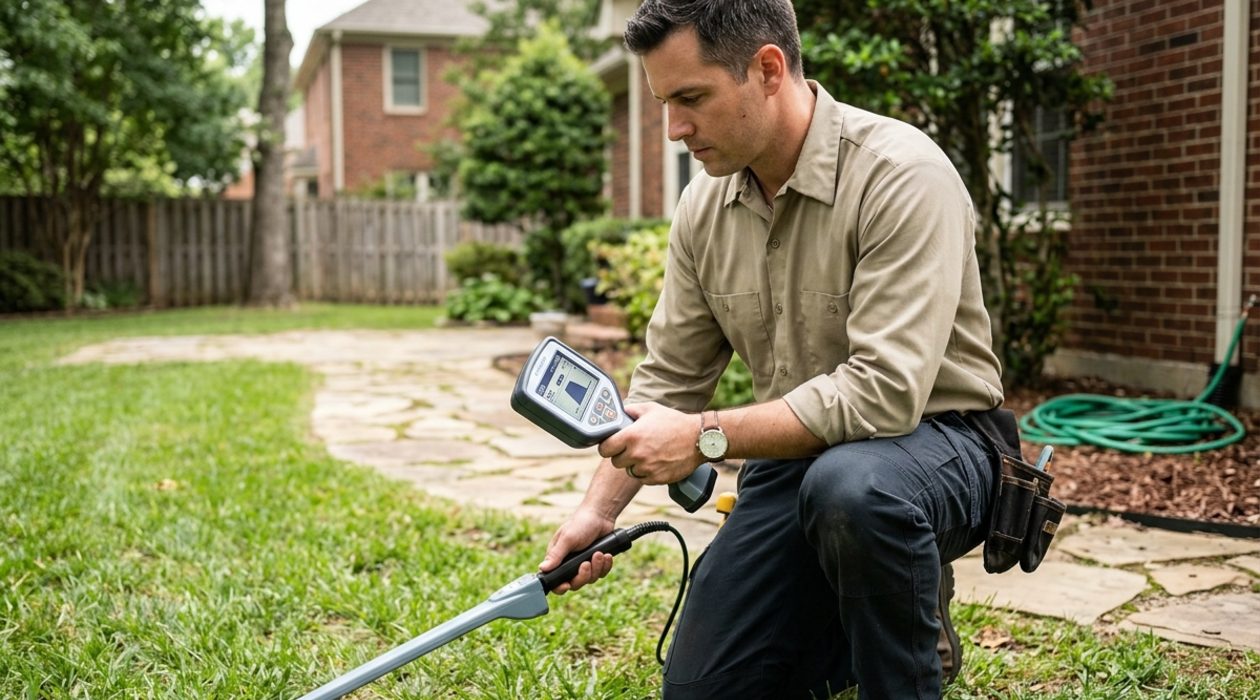
Pressure fading everywhere at once, a meter that keeps moving with the house shut off, a green patch in a dry lawn. Buried supply lines fail quietly here: clay soil moves, and shallow runs freeze.
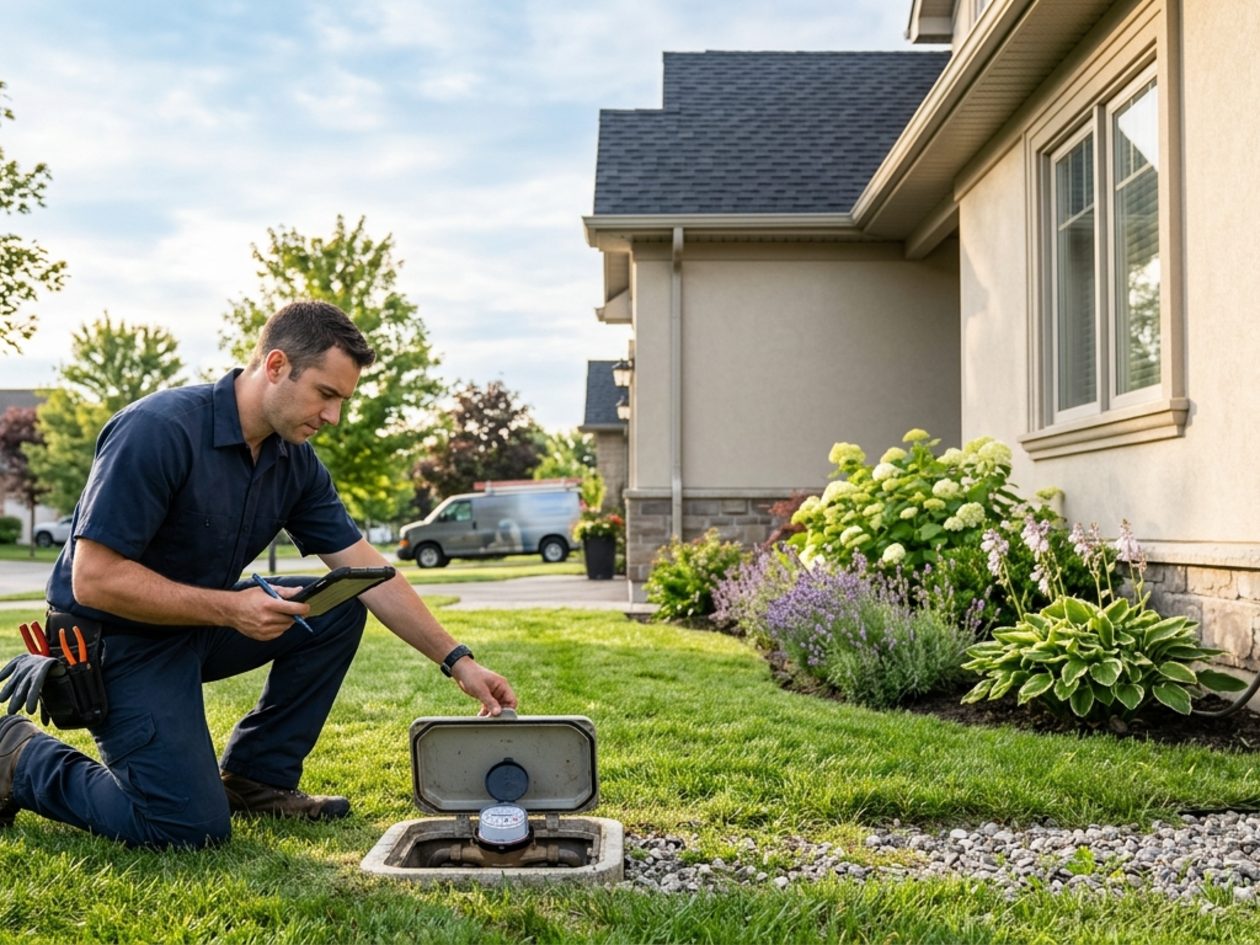
(970) 973-0235Shut off every tap, appliance and ice maker. Read the meter, wait an hour touching nothing, read it again. Movement means water is leaving the system somewhere. It costs nothing and it turns a vague worry into hard evidence.
Also worth checking: whether the irrigation system is genuinely off at its own valve. Underground sprinkler leaks account for a surprising share of “my water line is leaking” calls, and they’re a much smaller repair.
The soil moves, constantly. Expansive clay takes on water and swells, then shrinks as it dries, and it does that seasonally, year after year. A buried pipe is dragged through that cycle indefinitely. Rigid materials and jointed connections have limited tolerance for it, and the result is stressed joints, work-hardened metal and eventual failure, often at a fitting rather than in the middle of a length.
Depth isn’t uniform. A line laid below frost depth along most of its route can still run shallow at one point: over a rock, under a later addition, or where the original excavation was uneven. Frost reaches that point and not the rest, which is exactly why a service line freezes in one specific place while the remainder is fine. Surface changes matter too: adding a driveway or stripping insulating turf above a line changes how deeply frost penetrates.
Old materials are at the end of their run. Galvanized steel service lines corrode from the inside, losing bore and wall thickness until they weep at a thread or split. By the time one leak appears, the whole line is usually the same age and in the same condition, which is the argument against patching them repeatedly.
And things get built on top. Driveways, patios, sheds, retaining walls, mature trees planted without knowing where the line ran. Later construction traffic compacts soil above a pipe or nicks it outright, and the failure can appear years afterwards with no apparent cause.
Know the house’s rough age? That narrows the likely material considerably.
The lawn tells you Greener, softer, growing faster than everything around it
Excavation is most of the cost of this job, so precision before digging is where the money is saved.
Meter test and pressure isolation to establish that water is leaving, and which section of the system it’s leaving from.
Line tracing to establish where the pipe actually runs and how deep, which is frequently not where anyone assumed.
Acoustic listening, correlation between two points, or tracer gas to narrow the leak to a small area rather than a stretch of yard.
One targeted excavation over a known point at a known depth, after utility locates. Not a trench along a hopeful line.
Methods for the repair itself: a spot repair replaces the failed section where the pipe either side is sound. An open-cut replacement re-lays the full run and is right where fall, route or depth needs correcting. Directional boring installs a new line along a bored path from pits at each end, sparing driveways, walkways and mature trees, often the lowest total cost once restoration is counted. Any quote should say which method, why, what surfaces are affected, and who restores them.
Ask what’s included for sod, concrete and sprinkler repair, that’s usually the biggest hidden difference between quotes.
A leaking service line raises a question before it raises a quote: is this yours to fix? The answer decides whether you are facing a phone call to the utility or a five-figure decision, and homeowners routinely get it wrong in both directions: paying for work the city would have done, or waiting weeks for a utility that was never coming.
The general rule across most Colorado municipalities, including here, is that the water main in the street belongs to the utility, and the service line running from the main to your house belongs to you. The dividing point is usually the curb stop or the meter, and which of the two it is matters enormously, because the stretch between them can be twenty feet of pipe under a sidewalk.
So the first thing to establish is where your meter sits. In much of Greeley's older housing stock the meter is inside the basement, which typically means you own the pipe all the way from the curb stop at the property line. In newer construction the meter is often in a pit near the curb, which usually shortens your run considerably. Confirm it rather than assuming: a single call to the utility will tell you where the boundary is on your address, and it is the cheapest call you will make in this whole process.
The second thing is to report the leak regardless. Even when the pipe is unambiguously yours, the utility wants to know, and there are two practical reasons to tell them. They can confirm the main is not the source, which occasionally saves the entire job. And many utilities have some form of leak adjustment on the bill for a documented, promptly repaired leak: policies vary and none are automatic, but you cannot be considered for one you never reported.
The third is permits and the street. Any excavation that crosses a sidewalk, parkway or roadway needs permitting, and the restoration standard for public surfaces is set by the city, not by you or your contractor. This is worth knowing before you compare quotes, because a contractor who has done this work in Greeley prices city-spec sidewalk restoration correctly and one who has not will be back asking for more.
Finally, if you own an older home, ask what your line is made of before it fails. Galvanized steel and polybutylene both have known lifespans and known failure patterns, and knowing you have one changes a surprise emergency into a project you can plan and budget for.
Call the utility to confirm where your responsibility begins, then report the leak either way.
Finding water going somewhere it shouldn’t, without opening the house up.
See details →Low pressure that turns out not to be a leak at all.
See details →The same corrosion story, inside the house.
See details →Shallow buried runs that freeze in one specific spot.
See details →The other buried line, under the same moving clay.
See details →Water surfacing in the yard right now.
See details →Original galvanized service lines closing up between meter and house.
Area details →Lines run before anyone recorded depth or route.
Area details →Shallow lines under a high water table, corroding from outside in.
Area details →Long runs from the curb stop, where the leak is rarely near the house.
Area details →Not on the list? We cover Greeley, Weld County and the northern Front Range, see every service area.
A few signals, and they’re usually gradual. Pressure dropping at every fixture in the house rather than one. A water meter that keeps advancing with every tap and appliance shut off: the definitive test, and one you can run yourself. An unexplained rise in the bill. A patch of lawn greener, softer or growing faster than everything around it. Water surfacing in the yard or at the curb. In winter, an unexplained bare or thawed patch in snow along the line’s route. Any one of those is worth investigating; two together is fairly conclusive.
Turn off every tap, appliance and ice maker in the house, then find the water meter and note the reading and the position of the small leak indicator dial if it has one. Wait an hour without using any water and read it again. Movement means water is going somewhere. If the interior fixtures are all confirmed off, that somewhere is very likely the buried service line or an underground irrigation leak. It costs nothing, takes an hour, and it’s the single most useful piece of evidence you can bring to the phone call.
Three local factors compound. Expansive clay soil swells when wet and shrinks when dry, and that seasonal movement stresses buried pipe and its joints continuously. Freeze depth matters where a line was laid shallow, or where a driveway or path was later added above it, changing how deeply frost penetrates. And age and material: older galvanized steel service lines corrode from the inside out, and some vintages of other materials have known failure modes. Add ground disturbance from later construction or landscaping and you have most of the causes we see.
Generally the property owner owns and maintains the service line from the meter or curb stop to the house, while the utility maintains its side. The exact boundary varies by jurisdiction and sometimes by the age of the connection, and it determines who pays for a repair, so it’s worth establishing before work is scoped. Greeley’s water department will confirm where the boundary falls at your meter, and that answer belongs in the conversation before anyone breaks ground.
Usually, yes, and that’s the point of proper leak detection. Acoustic equipment amplifies the sound a pressurized leak makes through soil and pipe. Correlators compare timing between two points to narrow position. Tracer gas can be introduced and detected at the surface. Pressure isolation confirms which section is losing water. Combined with a line trace to establish the route and depth, this typically locates a leak within a small area, so the excavation is one targeted hole rather than a trench along a guess.
A single failure in otherwise sound modern pipe is a spot repair, and that’s a reasonable, contained job. The case for replacement builds when the material is at end of life: corroded galvanized, for instance, or when there have been multiple leaks, because a line that has failed twice will very likely fail again elsewhere. There’s also a practical argument: much of the cost is access, so if you’re already opening the ground on an old line, replacing the run rather than patching it can be better value over five years.
Often. Directional boring and pipe pulling can install a new service line along a bored path from a pit at each end, leaving driveways, walkways, established lawns and mature trees intact. Whether it suits your property depends on the route, the depth, what else is buried nearby and the soil conditions. Where it works it’s frequently the lower total cost once restoration is counted, replacing a concrete driveway section is a real expense that trenchless installation largely avoids.
Below the local frost line, with the specific depth set by code for the jurisdiction, and consistently so, a line that dips shallow at one point is vulnerable at that point regardless of how deep the rest of it is. That’s why lines sometimes freeze in one spot only, and why later changes at the surface matter: adding a driveway or removing insulating turf above a line can change how deeply frost reaches it. Any replacement should be laid to current requirements rather than matched to the old depth.
A targeted spot repair on a located leak is typically a day, including excavation, repair, backfill and restoration of the immediate area. A full service line replacement is usually one to three days depending on length, depth, surface materials and method, trenchless installation is often quicker on the plumbing but needs setup at both pits. Add lead time for permits and utility locates, both of which are mandatory and worth waiting for.
For part of the work, yes, and a good crew plans it to be as short as possible, typically the portion of one day when the new line is connected and pressure-tested. You should be told in advance roughly how long, so you can fill containers and plan around it. What matters more is what happens afterwards: the line should be pressure-tested, disinfected where required, and the water run until clear before anyone calls it finished.
Bring your meter test result, an hour with everything off tells us a great deal.
Water service line location, repair and replacement across Greeley, Evans, Windsor and Weld County.
(970) 973-0235Answered 24 hours a day, seven days a week, every week of the year.