Standard gas tank
The default in most Greeley houses. Atmospheric venting, fast recovery, modest purchase price. Reliable and easily serviced, with an eight-to-twelve-year expectation in this water.
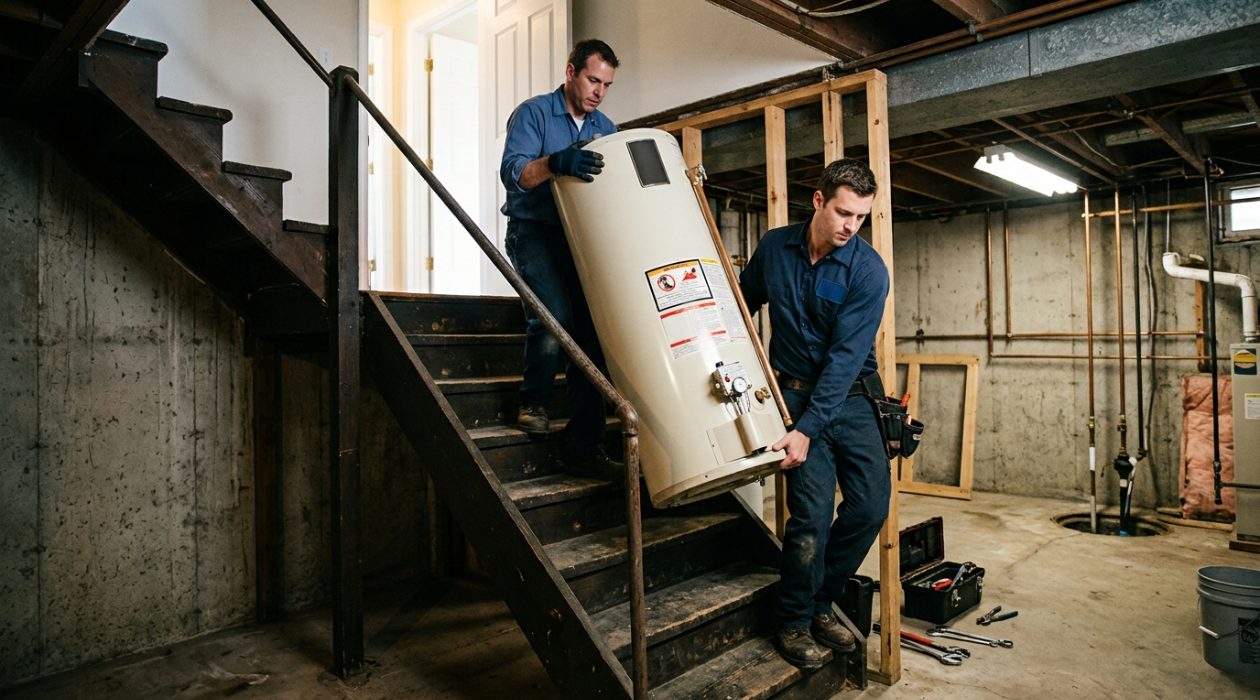
A replacement is the one chance to get capacity, recovery, venting and altitude specification right. Done properly it disappears into the basement for a decade. Done casually it becomes next winter’s emergency.
(970) 973-0235Capacity and recovery together. Gallons alone is a poor guide. What decides whether you run out is peak simultaneous demand and how fast the unit reheats. Two showers and a dishwasher at 7am is a different problem from four people showering across two hours, and the right answer to the first might be a smaller tank with a stronger burner rather than a bigger tank.
Fuel. Almost always dictated by what’s already there. Gas recovers faster and generally costs less to run; electric installs cheaply and simply but recovers slowly. Changing fuel type means either new gas piping and venting or a panel and circuit upgrade, and both deserve pricing before they get decided by default.
Altitude configuration. This is the one people outside the region miss. Less oxygen per cubic foot at 4,600 feet means gas appliances need altitude-appropriate specification and correct venting to burn cleanly and hit their rated output. It’s not optional local color, it’s the difference between the performance on the label and the performance in your basement.
Water chemistry. Northern Colorado water is hard, and a new tank starts accumulating scale from its first heating cycle. That affects whether a tankless unit is a good idea without treatment, whether a softener should be part of the conversation, and how the maintenance schedule should look. Ignoring it is how a twelve-year appliance becomes an eight-year one.
Have the age and capacity of the current unit handy, plus how many bathrooms get used at once.
Read the plate Capacity, input rating and altitude configuration
The default in most Greeley houses. Atmospheric venting, fast recovery, modest purchase price. Reliable and easily serviced, with an eight-to-twelve-year expectation in this water.
Higher efficiency, sealed combustion, plastic venting and a condensate drain. Costs more up front and needs a drain route, but noticeably cheaper to run and less fussy about combustion air.
Simplest installation, no venting, viable anywhere with sufficient service capacity. Slower recovery and higher running cost per gallon. Often the right answer where no gas line exists.
Very efficient, but it needs adequate air volume around it, produces cool air and condensate, and works best in a basement that isn’t tightly enclosed. Worth exploring where the space suits it.
What belongs in the quote: make, model and capacity. Altitude configuration. Removal and disposal of the old unit. Expansion tank, new or verified. Drain pan and its discharge route where required. Vent materials and termination. Gas sediment trap and shut-offs, or the electrical work. Permit and inspection. Warranty on parts and on labor, stated separately. A number without those isn’t comparable to another number without those.
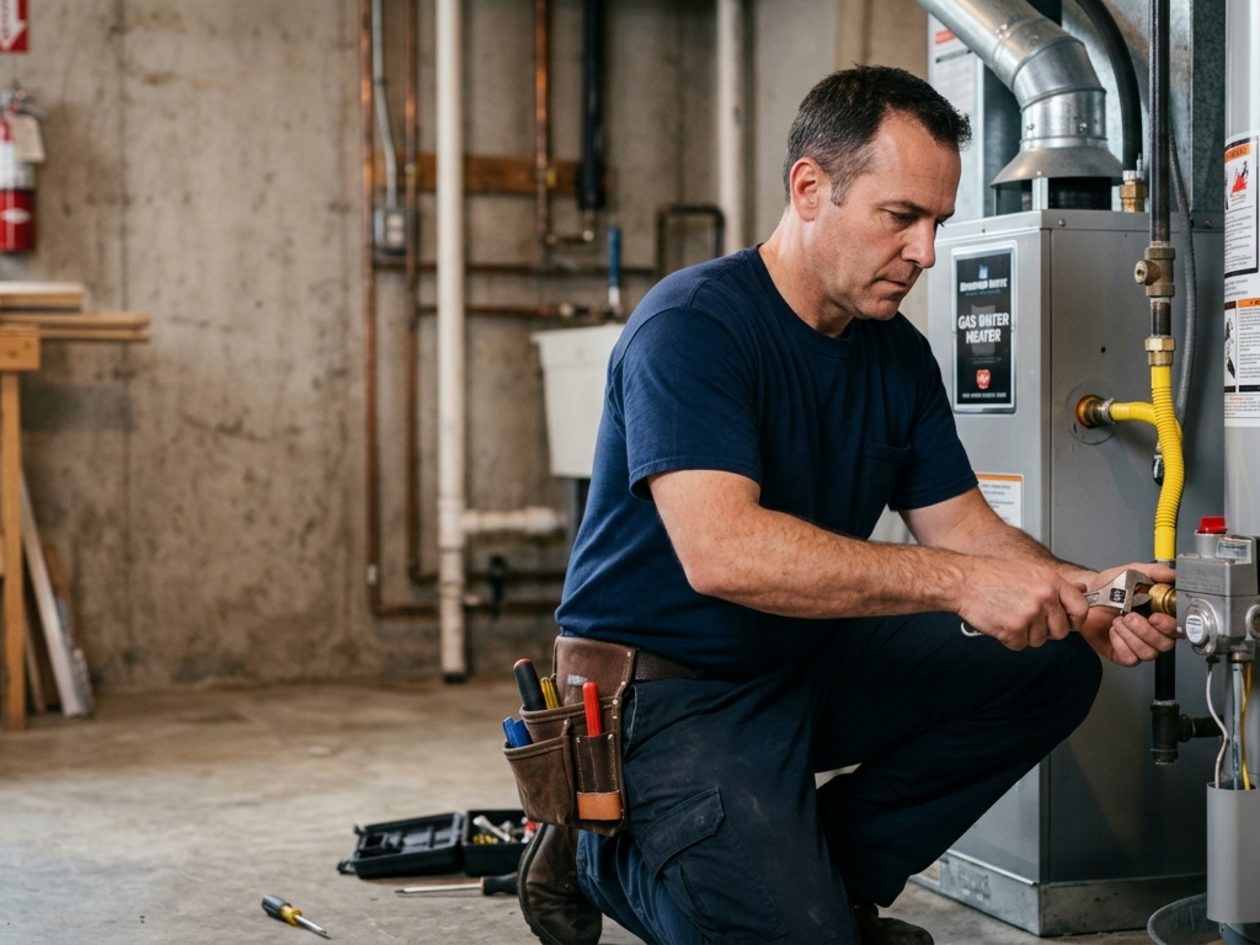
Replacing before failure means choosing the appointment. Replacing after means taking whatever is available.
A tank in its eleventh year with rumbling and rusty water is telling you something. Planned replacement means comparing options, getting a permit, choosing a convenient day and keeping hot water throughout. Emergency replacement means whatever is on the van tonight.
Two questions for any installer. “Is this unit configured for our altitude?” and “Are you pulling a permit?” The answers tell you a great deal about the rest of the work you won’t be able to see.
Homeowners replacing a heater routinely collect quotes that are wildly far apart for what looks like the same appliance, and conclude that one company is gouging them. Sometimes that is true. More often the two quotes describe genuinely different pieces of work, and the difference is in the parts nobody photographs.
The tank itself is the smallest variable. A mid-range forty or fifty gallon gas heater is close to a commodity, and the spread between brands at the same warranty tier is modest. What separates the quotes is what the installer intends to do with everything the tank connects to.
Code-required upgrades are the usual culprit. A heater installed twenty years ago sits in a world of older requirements. Bringing the replacement to current code can mean a thermal expansion tank, a drain pan and drain line, sediment trap, seismic or bracing provisions where applicable, updated venting, a proper drip leg on the gas line, and correct clearances. A quote that omits all of that is cheaper because it is not doing it, and an inspector may disagree.
Venting is the expensive surprise. Swapping a standard atmospheric heater for a high-efficiency condensing model changes the exhaust from hot flue gas up a metal chimney to cool, acidic condensate through PVC out a sidewall, plus a condensate drain. That is a real reroute, not a fitting. Conversely, removing one appliance from a shared chimney can leave the remaining furnace improperly sized to that flue, which is a genuine safety issue and a real cost.
Access and disposal matter more than people expect. A tank in an open basement next to a floor drain is a straightforward morning. A tank in a tight attic, a finished closet, or up a narrow stairwell is a different job, and the old one still has to come out the same way.
Permit and inspection should appear as a line item. If it does not, ask directly whether the work will be permitted. The saving is small and the exposure at resale is not.
Ask each company to itemize those five things. Once they are all listed, the quotes usually converge, and the remaining gap is labor rate and warranty, which is a comparison you can actually make.
Ask for permit, venting, expansion tank and disposal as separate lines; that is where the difference hides.
Whether this one still has life in it.
See details →The endless-hot-water alternative, and its hard-water caveat.
See details →Protecting the new one from the water that killed the old one.
See details →Treating the cause rather than replacing casualties every decade.
See details →House pressure, which decides how hard the relief valve works.
See details →Where a fuel change or a new line is part of the job.
See details →Tight utility rooms where the new unit has to fit the old space.
Area details →Original installs reaching thirty years, replaced before they fail.
Area details →Replacements that need a pressure check done at the same time.
Area details →Straight swaps, permitted and inspected, without a sales process.
Area details →Not on the list? We cover Greeley, Weld County and the northern Front Range, see every service area.
Sizing is about peak demand rather than household size alone. A 40-gallon tank suits a couple or a small family with staggered showers; 50 gallons is the common choice for three or four people; 75 gallons or more suits large households, multiple bathrooms used simultaneously, or a big soaking tub. What matters as much as capacity is recovery rate, how fast the unit reheats, because a smaller tank with strong recovery can outperform a larger one with weak recovery. A plumber should ask about your morning routine, not just count bedrooms.
Mostly determined by what the house already has. Gas units heat faster and cost less to run where natural gas is available, which is most of Greeley, but they need proper venting and combustion air. Electric units are simpler, cheaper to install, and viable anywhere there’s adequate service capacity, but slower to recover and generally more expensive per gallon heated. Switching from electric to gas means adding a gas line and venting; switching the other way often means a panel and circuit upgrade. Neither is trivial, so it’s worth pricing before deciding.
At roughly 4,600 feet there is less oxygen available per cubic foot of air, so gas appliances need altitude-appropriate specification or derating and correctly sized venting to burn cleanly and safely. A unit configured for sea level can run rich, waste fuel, produce more combustion by-product and underperform against its rated output. This is one of the strongest arguments for having the specification conversation before purchase, and against buying a heater online on price alone and handing it to an installer.
A straightforward like-for-like swap in an accessible basement is usually three to five hours: drain and remove the old unit, set the new one, reconnect water, gas or electrical, fit or replace the expansion tank, connect venting, fill, purge air, fire and test. Add time for a location change, a size change that affects venting, code upgrades required at replacement, or awkward access, a tight stairwell or a crawlspace turns the removal itself into a significant part of the day.
Water expands as it heats, and in a house with a closed system, which a pressure-reducing valve or a check valve at the meter creates, that expansion has nowhere to go. Pressure spikes with every heating cycle, which stresses the tank, the relief valve, fixtures and supply lines. An expansion tank gives that volume somewhere to expand into. Most jurisdictions require one on a closed system, and a great many older installations either lack one or have one that failed years ago and nobody checked. It’s a small part that prevents a class of expensive problems.
You can, but weigh what you lose. A supplied-and-installed unit typically comes with the installer standing behind both the appliance and the labor, correct altitude specification, and the right venting and connection parts on the van. Homeowner-supplied units frequently arrive as the wrong capacity, the wrong vent configuration, or without required accessories, and warranty claims become a conversation between you and a retailer. If you do want to buy your own, get the specification from a plumber first and buy exactly that.
In most jurisdictions, yes: water heater replacement involves gas or electrical connections, venting and pressure relief, all of which are inspected items. That inspection is protection for you: it verifies venting and combustion safety, which is the part of this appliance that can genuinely hurt people. It also matters at resale. Any installer who suggests skipping the permit is offering to save you a small fee by removing your only independent check. Greeley’s building division can tell you the current requirement and fee for a heater replacement, and any installer quoting the job should already know both without looking them up.
Replacing an appliance usually means bringing its installation up to current requirements, which can add items the old unit didn’t have: seismic or general strapping, a drain pan with a routed discharge where the unit sits above finished space, an expansion tank, a correctly sized and terminated relief discharge pipe, updated venting materials, sediment traps on the gas line, and proper shut-offs. These aren’t upsells: they’re what an inspection will look for, and they should be itemized in the quote rather than appearing on the invoice.
Usually where the old one was, since the connections and venting are there. There are good reasons to move one: a unit in a finished area with no drain pan is a flooding risk, a heater in an unheated space is a freezing risk, and relocating closer to the main bathroom group reduces the wait for hot water. Relocation adds cost: new venting, extended supply and gas lines, sometimes a condensate route, so it makes most sense when it solves a real problem rather than for tidiness.
Where the shut-offs are for water and gas or electric. What the expansion tank does and roughly when to check it. What temperature it’s set to and why: around 120°F is the usual recommendation for scald safety, efficiency and slower scale formation. When the first flush should happen, which in this water is genuinely important. The warranty terms for parts and labor separately. And the permit and inspection status. If nobody walks you through those, ask.
Tell us the current capacity, the fuel, and how many showers run at once.
Water heater installation across Greeley, Evans, Windsor, Eaton and the Weld County communities.
(970) 973-0235Answered 24 hours a day, seven days a week, every week of the year.