Ion-exchange softener
Actually removes calcium and magnesium. You get lather, softer laundry, no spotting and no new scale. Needs salt, a drain connection and periodic attention. The full solution to hardness.
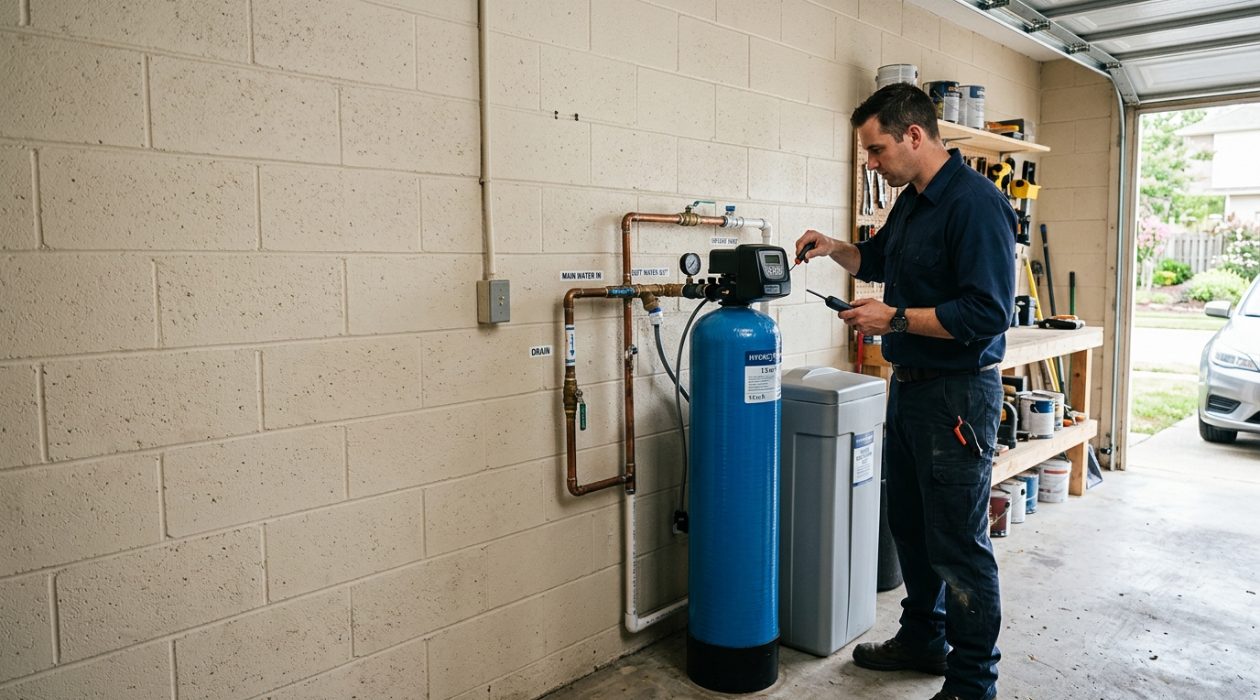
Hard water is the quiet tax on northern Colorado plumbing: scaled heaters, spotted glasses, appliances retiring early. Softening treats the cause rather than replacing the casualties one at a time.
(970) 973-0235Nobody gets a line item for water hardness. You pay it in other places, over years, and because it arrives as separate small expenses it rarely gets recognized as one recurring problem.
The water heater takes the worst of it. It’s the one appliance that concentrates dissolved mineral, and it does so every single day. Sediment accumulates, capacity drops, the burner works harder for the same result, and the tank’s life shortens. A heater reaching eight years instead of twelve is a hard-water cost, not bad luck.
Fixtures wear out early. Scale forms on faucet cartridges, shower valves, aerators and toilet fill valves. It’s abrasive, it holds valve seats open, and it turns a component with a fifteen-year life into one you replace every few years.
Appliances retire early. Dishwashers, washing machines, ice makers, humidifiers and coffee makers all contain small heated passages and small valves, which is precisely what scale attacks first.
You use more of everything. Hard water resists lathering, so soap, shampoo, detergent and dishwasher product all get used in larger quantities to achieve the same result. Laundry comes out stiffer and colors fade faster.
And you clean more. The film on glass shower doors, the spots on dishes, the ring in the kettle, the crust on the shower head. That’s time and cleaning product spent on a symptom, every week.
A test on your own tap is the right starting point, hardness varies by source and by address.
Visible on the outside The same deposit is forming inside the pipes
“Water treatment” covers technologies that solve genuinely different problems. Buying the wrong one is how people end up disappointed by equipment that’s working exactly as designed.
Actually removes calcium and magnesium. You get lather, softer laundry, no spotting and no new scale. Needs salt, a drain connection and periodic attention. The full solution to hardness.
Changes how minerals behave so they’re less likely to stick as scale. Reduces scaling without salt, drain or regeneration, but the water is still hard, so lather and spotting don’t change.
Addresses taste, odour, sediment, chlorine and specific contaminants. Does essentially nothing about hardness. Frequently the right companion to a softener, not a substitute for one.
How to choose: name the problem first. If glasses spot, soap won’t lather and the heater rumbles, you have a hardness problem and you want a softener. If the water tastes or smells wrong, you have a quality problem and you want filtration. If your only concern is scale in pipes and equipment and you can’t accommodate salt or a drain, a conditioner is a legitimate compromise. Plenty of houses here justifiably end up with both softening and filtration, they’re doing different jobs.
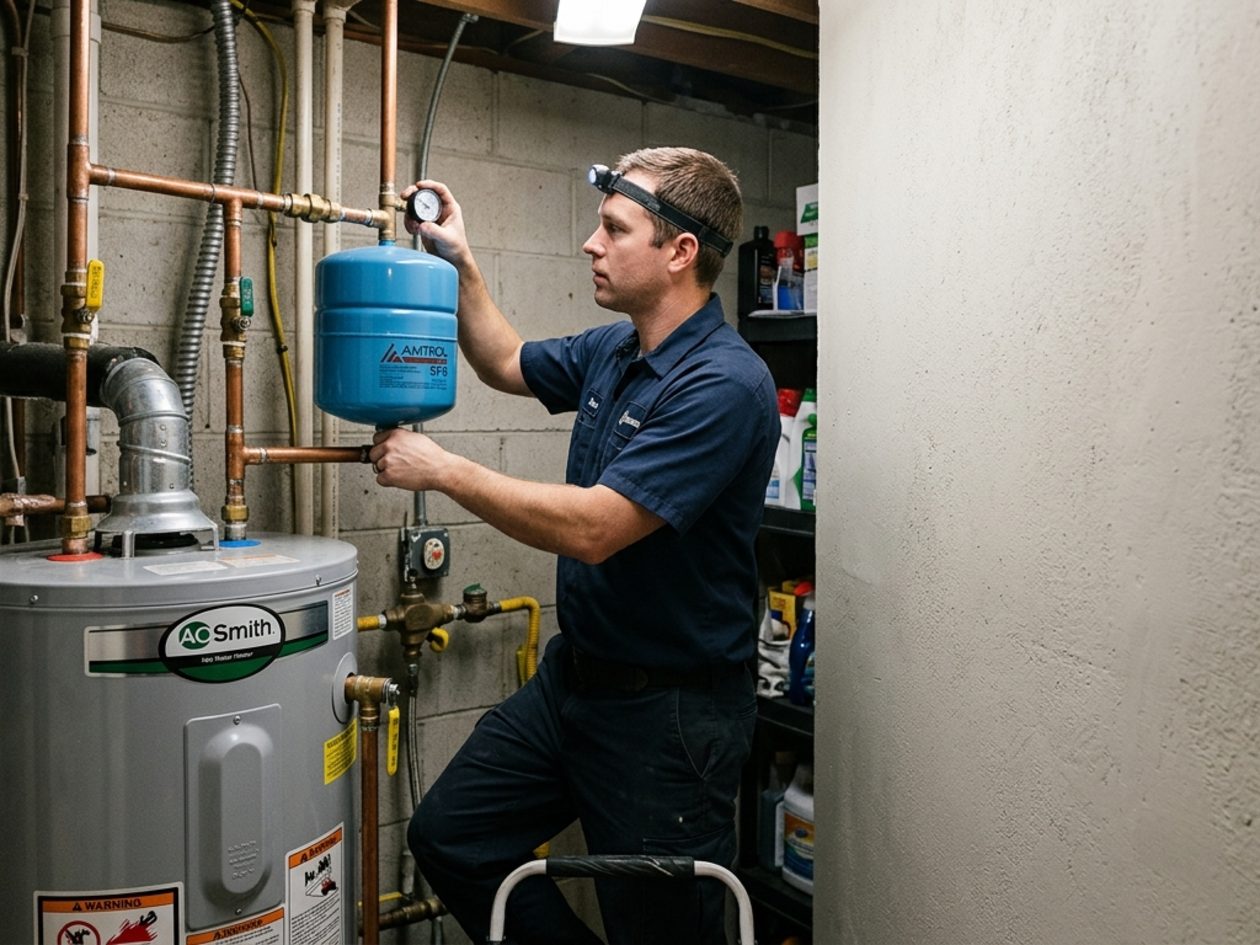
On a well? Say so, well water is often harder and may need iron or sulfur handled too.
The most common reason a softener stops working is a hard crust of salt that forms above the water line in the brine tank. The tank looks full, the unit looks fine, and no brine is being drawn. Break it up, and it works again. Check for it a couple of times a year.
If you’re fitting a tankless heater, treat softening as part of that project rather than a separate purchase. Narrow heat-exchanger passages and untreated hard water is the combination behind most premature tankless failures in this region.
The purchase price of a softener is the part everyone compares. The ownership cost is the part that determines whether you are happy with it in five years, and it comes down to three things: salt, water, and how well the unit was sized and set up in the first place.
Salt is the obvious one and usually the smallest. A typical household goes through a bag every few weeks to a month or so, depending on hardness, household size and unit efficiency. Buying in bulk helps. What matters more than the price per bag is which type you use, and for most systems, clean pellets are worth the modest premium over rock salt, because the insoluble matter in cheaper salt is what silts up the brine tank and eventually causes problems.
Water used for regeneration is the cost people never count. Every regeneration cycle flushes the resin bed and sends that water down the drain. This is exactly where the difference between a demand-initiated unit and a timer-based one shows up. A timer regenerates on a schedule whether the resin is exhausted or not, including while you are away for two weeks. A metered unit regenerates based on actual water used. Over a year the metered unit uses meaningfully less salt and less water, and the price difference between the two is usually recovered well within the life of the appliance.
Sizing drives both. A softener too small for the household regenerates constantly: more salt, more water, more wear, and hard water breaking through at peak demand. Oversized, it sits between regenerations long enough for the resin bed to channel and lose efficiency. This is why the sizing conversation is not a formality: it is the decision that sets your running cost for the next fifteen years.
Maintenance is modest but real. Expect to check the brine tank periodically for a salt bridge or a build-up of sludge, replace the resin bed once in the unit's life: commonly somewhere around the ten to fifteen year mark, sooner if the water carries iron or chlorine, and have the injector and valve serviced if regeneration performance drops.
Set against that is the offset, which is what makes the case: fewer scale-related failures in the water heater, longer life from dishwashers and washing machines, less soap and detergent, and no descaling of fixtures. It is a genuine saving in a hard-water area like ours, but it is a saving that only materialises if the unit is sized properly and actually maintained.
Ask for a metered demand-initiated unit sized to your real hardness and household, not a stock model.
Taste, odour, sediment and specific contaminants.
See details →Dealing with the scale already in the tank.
See details →Where softening moves from beneficial to close to essential.
See details →Properties outside city water, often with harder supply.
See details →Scaled aerators and worn cartridges, hard water casualties.
See details →Pipe already narrowed by decades of deposit.
See details →Hard supply and new fixtures, which is when owners notice.
Area details →Large households where the sizing calculation actually matters.
Area details →Town water hard enough to scale a heater inside a decade.
Area details →Acreage properties where well hardness is higher again.
Area details →Not on the list? We cover Greeley, Weld County and the northern Front Range, see every service area.
Northern Colorado water is genuinely hard, it carries meaningful dissolved calcium and magnesium picked up from the mineral geology the supply passes through. Hardness varies by source, season and neighborhood, and it differs again for properties on private wells, which are often harder still. Rather than quote a figure that may not match your address, the useful step is a test on your own tap. Greeley publishes an annual water quality report giving the hardness range for each source it draws on, which is a useful reference point, but it is the test at your own tap that sizes the softener.
White crusty deposits on faucet aerators, shower heads and glass. Spotting on dishes straight out of the dishwasher. Soap and shampoo that won’t lather, and a film left on skin and hair. Stiff, dull laundry. A water heater that rumbles. Coffee makers and humidifiers scaling up within months. Appliances: dishwashers, washing machines, ice makers, failing earlier than they should. Individually these are annoyances; collectively they’re a bill you’re already paying in replacements.
Ion exchange. Water passes through a bed of resin beads carrying sodium or potassium ions; the calcium and magnesium in the water swap places with them and stay behind on the resin. When the resin is saturated the unit regenerates, flushing brine from the tank through the bed to reverse the swap and rinse the hardness minerals to drain. The result at your tap is water without the mineral that forms scale.
No, if it’s working properly. The sodium added is proportional to the hardness removed and is a small amount in absolute terms: far less than most people assume, and less than plenty of everyday foods. A salty taste indicates a fault, usually a regeneration cycle not rinsing properly or a control valve problem, and it should be investigated rather than tolerated. Households wanting to avoid sodium entirely can use potassium chloride instead, at a higher running cost.
A common approach is to soften the whole house but leave one kitchen tap on unsoftened supply for drinking and cooking, often with a filter on it. That gives you scale-free water for the heater, the fixtures and the appliances while keeping the mineral content in your drinking water. It also matters for anyone on a sodium-restricted diet. Outside hose bibs are usually left unsoftened as well: there’s no benefit in softening water for the lawn, and it wastes capacity.
Sizing comes from your water’s hardness multiplied by household daily usage, which gives the grains of hardness the unit must remove between regenerations. Undersized units regenerate constantly, wasting salt and water and wearing the control valve; oversized units cost more than necessary and can sit long enough between cycles for the resin bed to channel. A proper specification starts with a hardness test on your tap and an honest count of occupants and fixtures, not a guess from square footage.
Very little, but not nothing. Keep the salt topped up and check for a salt bridge: a hard crust that forms above the water level and stops the brine drawing properly, which is the most common reason a softener quietly stops working while looking fine. Clean the brine tank occasionally. Check the resin every several years. Confirm regeneration is actually happening on schedule. Resin generally lasts a decade or more, and control valves are serviceable.
Properly configured, no. The concern occasionally raised is that softened water is slightly more aggressive toward certain metals, but at normal residential settings this isn’t a practical problem, and the alternative, scale steadily narrowing the bore of every pipe and coating every heat exchanger in the house, is far more damaging. What genuinely matters is correct installation: proper bypass, a drain connection made with an air gap, and the unit plumbed so outside hose bibs and any unsoftened tap stay separate.
They do something different, and the distinction matters. Template-assisted crystallisation and similar technologies don’t remove hardness minerals; they alter their form so they’re less inclined to adhere as scale. That can reduce scaling in pipes and heaters, which is a real benefit, but the water is still hard, so you won’t get better lather, softer laundry or an end to spotting. They also need no salt, no drain and no regeneration, which suits some situations well. Choose based on which problem you’re solving.
It’s the single most direct benefit. A water heater is where hard water concentrates, every gallon heated leaves mineral behind, so removing that mineral upstream addresses sediment build-up, the rumbling, the lost capacity, the wasted fuel and the accelerated tank corrosion in one move. For tankless units in this area it’s close to essential, because narrow heat-exchanger passages are far less tolerant of scale than a big tank is.
City water or a well? That changes the recommendation considerably.
Water softener sizing and installation across Greeley, Evans, Windsor, Eaton and Weld County.
(970) 973-0235Answered 24 hours a day, seven days a week, every week of the year.