Burst Pipe Repair
A split line or a blown fitting: cut out, replaced, and the cause addressed.
See details →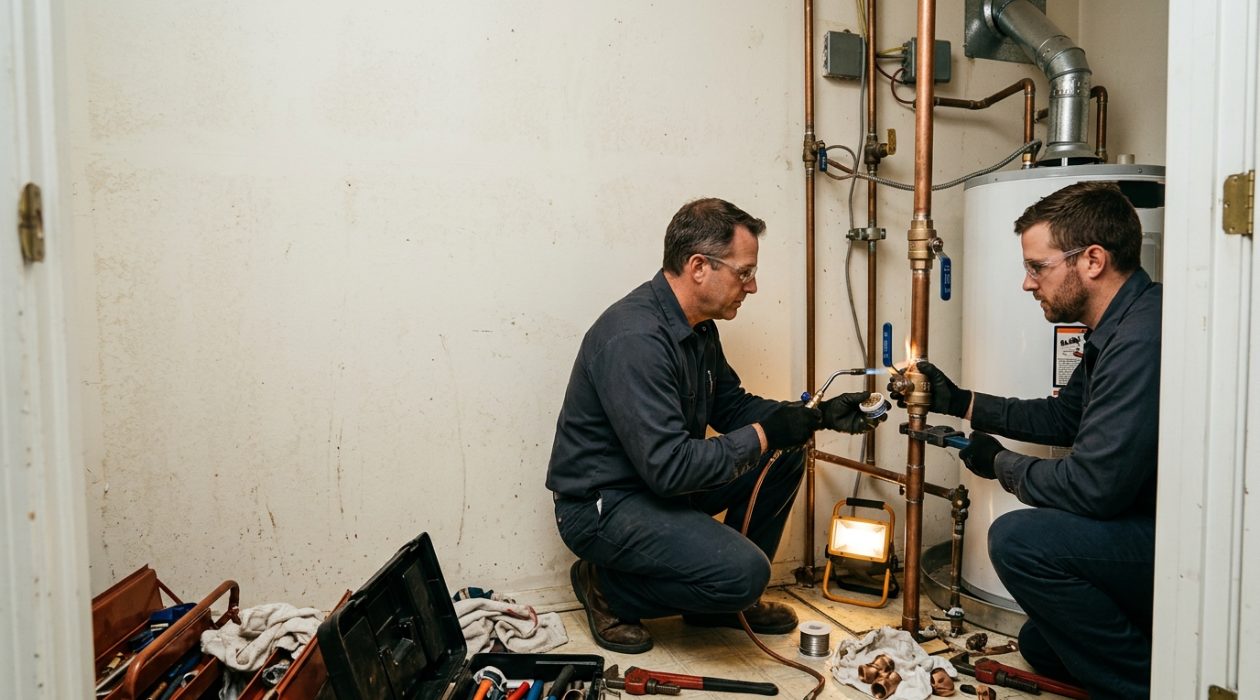
Water you can’t stop, sewage in the basement, or no water at all on a freezing night. Call and we’ll route an emergency-capable local plumbing pro to your address, then talk you through what to shut off while you wait.
(970) 973-0235Fixture stop for one sink or toilet. Main shutoff for a supply line, the heater, or anything you can’t place.
If water is near outlets, the furnace or a panel. Never step into standing water to reach a breaker.
Open the lowest faucet in the house after closing the main so the pipes empty away from the leak.
Tell us what you see and hear. We’ll get someone moving while you’re still on the line.
You don’t need to make this call alone, describe it and we’ll tell you. But here’s roughly how a plumber sorts it.
Frozen and burst supply lines. These arrive in clusters, on the first hard freeze of the season and again during any multi-day cold snap. The pipes that fail are almost never the ones in heated space: they’re in crawlspaces, unheated garages, exterior walls and along basement rim joists where cold air tracks in. A pipe that freezes at 2am often doesn’t burst until mid-morning, when the thaw releases the pressure that built up behind the ice plug.
Sewer backups into the lowest fixture. A basement floor drain is the lowest opening in the house, so a restricted lateral shows itself there first. In the older neighborhoods the culprit is frequently a clay-tile line with root intrusion at the joints; in newer areas it’s more often grease, wipes, or a settled section sitting in expansive clay soil that has moved.
Water heater failures. Hard water shortens tank life here, and tanks tend to fail at the worst possible moment: the first cold morning, or with a full house over a holiday. The distinction that matters is whether water is coming from a fitting or from the tank seam: the first is a repair, the second is a replacement, tonight or tomorrow.
Sump pump failures during thaw and storms. Snowmelt and spring rain raise the water table, and a pump that sat dry all winter picks that exact week to seize, or its float sticks, or its discharge line is still frozen shut. Power outages and heavy storms travel together, which is why battery backup earns its keep in this county.
Supply-line and shutoff failures. Braided washing-machine hoses, toilet supply lines, refrigerator ice-maker lines and old gate valves that seep when turned. These are small parts that release a very large amount of water, and they’re the reason knowing your main shutoff is the single most useful piece of household knowledge you can have.
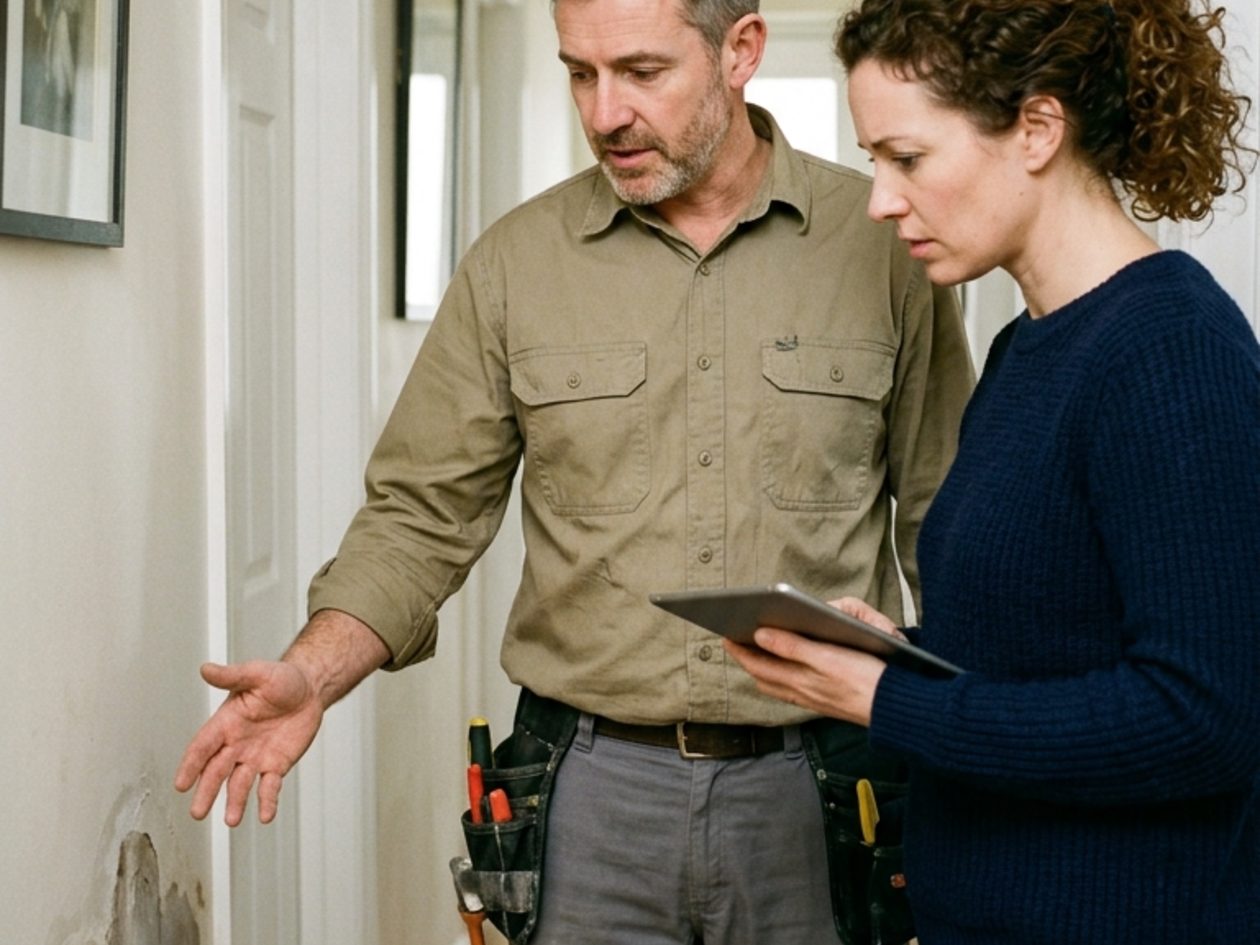 Gravity does the restA pinhole upstairs shows up two floors down
Isolate the failure as tightly as possible: ideally one branch rather than the whole house, so you still have water while the repair happens. If the main is the problem, that comes first regardless.
Visible water is rarely where the fault is. Tracing a leak back along a joist, pressure-testing a line, or putting a camera down a lateral is what separates a repair from a recurrence.
You hear what’s wrong, what it takes, and what it costs before work starts, including whether tonight’s job is the full repair or the part that makes the house safe until daylight.
On temporary fixes: sometimes the right answer at midnight genuinely is a controlled shut-off and a return visit; you can’t excavate a sewer lateral in the dark, and you shouldn’t open a wall you can’t close. What you should never get is a temporary fix presented as a permanent one. Ask directly: is this finished, or is this holding until something else happens?
Every emergency call has the same first few minutes: the homeowner is looking for a valve they have never used, in a place they are not sure about, holding a phone torch. That search is where most of the water damage happens. It is entirely preventable, and doing it once on a calm afternoon changes how the next incident goes.
Find the main shut-off and turn it off and on. Locating it is not enough, you need to know it works. In most Greeley houses it is on the wall where the service line enters, often in the basement near the front of the house, sometimes near the water heater or in a utility closet. Older homes have a gate valve with a round handle, which is the type most likely to seize after decades untouched or to fail once turned. Exercising it now, while a plumber can replace it as scheduled work, is far better than discovering it will not close during a burst. If it turns hard or weeps afterwards, get it replaced.
Label it, and label the others. A tag on the main valve is worth more at two in the morning than any amount of remembering. While you have the tags out, label the water heater's cold inlet valve, the toilet stops, the washing machine valves and the electrical breakers for the water heater and any pumps. Anyone in the house should be able to act without needing you present.
Know where the water heater drains. If it fails, is there a pan with a working drain line, or does the floor of a finished basement take the water? That answer determines whether a tank failure is an inconvenience or a claim, and if the answer is bad, it is a small job to fix in advance.
Keep the basics together. A bucket, a mop, old towels, a torch with working batteries, an adjustable wrench, a roll of self-fusing silicone tape and the number of a plumber you have already chosen. Deciding who to call while water is running is how people end up paying whoever answers first.
Teach one other person. Emergencies rarely wait for the household member who knows the house. Walk a partner, an older child or a tenant through the main valve once. It takes five minutes and it is the single most useful thing on this list.
None of this prevents a pipe from failing. What it does is compress the gap between the failure and the shut-off from twenty frantic minutes to two, and that gap is the entire difference between a repair and a restoration project.
If your main shut-off is stiff or weeping, replacing it is scheduled work, not an emergency. Ask us.
A split line or a blown fitting: cut out, replaced, and the cause addressed.
See details →No flow on a cold morning. Thawed under control, then inspected.
See details →Water coming up instead of going down at the lowest fixture.
See details →No hot water, leaks at the fittings, or a tank that has given up.
See details →A pit filling faster than the pump can empty it, or not running at all.
See details →A meter that keeps moving with nothing visible anywhere.
See details →Old shutoffs that seize, in houses where the water has to be killed at the street.
Area details →New-build failures: a fitting or a valve, not a worn-out system.
Area details →One of the shortest runs in our coverage area, day or night.
Area details →A wide town with long driveways, where a clear address matters.
Area details →Not on the list? We cover Greeley, Weld County and the northern Front Range, see every service area.
Anything that is actively damaging the house, making it unsanitary, or leaving you without water in freezing weather. Water you can’t shut off. A sewer line backing up into a basement. A water heater leaking from the tank body rather than a fitting. No water at all in January, which usually means a frozen or broken line. The smell of gas anywhere near an appliance: that one is a call to the gas utility first, from outside the house, then to us. A dripping tap at 2am is not an emergency, and we’ll tell you that honestly rather than sending someone at after-hours rates.
Inside Greeley proper, night and weekend response is usually the fastest thing we do, because emergency-capable pros keep stocked vans and expect the calls. Out toward Kersey, Platteville or the north county the drive is simply longer. The honest complication is weather: during a hard freeze or a big spring storm, emergency calls stack up across the whole northern Front Range at once, and everybody’s wait gets longer. We’ll give you a realistic window on the phone and tell you what to do in the meantime rather than quote a number that sounds good.
Stop the water first: the fixture stop if the problem is at one sink or toilet, the main shutoff if it’s a supply line, the heater, or you can’t tell. Then cut power to the area if water is anywhere near outlets, a furnace or a panel, but never wade into standing water to reach a breaker. Open a low faucet to drain pressure out of the system. Move what matters off the floor, and photograph the scene before you start cleaning up. If a drain is backing up, stop running water everywhere in the house, including upstairs toilets.
In most homes here it’s in the basement, on the front foundation wall, close to where the service line enters from the street, often next to the meter. In older houses off Lincoln Park or in Sunrise it may be a gate valve with a round handle that hasn’t been turned in twenty years, and it can be stiff or seep slightly when moved; turn it slowly and firmly. Newer west-side builds usually have a quarter-turn ball valve instead. Houses on a crawlspace may have it just inside the access hatch. Find yours tonight, before you need it, and label it.
Usually yes. After-hours, weekend and holiday work carries a premium with essentially every plumbing outfit, and pretending otherwise would be dishonest. What you should expect is transparency: the plumber tells you the price before starting, including any after-hours component, and you decide. It’s also worth knowing that waiting isn’t automatically cheaper: six hours of a supply line running into a finished basement costs far more in drywall, flooring and remediation than the premium on a night call.
Both happen, depending on the job. A burst section of copper in an accessible basement joist bay can often be cut out and permanently repaired in one visit. A failed sewer lateral under the front yard cannot: the night work is to relieve the backup and make the house usable, with the excavation or lining scheduled properly in daylight. A good emergency plumber is clear with you about which of those two you’re in, and doesn’t leave a temporary fix in place while calling it finished.
Only once the water has stopped coming in and only if you’re certain there’s no electrical hazard, standing water plus extension cords is a genuinely dangerous combination. If the source is a sewer backup rather than clean supply water, treat it as contaminated: keep people and pets out, don’t track it through the house, and expect that porous materials it touched will need professional remediation rather than drying out. Photographs of the water level before cleanup are worth having for your insurer.
It depends where it’s leaking from. Water dripping from a fitting, a valve or the temperature-and-pressure relief pipe is usually a repair that can wait until morning if you close the cold inlet. Water seeping from the bottom seam of the tank itself means the tank has corroded through, it cannot be repaired, and it will keep getting worse: shut off the cold inlet and the gas or breaker, and call. If the T&P valve is discharging repeatedly or the tank is making banging noises with no hot water, treat it as urgent for safety reasons rather than water damage.
Both, in sequence. The plumbing side is finding and clearing the blockage or defect that caused it, which usually means cabling or jetting the lateral and running a camera to see whether it was a soft blockage or a structural failure. The cleanup of contaminated materials: carpet, drywall, insulation: is remediation work, and a local pro will tell you plainly when you need that as well rather than mopping and hoping.
That’s between you and your carrier, and we won’t pretend to speak for them. What tends to matter is the cause and the documentation: sudden accidental discharge is treated differently from long-term seepage or lack of maintenance, and sewer backup is frequently a separate endorsement rather than part of the base policy. Photograph everything, keep the plumber’s written diagnosis and invoice, and call your carrier early rather than after the repairs.
If you’re unsure whether it can wait, that uncertainty is itself a good reason to call.
Emergency dispatch across Greeley, Evans, Windsor and the surrounding Weld County communities: nights, weekends and holidays.
(970) 973-0235Answered 24 hours a day, seven days a week, every week of the year.