Water Heater Repair
Original tanks past fifteen years, assessed honestly rather than sold against.
See details →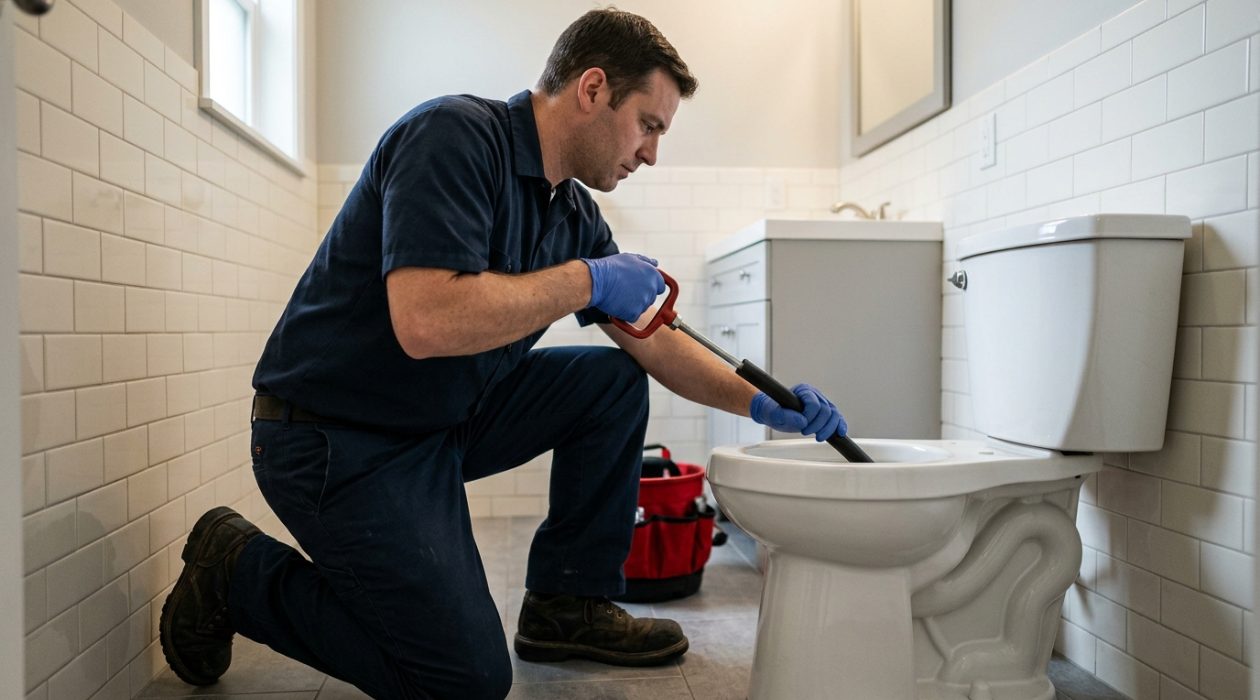
Streets built within a few years of each other have water heaters, drains and fixtures that reach the end of their lives within a few years of each other too.
(970) 973-0235Sunrise went up over a relatively narrow window, and that has a consequence people notice but rarely name: everything in these houses is the same age. When one street starts replacing water heaters, the whole street replaces water heaters within a few years.
That is not a coincidence and it is not a defect. A tank water heater has a service life of roughly ten to fifteen years, longer with maintenance and shorter on hard water. A neighborhood built in the same period, on the same water, with the same original equipment, hits that wall together. The same applies to disposals, toilet internals, angle stops and hose bibs.
The useful implication is that you can predict your own house from your neighbors. If the house next door has just had a heater fail, yours is a candidate. If three houses on the street have had a slab or lateral issue, yours deserves a camera.
The other implication is planning. A heater replaced on your schedule, on a weekday, with the model you chose, costs less and goes better than one replaced at 8pm on a Sunday because the tank let go over a finished floor.
Age, condition and honest advice on timing.
A steel water heater tank is protected from corrosion by two things: a glass lining, and a sacrificial anode rod that corrodes instead of the steel. When the anode is consumed: typically in three to five years on hard water: the tank starts corroding, and the clock is running.
Replacing an anode rod is a genuinely high-value maintenance item that almost nobody does. It costs a fraction of a new heater and can add years to the tank. It is only practical if it is done before the rod is completely gone and before corrosion has started, which is why we check it during maintenance visits rather than after a failure.
The other killer is sediment. On Greeley water, minerals settle on the tank bottom over the burner, insulate the water from the flame, and overheat the steel. The rumbling sound is the tell. Annual flushing removes it; a decade of no flushing produces a layer that cannot be drained out and a tank that fails early.
The visible warning signs are worth knowing: rust-colored hot water, moisture around the base, a relief valve that weeps, temperature that has become inconsistent, and a heater older than fifteen years. Any two of those together is a conversation about replacement rather than repair.
Flush, anode check and a straight answer on remaining life.
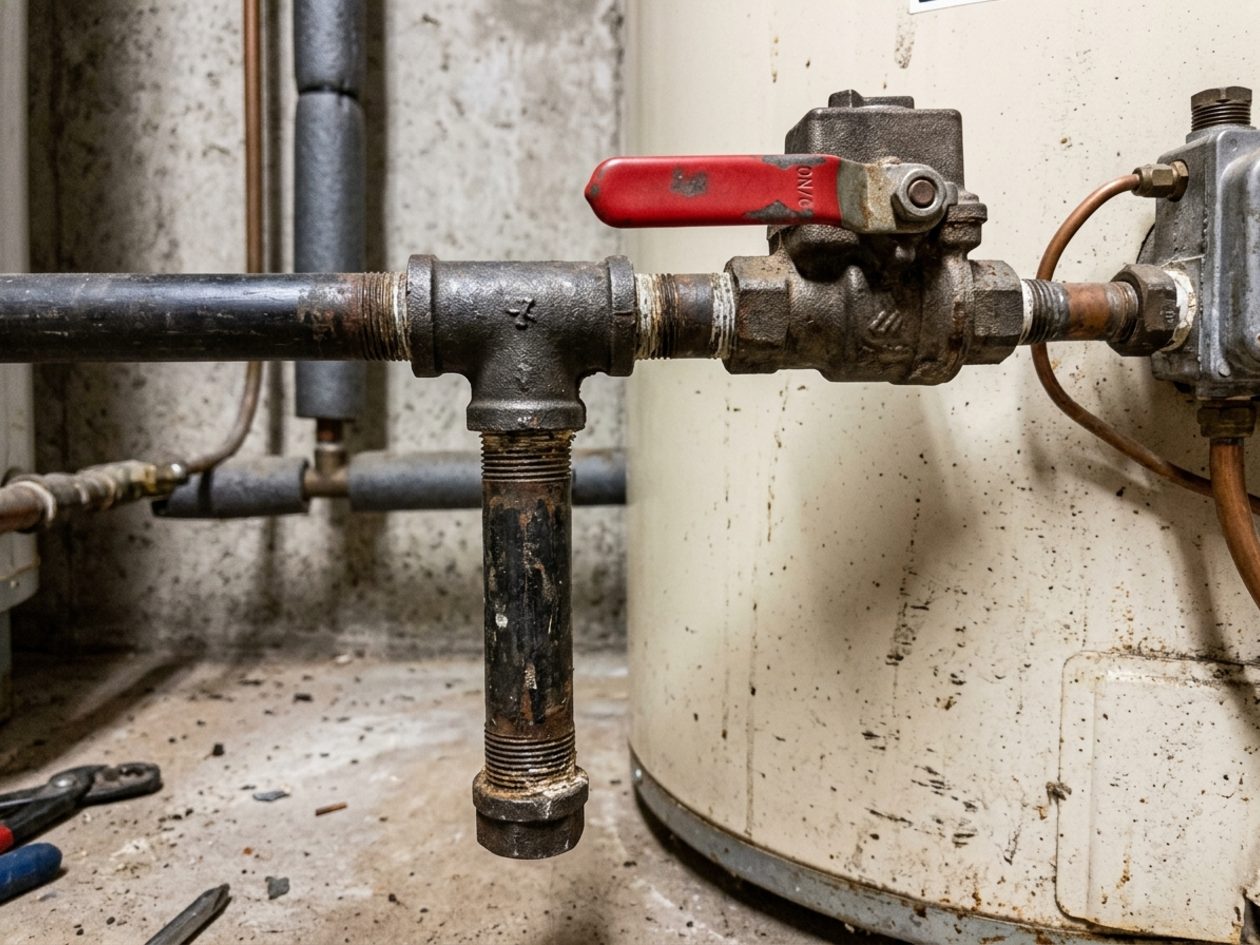 Check the anodeA rod costs a fraction of a tank and buys years. Almost nobody replaces one before it is too late.
Houses of this era were plumbed with cast iron drain stacks, and cast iron has a long but finite life. It does not fail suddenly. It scales internally, the bore narrows, the bottom of horizontal runs channels out, and eventually a section rots through: almost always at the base of a stack, in a crawlspace, wall cavity or basement, where nobody is looking.
The symptoms are gradual and easy to attribute to something else. Drains across the house get slower over years. A stack gurgles. There is an intermittent smell nobody can source. Rust-colored staining appears on a basement wall near where a stack goes into the floor.
The good news is that cast iron rarely needs to be replaced wholesale in a residential house. Failures are usually sectional, and a rotted section can be cut out and replaced with PVC using proper couplings. The bad news is that access is often behind finished surfaces.
A camera in the stack answers the question definitively, and on a house of this age it is worth doing once so you know what you own. If the iron is heavily scaled but sound, hydro jetting can restore a surprising amount of bore without replacing anything.
Sectional, not wholesale Cast iron usually fails in one place. Cutting out a section beats replacing a whole system.
If you have lived in Sunrise a while and never had anything looked at, one visit covers most of it: heater age and condition, an anode check, a pressure reading, the state of the angle stops, and a camera down the stack or lateral if you want certainty.
It is a couple of hours and it usually reorders someone’s priorities in a useful direction.
Original tanks past fifteen years, assessed honestly rather than sold against.
See details →Annual flushing and anode checks, the maintenance that actually extends tank life.
See details →Replacement on your schedule, correctly vented and sized.
See details →Slow drains across a house, which in these homes usually means the stack.
See details →Restoring bore in scaled cast iron without replacing it.
See details →Original 1970s fixtures and everything inside their tanks.
See details →Same era, more basements, more sump work.
Plumbers here →Nearby streets where pressure varies more than you would expect.
Plumbers here →Newer construction with a completely different set of problems.
Plumbers here →The serial number on the data plate encodes the manufacture date, usually in the first four characters, and the format varies by brand. Send us a photo or read it to us over the phone and we can tell you. Anything past fifteen years is living on borrowed time regardless of how well it seems to be working.
A sacrificial metal rod inside the tank that corrodes so the steel does not. On hard water it is often consumed in three to five years, after which the tank itself starts corroding. Replacing one is inexpensive and can add years to a heater, but only if it is done before corrosion has started, which is why it is a maintenance item, not a repair.
Sediment on the tank bottom. Minerals precipitate out when water is heated and settle over the burner, and the rumble is water boiling underneath that layer. It makes the burner work harder and overheats the steel above it. Annual flushing prevents the build-up; a heavily sedimented tank may be beyond flushing.
If it is past fifteen years and sits anywhere that a tank failure would damage: a finished basement, above living space, near stored belongings, then yes, planning it is the better decision. You choose the model, the day, and pay a normal rate rather than an emergency one.
In houses of this era it is usually the cast iron stack scaling internally and narrowing the bore. It is gradual over years, which is why nobody notices until several fixtures are affected. A camera confirms it, and hydro jetting can often restore a good deal of the original bore without replacing pipe.
Not usually as a whole system. Cast iron typically fails in one section, most often at the base of a stack, and that section can be cut out and replaced with PVC. Wholesale replacement is occasionally right in a badly deteriorated house, but it should follow camera evidence, not a sales conversation.
Common in this housing stock. The usual causes are a dried-out floor drain trap, a failed wax ring under a toilet, or a hairline failure in a cast iron stack inside a wall. Start with water down every unused drain. If that does not solve it, we can smoke or dye test to find it properly.
It is worth a camera inspection, yes. Houses on the same street were usually built in the same period with the same materials and the same trees, and laterals tend to reach the same condition at roughly the same time. It is a short visit and it either reassures you or gives you a year or two of warning.
Often not. Multi-turn stops from the seventies seize when they sit untouched for decades, and the handle either refuses to move or snaps off. We replace them with quarter-turn ball valves during any fixture work, which costs very little and means the next repair does not require shutting off the whole house.
Yes, and in this neighborhood it is the sensible approach. Heater age and condition, anode, pressure, angle stops, hose bibs, and a camera down the stack or lateral if you want it. A couple of hours gives you a clear picture of what is due now and what has years left.
Not sure how old your heater is? We can read the serial number for you.
Water heaters, cast iron drains and fixtures across the Sunrise neighborhood.
(970) 973-0235Answered 24 hours a day, seven days a week, every week of the year.