Water Heater Repair
Dripping relief valves and expansion tank faults.
See details →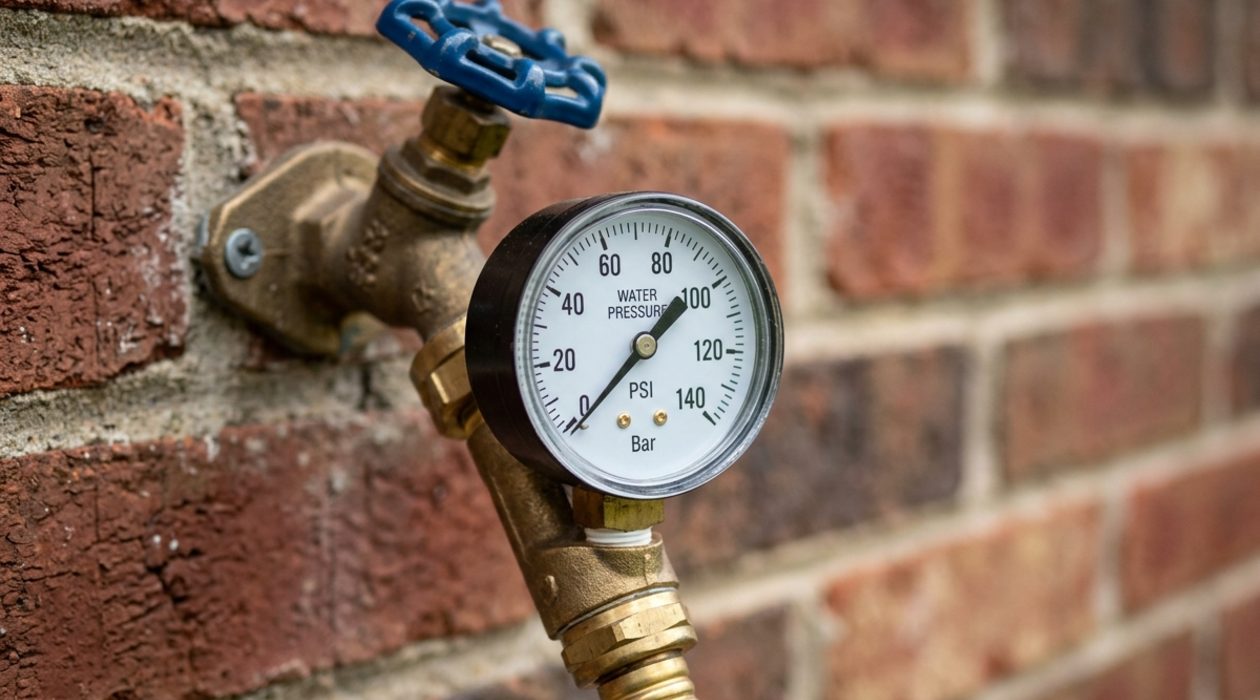
Banging pipes, a relief valve that drips, cartridges that wear out early, appliance hoses that fail without warning. One small brass valve sets the conditions every other part of your plumbing lives under.
(970) 973-0235Pressure problems rarely announce themselves as pressure problems. They announce themselves as a series of unrelated-looking small failures spread over years, each treated separately, none of them solved.
A homeowner replaces a toilet fill valve. Eighteen months later, another one. A faucet cartridge is changed, and changed again. The water heater’s relief valve drips, so it gets replaced, and the new one drips too. Then a washing machine hose lets go while nobody’s home and there’s water across a laundry floor. Four separate service calls, four separate invoices, one underlying cause that nobody measured.
Excessive static pressure wears every valve seat, every cartridge, every diaphragm and every flexible connector in the house, continuously. It’s not dramatic: it’s a tax, collected in parts and labor. And the reverse case is just as real: a regulator failing toward low pressure gives you weak showers and slow fills that get blamed on the municipal supply, on old pipe, on anything but the valve at the front of the house.
The remedy is unglamorous. A gauge on a hose bib, five minutes, a number. That number tells a plumber whether your problem is the fixture in front of them or the condition the whole system is operating under.
Replaced the same part twice? That’s the signal to measure rather than replace a third time.
 One numberStatic pressure, quiet house, gauge on a hose bib
The diagnostic distinction that matters: is the problem uniform or local? Weak pressure everywhere points at the regulator, the service line, the meter or the supply. Weak pressure at two fixtures with everything else fine points at scaled aerators, worn cartridges or a partly closed stop, and in this hard water, scale at the fixture is an extremely common answer that has nothing to do with the regulator at all.
Here’s the mechanism behind a large share of “my relief valve keeps dripping” calls, and it’s worth understanding because replacing the valve won’t fix it.
Water expands when heated. In an old-fashioned open system, that expansion simply pushed back out into the street main. But a pressure-reducing valve, or a check valve at the meter: makes the house a closed system: water can come in, but it can’t go back. So when the water heater fires and the water in it expands, that extra volume has nowhere to go, and pressure in the whole house spikes.
A thermal expansion tank solves it with a cushion of air behind a diaphragm that absorbs the volume change. Most jurisdictions require one on a closed system. In practice, a great many older installations never had one fitted, and a large proportion of those that do have one are running with a tank whose air charge failed years ago, which is functionally the same as not having one.
The result is pressure spiking on every heating cycle. The relief valve on the water heater discharges, because that is precisely its job. Somebody replaces the relief valve. It drips again. Meanwhile every fixture cartridge and supply connector in the house is absorbing those spikes several times a day.
So a proper pressure diagnosis looks at three things together: the regulator’s actual output, whether the system is closed, and whether the expansion tank exists and holds its charge. Fixing one without checking the others is how this problem persists for years.
Relief valve dripping? Ask about the expansion tank before agreeing to replace the valve.
Water heater work, a repipe, a fixture replacement, a burst pipe repair, all sensible moments to put a gauge on a hose bib. Five minutes, one number, and occasionally the explanation for a decade of small failures.
Regulators wear out quietly. Ten to fifteen years is typical, and they fail gradually rather than dramatically, which is why nobody notices until a third fill valve gives up or a hose bursts.
House pressure is one of the few things in plumbing you can measure yourself, accurately, with a tool that costs less than a takeaway. If you suspect a regulator problem, or you simply want to know before something fails; this is worth doing before anybody quotes you.
Buy a screw-on water pressure gauge with a hose thread. Any hardware store carries them. Spend slightly more for one with a red maximum-reading needle that stays where the peak was; that feature is the whole point of what follows.
Take a static reading first. Thread the gauge onto an outside spigot or the laundry tub tap, ideally the fixture closest to where the water enters the house. Turn the tap fully on with nothing else in the house running and read the number. Most residential systems should sit somewhere in the range of roughly fifty to seventy psi. Above about eighty and you are outside what code generally permits and what fixtures are designed for; that is the territory where appliances fail early, relief valves weep and joints start giving up.
Then leave it on overnight. This is the test that catches what a single reading misses. Fit the gauge, open the tap, and go to bed. A regulator that is failing, or a thermal expansion problem with no working expansion tank, produces pressure spikes that occur mostly when nobody is drawing water: overnight, after the water heater fires. In the morning the maximum needle will have recorded the peak. Seeing a static sixty and an overnight maximum of a hundred and thirty tells you far more than either number alone, and it is the single most useful piece of information you can hand a plumber.
Check for a pressure drop while running. With the gauge fitted, have someone open a couple of fixtures inside. A modest drop is normal. A dramatic one points to a restriction: a partly closed valve, a clogged regulator, or corroded galvanized supply pipe, rather than a regulator set too low.
Write down all three numbers with the date. If the peak reading is high, do not adjust the regulator yourself expecting it to solve things; a unit that spikes is usually a unit that is failing, and the adjustment screw will not hold it. But arriving at the conversation with recorded figures means the diagnosis starts from evidence instead of guesswork.
The overnight maximum is the number that matters, a single daytime reading hides the spikes.
Dripping relief valves and expansion tank faults.
See details →What excessive pressure eventually causes.
See details →Cartridges wearing out faster than they should.
See details →Uniform low pressure that turns out to be the buried line.
See details →Fill valves failing repeatedly for a reason.
See details →Pressure control on private supply.
See details →Elevation change across the neighborhood, which shows up as banging pipes.
Area details →PRVs installed with the house and now ten to fifteen years old together.
Area details →High static pressure on long interior runs, hard on every fixture.
Area details →Town supply pressure that varies by zone more than owners expect.
Area details →Not on the list? We cover Greeley, Weld County and the northern Front Range, see every service area.
Municipal water mains often run at pressures well above what household plumbing is designed for: higher pressure is useful for the utility, moving water through a network and up to upper floors. A pressure-reducing valve, usually fitted where the service line enters the house, drops that incoming pressure to a safe working level for your fixtures, appliances and pipes. It’s a small brass valve doing a job that every supply line, cartridge and hose in your house depends on.
Residential plumbing is generally designed around a working pressure in the region of 50 to 70 psi, with codes commonly setting an upper limit around 80 psi. Above that, wear accelerates across everything. Below about 40 psi, showers and simultaneous fixture use start feeling weak. A plumber measures actual static pressure with a gauge on a hose bib, and it’s worth doing both when everything is quiet and when several fixtures are running.
Banging or hammering in the pipes when a tap or appliance valve closes. A water heater relief valve that drips or discharges periodically. Toilets that run intermittently or fill valves that fail repeatedly. Faucet cartridges wearing out much faster than they should. Washing machine hoses that look swollen. Spitting or unusually forceful taps. And the expensive version: supply lines and appliance connections that fail without warning. High pressure is a slow, expensive tax on every part of the system.
Weak showers, especially upstairs. A noticeable drop whenever a second fixture is used. Slow-filling toilets and appliances. Poor performance from anything that needs flow: irrigation, a tankless heater, a pressure-assisted toilet. The important distinction is whether low pressure is uniform across the house, which suggests the regulator, the supply or the meter, or specific to a few fixtures, which points at scale in aerators and cartridges or a partly closed valve somewhere.
Typically somewhere in the range of ten to fifteen years, and they fail in a way that’s easy to miss: gradually, without any dramatic event. Internal components wear, the diaphragm hardens, or scale interferes with the mechanism. They can fail toward high pressure, which quietly damages the whole system, or toward low, which is merely annoying. Because the failure is gradual, most households don’t notice until something else breaks, which is why measuring pressure occasionally is worth the five minutes.
The adjustment screw is accessible and turning it does change pressure, so technically yes. Two reasons for caution. First, adjusting without a gauge fitted is guessing, you need to see the number you’re setting. Second, if a regulator has failed internally, adjustment achieves nothing or masks the problem temporarily, and the underlying fault continues. Measuring first, then adjusting, then re-measuring is the right sequence, and if the valve won’t hold a setting, it needs replacing rather than turning further.
Very often, yes, and it’s one of the most common connections people miss. A temperature-and-pressure relief valve discharges when either temperature or pressure exceeds its limit. If house pressure is high, or if thermal expansion has nowhere to go because there’s no functioning expansion tank on a closed system, pressure spikes on every heating cycle and the relief valve does exactly what it should. People often replace the valve, and it drips again, because the valve was never the fault.
Water expands as it heats. In an open system that expansion pushes back into the main harmlessly. But a pressure-reducing valve or a check valve at the meter creates a closed system, so the expansion has nowhere to go, and pressure spikes each time the water heater fires. That’s what an expansion tank absorbs. Most jurisdictions require one on a closed system, and a great many older installations either never had one or have one whose air charge failed years ago and nobody checked.
Different arrangement. A well system’s pressure is set by the pressure switch and cushioned by the pressure tank, so it doesn’t generally need a reducing valve for incoming supply. What it does need is correct switch settings and a healthy tank, the well equivalent of a pressure problem is usually a failed bladder or a mis-set switch. Some well properties do fit regulators for specific equipment or zones, but the core pressure control lives at the tank and switch.
Yes, and it should be routine. It takes five minutes with a gauge on a hose bib, and it occasionally explains a whole history of small failures: the cartridges that keep wearing out, the toilet fill valve replaced three times, the relief valve that drips, the appliance hose that burst. Any visit for a water heater, a repipe, a fixture replacement or a burst pipe is a sensible moment to measure it, because pressure is the condition everything else in the system operates under.
Is the problem everywhere in the house, or only at certain fixtures?
Pressure testing, regulator repair and expansion tank work across Greeley, Evans, Windsor and Weld County.
(970) 973-0235Answered 24 hours a day, seven days a week, every week of the year.