Galvanized steel
Common in pre-1960 houses: the historic core, Sunrise, parts of downtown. Corrodes internally, loses bore, weeps at threaded joints. A leak here is usually a signal about the whole system rather than one bad spot.
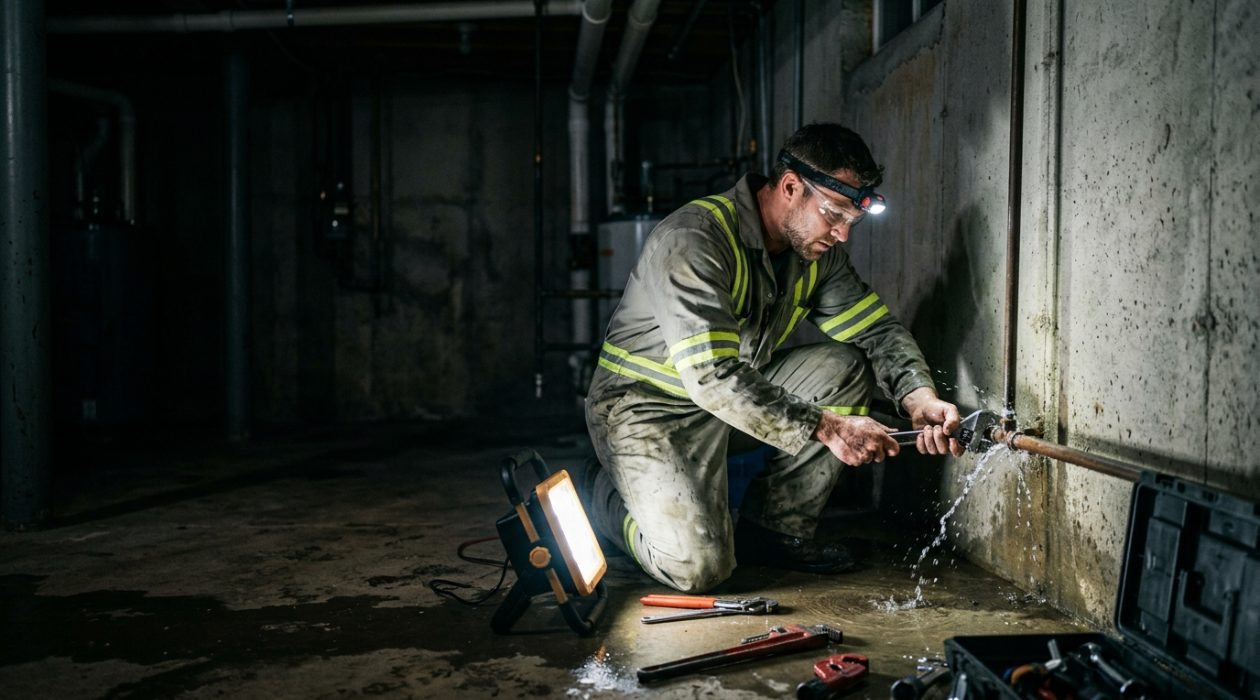
A split line, a blown fitting or a failed appliance hose can put hundreds of gallons through a finished basement in an evening. Call and we’ll dispatch a local plumbing pro, and talk you through the shut-off while you wait.
(970) 973-0235Main shutoff. Power. Low faucet. Call. In most Greeley homes the main is in the basement against the front foundation wall, near the meter: a round-handled gate valve in older houses, a quarter-turn lever in newer ones. Turn it firmly and fully. Then open the lowest tap in the house so the system drains away from the break rather than through it.
Can’t find the shutoff? Say so on the phone. There’s usually a second option: the curb stop at the street, or isolating a single branch, and it’s faster to be walked through it than to keep searching a flooding basement alone.
The dramatic version, a spraying line in an open basement, is the easy one. The expensive version is quieter, and it’s the one that does structural damage before anyone notices.
Inside a wall or ceiling. A stain that grows, paint that bubbles, a patch of drywall that feels cool and soft, or a nail head rusting through a ceiling. Often accompanied by a faint hiss you only hear at night. On a two-story house the water can travel along a joist and appear a surprising distance from the actual break.
Under the floor or in a crawlspace. A musty smell that arrived recently, a warm or cold spot underfoot, buckling flooring, or the sound of running water when every fixture in the house is closed. Crawlspace failures can run for weeks unnoticed, and standing water under a house is a moisture and mold problem as well as a plumbing one.
In a buried supply line. A sudden drop in pressure at every fixture, a water meter that keeps ticking with the whole house shut off, an unexplained jump in the bill, or a patch of lawn that’s greener and softer than the rest, sometimes with a sinkhole-like depression. Expansive clay soil in this region moves seasonally, which puts real stress on buried lines and joints.
At an appliance connection. Behind the washing machine, under the dishwasher, at the refrigerator ice-maker line, or at a toilet supply riser. These small hoses are among the most common single causes of interior water damage, and they’re also the cheapest thing on this page to replace on a schedule rather than after a failure.
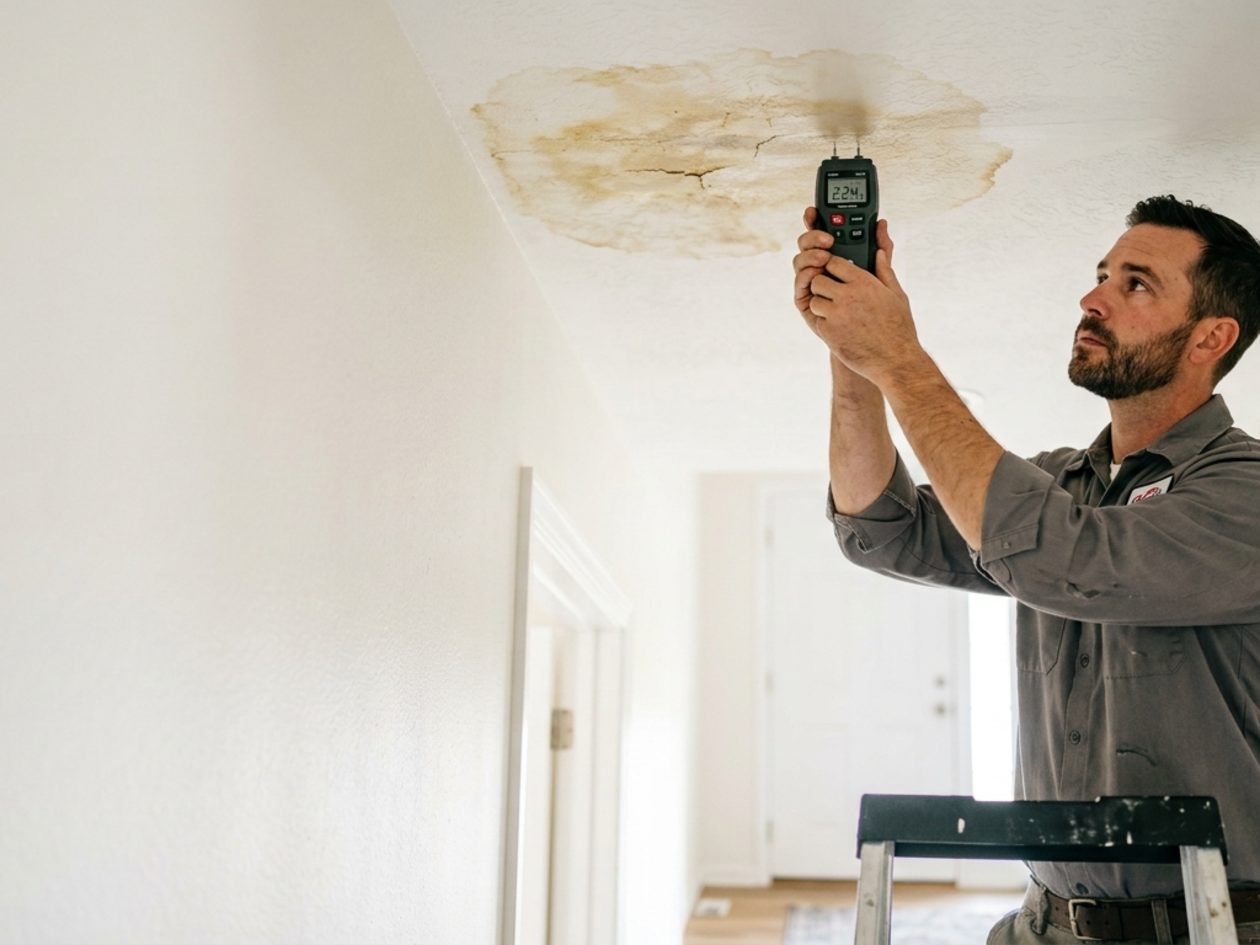 The quiet ones cost moreA hidden burst runs for days before it shows
Greeley’s housing stock spans the 1880s to last year, which means a plumber here works on five generations of supply pipe in a single week.
Common in pre-1960 houses: the historic core, Sunrise, parts of downtown. Corrodes internally, loses bore, weeps at threaded joints. A leak here is usually a signal about the whole system rather than one bad spot.
The mid-century-to-modern standard, and generally excellent. Fails at solder joints after a freeze, at pinholes where water chemistry or velocity has been aggressive, and where it was strained during an earlier remodel.
Gray plastic pipe used in some late-1970s to mid-1990s builds. Notorious for failing at fittings with no warning at all. If you have it, knowing you have it is worth a great deal.
Rigid cream-colored plastic. Reliable but brittle with age and unforgiving of impact or over-tightening, failures tend to be clean cracks rather than slow weeps.
Flexible tubing dominant in newer west-side construction. Tolerates a freeze better than copper because it can expand slightly, though it still bursts, and the fittings and manifolds are where problems concentrate.
Not really pipe, but responsible for a large share of indoor flooding. Braided stainless is a cheap upgrade over rubber, and a five-to-seven-year replacement habit is cheaper still than one failure.
Repair or repipe? One failure in sound pipe is a repair, full stop. The conversation changes when there’s a pattern: repeated pinholes, pressure that has faded room by room over years, rusty water after the house sits unused, visible scale and corrosion at every joint the plumber opens. At that point a staged repipe, done a zone at a time so the house stays liveable, usually costs less over five years than paying for emergency repairs one hole at a time. Ask to see the cut-out section; the inside of the pipe tells you which conversation you’re in.
Shut down as narrowly as the plumbing allows, so the rest of the house keeps water while the work happens.
Acoustic and thermal tools, moisture readings, and pressure isolation, evidence before anything is cut open.
The damaged section and its compromised fittings come out. New pipe, correctly supported, with proper transitions between materials.
Full pressure, observed. Then a straight answer on why it failed and what would stop the next one.
The plumbing repair is usually the fast part. A burst supply line is cut out and replaced in an afternoon. What determines whether this event costs a few hundred dollars or tens of thousands is what happens to the water that already left the pipe, and the decisions that matter are made in the first two days: often before anyone has thought about them.
Get the standing water out immediately, then keep going. Removing what you can see is the easy half. Water has already traveled along the tops of joists, under cabinet kickboards, beneath flooring and into wall cavities through the gaps around outlets and baseboards. A surface that feels dry to the hand can sit against saturated insulation. This is the point at which a moisture meter earns its keep, and it is why restoration companies lead with one.
Air movement matters more than heat. The instinct is to turn the heating up. What actually dries a building is moving air across wet surfaces combined with dehumidification to carry the moisture away: otherwise you are simply relocating water vapor into the rest of the house, where it condenses somewhere colder. Open interior doors, run fans continuously, and if the affected area is more than a small patch, hire or have brought in a proper dehumidifier rather than relying on a domestic one.
Open things up early rather than hopefully. Removing a section of baseboard, drilling ventilation holes in a wall cavity, or lifting a small area of flooring feels like making the damage worse. It is almost always cheaper than the alternative, because trapped moisture in a closed cavity does not dry: it grows mold, and remediation costs several times what proactive ventilation would have. Two days is roughly the window in which this is a choice.
Document everything before you tidy. Photograph the burst itself, the standing water, every affected room and every damaged item, with timestamps. Keep the section of failed pipe if it has been cut out. Note the time you discovered it and the time you shut the water off. Save the plumber's invoice describing the cause. Insurers treat sudden pipe failure very differently from gradual leakage, and this documentation is what places your claim in the first category.
Call your insurer before major work starts. Emergency mitigation: stopping the leak, extracting water, drying, should not wait for anyone's approval and policies expect you to act. But reconstruction generally should be discussed first, and most carriers want notification promptly. A call on day one costs nothing and protects the claim.
Photograph everything before you clean up, and keep the failed section of pipe.
The cause, most of the time, between December and February.
See details →A moving meter and no visible water, located without opening the house up.
See details →When one leak is really a system at end of life.
See details →The quiet reason supply lines and cartridges keep failing early.
See details →Buried service lines under clay soil that moves with the seasons.
See details →24/7 dispatch for anything actively causing damage.
See details →Uninsulated crawlspaces and pipe on exterior walls that predates any code requiring otherwise.
Area details →Mid-century additions with supply lines run through unheated space.
Area details →Empty rentals over winter break, with heat turned down and nobody checking.
Area details →Exposure and wind, on properties where the nearest shutoff is a long walk.
Area details →Not on the list? We cover Greeley, Weld County and the northern Front Range, see every service area.
Close the main shutoff, not the fixture stop, the main, because you may not know yet which branch you’re dealing with. Then open the lowest faucet in the house to drain the standing water out of the system so it stops feeding the break. Kill power to the area if water is anywhere near outlets, the furnace, a panel or the water heater’s connections, and stay out of standing water to do it. Then call. Everything else: towels, buckets, moving boxes, comes after the water has stopped.
Both are normal outcomes and the difference is usually the pipe’s condition, not the size of the hole. A single failure in otherwise sound copper is a spot repair: cut out the damaged section, replace it with new pipe and fittings, pressure test. A failure in galvanized steel that’s eighty years old is different: the leak is a symptom, the pipe is at end of life, and repairing one section often just moves the weakest point six feet down the run. A plumber should show you what the cut-out section looks like inside; corroded galvanized is unmistakable.
Far more than people expect. A half-inch supply line at typical household pressure discharges on the order of several gallons a minute, which is why an unattended burst overnight is measured in hundreds of gallons and finished basements, not in buckets. This is also why the sequence matters: minutes spent finding the shutoff cost less than hours spent on remediation. If you take one thing from this page, let it be locating and labeling your main shutoff today.
Old galvanized steel, because a century of internal corrosion leaves thin walls and restricted bores. Copper at solder joints, particularly where a freeze has stressed them. Polybutylene, found in some late-1970s to mid-1990s builds, which fails at fittings with little warning. Braided or plastic appliance supply lines: washing machines, ice makers, toilet risers, which are cheap parts responsible for a disproportionate share of interior flooding. And any pipe, of any material, in unheated space during a cold snap.
Sometimes, and a good plumber opens as little as possible. Leak location comes first: acoustic listening, thermal imaging, moisture meters and pressure isolation narrow it down before anything is cut. Access holes are then made deliberately, in the least destructive place that lets the repair be done properly. What you shouldn’t accept is exploratory demolition; if someone is opening a third hole while guessing, ask what evidence they have for the fourth. Note that plumbers repair the pipe, drywall and paint are usually a separate trade.
Only if nobody addresses the cause. A freeze-induced burst recurs unless the pipe is insulated, sealed off from cold air, heat-taped or rerouted. A pressure-induced burst recurs unless the pressure regulator is checked: excessive static pressure quietly destroys supply lines, appliance hoses and fixture cartridges across the whole house. A corrosion-induced burst recurs by definition, at the next-weakest point. The repair is the easy part; the diagnosis of why it failed is what you’re actually paying for.
The plumber will, deliberately and while watching. Repressurizing a system after work is done in stages, with air bled from fixtures and the repair observed under full pressure for a while before anyone declares it finished. Do that yourself in a hurry and you can turn a completed repair into a second leak, particularly on old galvanized where the pressure surge finds the next thin spot. Let it be part of the visit.
No, and be wary of anyone who says it is. Plumbers stop and repair the plumbing. Extracting water, drying the structure, and dealing with wet insulation, carpet and drywall is water-damage remediation, a different trade with different equipment. Local pros usually know who to call and will tell you honestly whether you need them, which mostly depends on how long the water ran, how much porous material it soaked, and whether it was clean supply water or came from a drain.
More than most homeowners realize. Municipal supply can arrive well above what household plumbing is designed for, which is why a pressure-reducing valve exists on most services. When that regulator fails, and they do fail, quietly: static pressure climbs, appliance hoses balloon, fixture cartridges wear out early, and pipes that would have lasted another decade start finding weak points. Having pressure tested during any repair visit is a five-minute check that occasionally explains years of odd little failures.
A repair clamp or self-fusing silicone tape on a small pinhole can buy you time, and if the water is off it does no harm to try. Understand what it is, though: a way to keep the house usable for a few hours, not a repair. Under full pressure and with any movement in the pipe, patches let go, often when nobody’s home. Any clamp or wrap should be treated as a countdown to a proper cut-and-replace, and it should be pointed out to the plumber rather than hidden behind insulation.
If water is running right now, call rather than read, we’ll talk you through the shut-off.
Burst pipe repair across Greeley, Evans, Windsor, Eaton and the surrounding Weld County communities, any hour.
(970) 973-0235Answered 24 hours a day, seven days a week, every week of the year.