Pressure Regulator Repair
Testing, adjustment and replacement, the core of most pressure complaints here.
See details →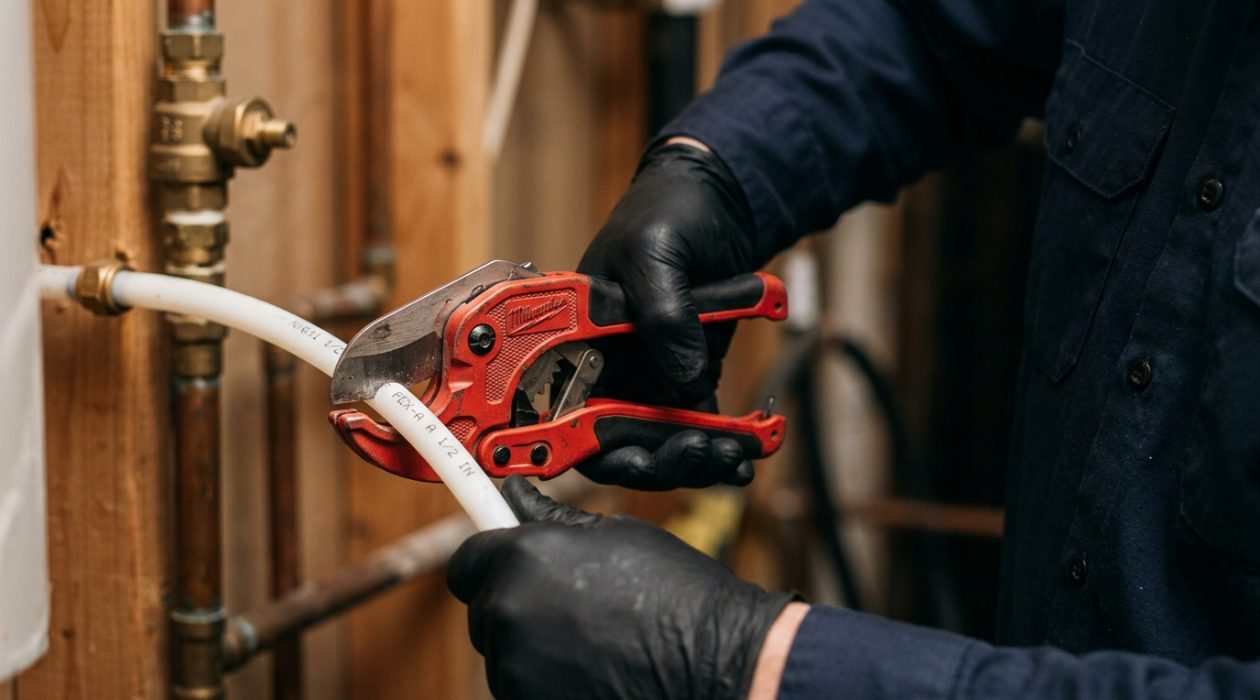
Two houses three blocks apart can see very different water pressure here. It explains a lot of complaints that otherwise make no sense.
(970) 973-0235Municipal water pressure is not one number for a city. It is set by the network: reservoir elevation, pump stations, pressure zones, and then modified by where your house sits relative to all of that. On sloping ground the difference over a few blocks can be substantial.
The practical result in Highland is that pressure complaints here genuinely do not generalise. One neighbor has too much and is replacing fixture cartridges every couple of years. Another, higher up or at the end of a run, has too little and cannot get a decent shower on the top floor while the dishwasher runs.
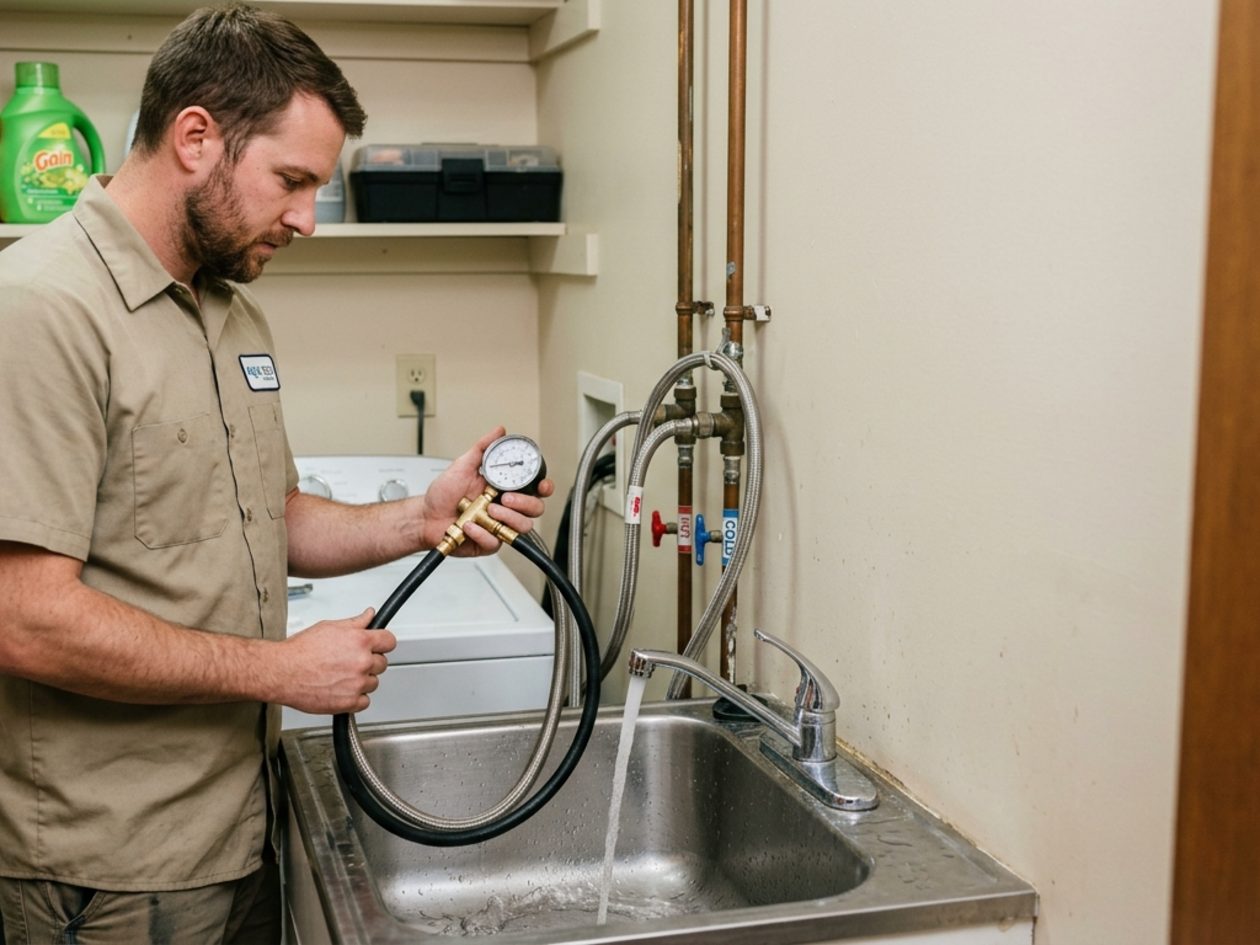
Both of those are solvable, but they are opposite problems with opposite solutions, and the first step in either case is the same: measure. A gauge on a hose bib with everything in the house off gives a static reading in under a minute. Running a couple of fixtures and reading again gives you the dynamic figure, which is the one that tells you whether the supply line or the fixtures are the constraint.
Guessing costs money. We have seen people fit booster pumps to houses with perfectly adequate pressure and a clogged aerator, and we have seen people replace three faucets in a house running at well over a hundred PSI.
Static and dynamic, measured, not guessed.
Above about eighty PSI a house is outside what its components were designed for. Nothing dramatic happens immediately. What happens instead is a steady tax on every seal in the building.
Faucet cartridges fail early. Toilet fill valves wear out. Washing machine and dishwasher inlet valves: small solenoids not built for it: fail, sometimes messily. Supply risers under sinks age faster. The water heater’s temperature and pressure relief valve starts weeping, which people mistake for a heater fault. And water hammer, the bang in the walls when an appliance valve snaps shut, becomes routine.
A pressure reducing valve at the service entry fixes all of it at once. If your house already has one and you are still reading high, the PRV has failed, which they do silently after ten to fifteen years. Replacing it is a modest job with an outsized effect.
One related item worth checking at the same time: thermal expansion. Once a PRV is fitted, the house becomes a closed system, and heated water has nowhere to expand into. Without a functioning expansion tank the pressure climbs every time the heater runs, which stresses everything and shortens the heater’s life. A pressure reading that is fine in the morning and high in the evening is usually this.
Regulator, expansion tank and a full pressure profile.
 They fail silentlyA PRV has a diaphragm and a spring. After ten or fifteen years it stops regulating and nobody notices.
Low pressure complaints are usually low flow complaints, and the distinction matters because they have different causes.
If a single fixture is weak and everything else is fine, the fixture is the problem: almost always an aerator or shower head packed with mineral scale, occasionally a partly closed angle stop or a blocked cartridge screen. That is a five-minute fix and does not need a plumber.
If everything in the house is weak, look upstream. A failing pressure regulator can throttle as well as fail open. A partially closed main shutoff after some earlier work is surprisingly common. Corroded galvanized supply, in the older Highland houses that still have it, narrows the bore until nothing downstream gets enough. And an undersized or partially blocked service line from the street affects everything at once.
If pressure is fine until a second fixture opens, that is flow capacity, not pressure, the supply line or the internal piping cannot carry enough volume for two demands. Booster pumps do not fix that; larger pipe does.
The honest diagnostic sequence is: measure static, measure dynamic, clean an aerator, check the shutoffs, then look at the pipe. It takes about twenty minutes and it usually ends somewhere much cheaper than the homeowner feared.
One weak fixture is not a pressure problem It is nearly always an aerator. Soak it in vinegar before calling anyone.
Whatever anyone recommends for a pressure complaint, ask what the static and dynamic readings were. A recommendation without a measurement is a guess with an invoice attached.
We write both on the paperwork as a matter of course, so you have a baseline to compare against in five years.
Testing, adjustment and replacement, the core of most pressure complaints here.
See details →Service line repair and upsizing when flow, not pressure, is the constraint.
See details →Corroded galvanized supply replaced in copper or PEX.
See details →Fixtures worn out early by pressure they were never designed for.
See details →Finding what a pressure drop is actually feeding.
See details →Relief valves weeping because of pressure, not because the heater has failed.
See details →Neighboring streets with the same era of housing and aging heaters.
Plumbers here →Ranch houses on full basements a short drive away.
Plumbers here →Where high pressure is the rule rather than the variation.
Plumbers here →Between about forty and eighty PSI, with most houses comfortable in the fifty to seventy range. Below forty and fixtures feel weak; above eighty and you are shortening the life of every seal in the building. Code generally requires a pressure reducing valve where the supply exceeds eighty.
A screw-on gauge from any hardware shop, fitted to an outside hose bib with every fixture and appliance in the house off. That gives your static pressure. Then have someone run a shower and read it again for the dynamic figure. The gap between the two tells you a great deal about flow capacity.
Elevation and position in the distribution network. On sloping ground, a few blocks of rise or fall changes what arrives at the meter noticeably, and being at the end of a run rather than near a main matters too. It is why pressure advice for this neighborhood has to be house by house.
A fast-closing valve, typically a washing machine or dishwasher solenoid, stopping a moving column of water abruptly. High pressure makes it much worse. The fixes are reducing the pressure to a sane level and fitting arrestors near the offending appliances. Old-style air chambers in the walls waterlog over time and stop working.
Thermal expansion. Once a pressure reducing valve is fitted the house is a closed system, and water expanding as the heater runs has nowhere to go. Without a working expansion tank the pressure climbs through the day. It stresses everything and shortens heater life, and an expansion tank is an inexpensive fix.
Almost certainly not. If everything else in the house is fine, the problem is at that fixture: usually a shower head crusted with mineral scale, occasionally a partly closed shutoff or a blocked cartridge screen. Unscrew the head and soak it in white vinegar overnight before calling anyone.
Rarely the right answer, and often the wrong one. If the issue is flow capacity: pressure fine until a second fixture opens: a pump does not help, because the constraint is pipe size, not pressure. Diagnose first: static reading, dynamic reading, aerators, shutoffs, then pipe.
Ten to fifteen years typically, and often less on hard water. They fail silently: the diaphragm gives up and the valve stops regulating, leaving your house at full street pressure with no obvious symptom until fixtures start failing early. Checking pressure every few years catches it.
That is a question for your insurer rather than for us, but it is worth knowing that a failed supply hose or appliance valve is a very common claim, and high pressure is a known contributing factor. Fitting or replacing a regulator is inexpensive relative to any escape-of-water claim.
Yes, and we do it as standard. It takes a minute, it costs nothing, and it explains a remarkable share of the recurring problems people call about. We write the readings on the paperwork so you have a baseline for next time.
Ask for the static and dynamic readings. Always.
Measured, diagnosed and fixed properly across the Highland area.
(970) 973-0235Answered 24 hours a day, seven days a week, every week of the year.