Tankless Water Heater Installation
Installation and the annual descaling these units need on Greeley water.
See details →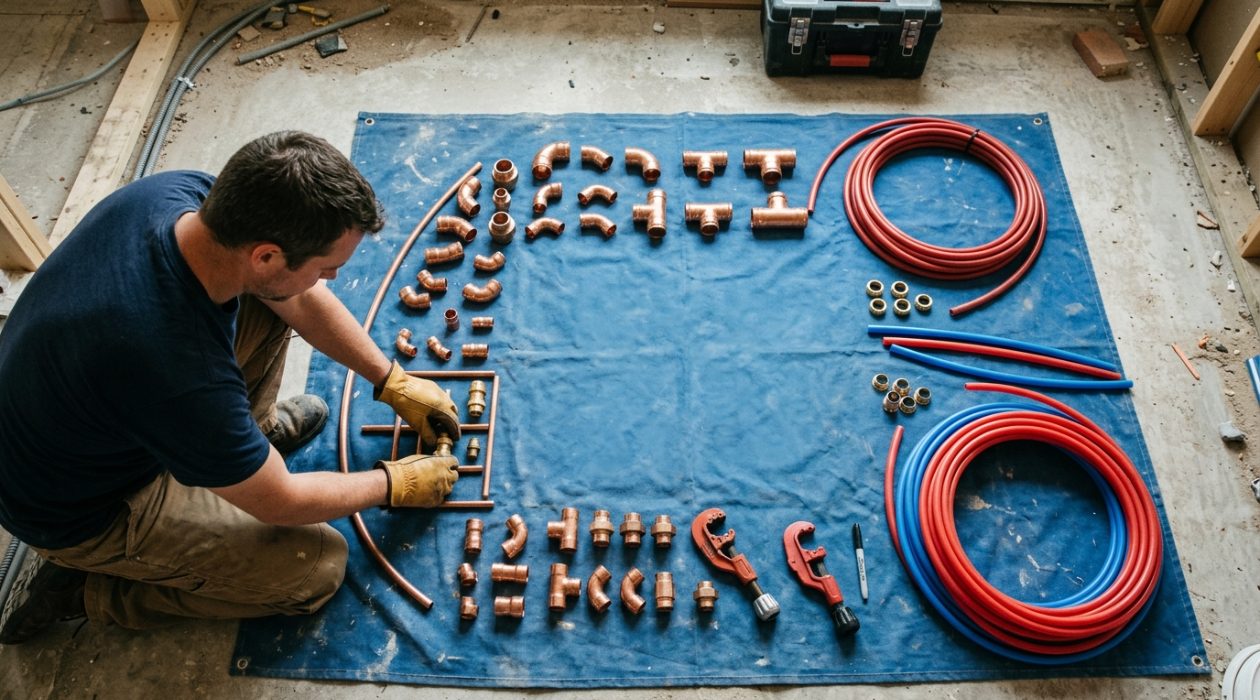
Larger homes on larger lots run tankless heaters, treatment systems and irrigation on a scale that needs a maintenance schedule rather than a repair number.
(970) 973-0235Houses out on this edge of the city tend to be newer, larger, and equipped with things older Greeley homes do not have: tankless water heaters, whole-home filtration or softening, multi-zone irrigation, sometimes a secondary heater or a recirculation loop for a long run to a distant bathroom.
That equipment is good. It is also equipment, and equipment has service intervals. The characteristic problem in a neighborhood like this is not that things break; it is that nothing has ever been serviced, because the house is only ten years old and nothing feels old enough to need attention.
A tankless heater on Greeley water that has never been descaled will start throwing errors around year five. A softener that has never had its brine tank checked stops regenerating and quietly does nothing. A filtration cartridge left in for three years is worse than no filter. An irrigation system with a failed pressure regulator on a drip zone blows emitters off the tubing without any visible spray to reveal it.
None of that is dramatic. All of it costs money in a slow, invisible way, and all of it is prevented by one visit a year.
Tankless, softener, filtration and irrigation in one visit.
A tankless water heater passes water across a heat exchanger and raises its temperature on demand. On hard water, minerals precipitate on the inside of that exchanger, and scale is a very effective insulator. The unit compensates by firing harder, then longer, then eventually cannot hit its target and starts reporting flow or temperature faults.
Owners almost always interpret that as a defective unit. It is a maintenance backlog. A descaling flush: circulating a descaling solution through the exchanger via the isolation valves: restores it, and doing it annually keeps a tankless heater in the twenty-year bracket rather than the seven-year one.
Two other tankless items worth knowing. The inlet filter screen clogs with grit and produces exactly the same symptoms as scale, and it takes two minutes to clean. And condensing units produce acidic condensate that needs a neutralizer, which is a consumable that gets forgotten and then corrodes the drain it discharges into.
If your unit has isolation valves fitted, most do, the annual service is a straightforward visit. If it does not, fitting them during the first service makes every future one cheaper.
Annual service, filter screen and condensate neutralizer checked.
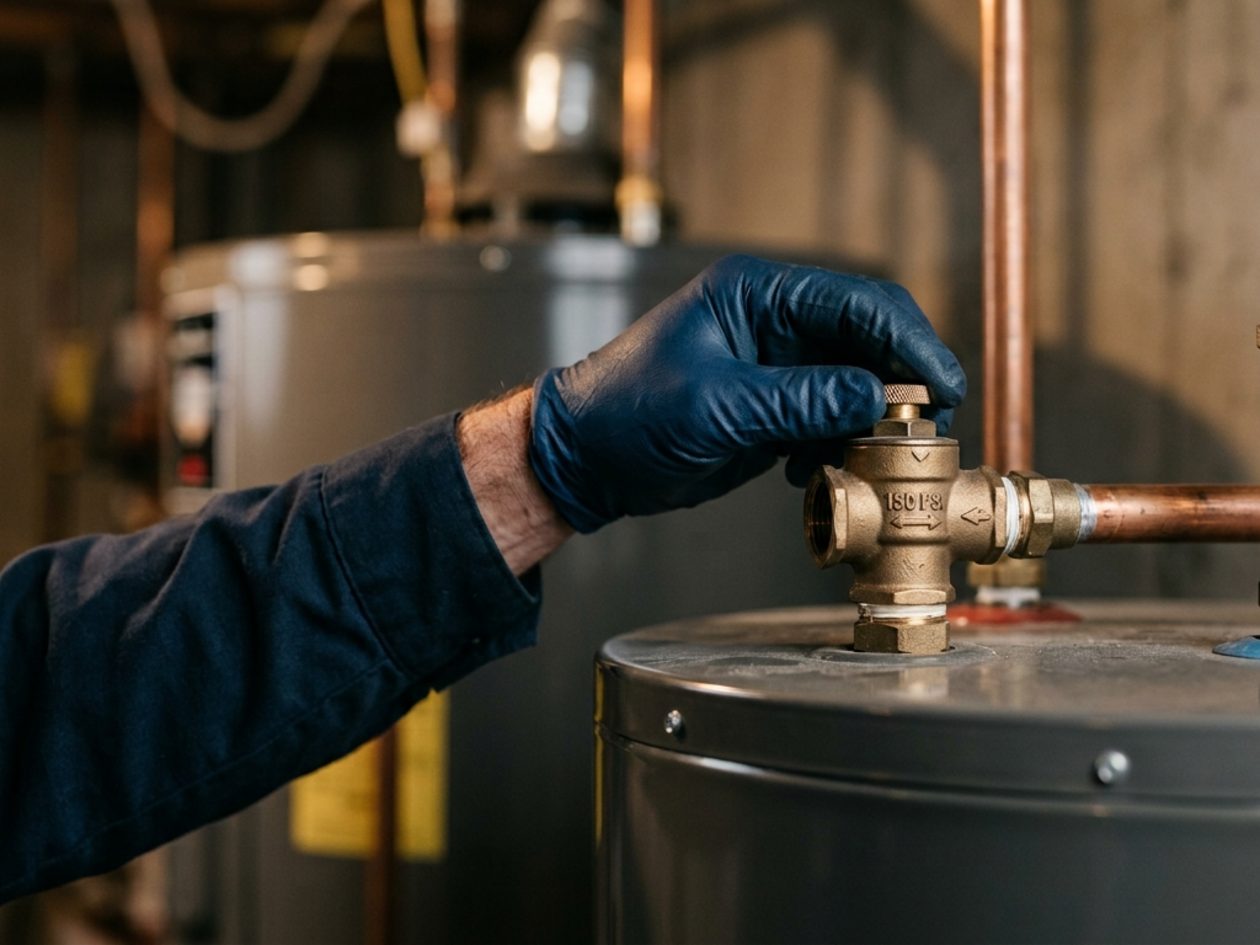 Errors mean scale, not defectA tankless unit throwing temperature faults at year five has almost always never been descaled.
This is worth being precise about, because whole-home treatment is the area where homeowners are most often sold something they did not need.
A water softener is an ion exchange system. It removes calcium and magnesium, hardness, and replaces them with sodium. It does nothing for taste, chlorine, or contamination. What it does is stop scale, which extends the life of your water heater, fixtures, dishwasher and washing machine and makes soap work properly.
A filter removes particulates, chlorine, taste and odour compounds, depending on the media. It does nothing about hardness. Carbon is the common whole-home media; sediment pre-filters protect everything downstream.
A reverse osmosis system is a separate thing again, usually fitted at a single tap, and it removes dissolved solids that neither of the above touch.
Plenty of Promontory houses have a softener and a carbon filter, which is a sensible combination on this water. Some have a softener sold as a filter, and the owner is confused about why the water still tastes of chlorine. Ask what a system removes and what it does not, and be suspicious of anything sold as doing everything.
We are happy to test your water and tell you what you actually have and what, if anything, is worth adding.
Hardness and a straight explanation of what you need.
Two different jobs A softener handles scale. A filter handles taste and chlorine. Neither does the other.
For a house with this much equipment, an annual service visit covering the tankless descale, softener and filter check, pressure reading, water heater relief valve, and irrigation backflow test is genuinely the efficient way to own it.
It also means somebody who has seen your specific setup before is the person answering the phone when something does go wrong.
Installation and the annual descaling these units need on Greeley water.
See details →Softener installation, servicing and honest advice on whether you need one.
See details →Whole-home filtration and point-of-use systems, specified for what is actually in your water.
See details →Spring charge-up and repairs for large multi-zone irrigation systems.
See details →Annual testing, filed with the district for you.
See details →High street pressure on this side of town, measured and regulated.
See details →Adjacent newer subdivisions with the same pressure and irrigation profile.
Plumbers here →Comparable construction era a short drive north-west.
Plumbers here →Family homes nearby where softeners are near-universal.
Plumbers here →Annually on Greeley water. Scale builds inside the heat exchanger, insulates it, and forces the unit to work harder until it starts reporting temperature or flow errors, usually around year five in a house that has never had it done. Annual descaling is the difference between a twenty-year unit and a seven-year one.
Usually not. The two most common causes are a scaled heat exchanger and a clogged inlet filter screen, and both produce faults that look like a failing unit. The filter screen takes two minutes to clean. A descale takes a service visit. Genuine component failures are much rarer than the error codes suggest.
A softener removes hardness minerals, calcium and magnesium, and stops scale. A filter removes particulates, chlorine, taste and odour. Neither does the other job. Many Promontory homes sensibly have both, and a good deal of confusion comes from systems sold as doing everything.
Check the brine tank: if the salt has bridged into a solid crust or the tank is empty, it is not regenerating. Beyond that, hardness testing before and after the unit gives a definitive answer in a minute. A softener that has quietly stopped working is extremely common and produces no obvious symptom until scale reappears.
It depends on the media and your usage, but most sediment and carbon cartridges want changing every six to twelve months. A cartridge left in for years is worse than no filter at all, it becomes a restriction and a place for growth. If you cannot remember the last change, it is due.
In a large house with a bathroom far from the heater, it genuinely helps, hot water arrives in seconds instead of after a minute of waste. The trade-off is standby energy and, on an uninsulated loop, real heat loss. A timer or on-demand button rather than continuous running is the sensible middle ground.
The west side of the city generally runs high, and newer houses were built with a pressure reducing valve to handle it. Those valves fail silently after ten to fifteen years, at which point the house is back on full street pressure. If your house is over a decade old, it is worth a five-minute gauge check.
Multi-zone residential systems of any size, including drip zones in beds, which are the part most often neglected because a failed emitter produces no visible symptom. Spring startup, zone-by-zone repairs, controller programming, the annual backflow test and autumn blowout are all handled.
That is the most common assumption in this neighborhood and it is the reason we get called. The building is new; the equipment inside it is on service intervals that started the day it was commissioned. A tankless heater, softener and irrigation system in a ten-year-old house are all several services overdue if nobody has touched them.
Yes, and it is how we would recommend owning a house with this much equipment. Tankless descale, softener and filter check, pressure reading, heater relief valve, irrigation backflow test and startup. One appointment, one invoice, and a written note of what was found.
Newer house, never serviced? That is the most common call we get here.
Tankless, treatment and irrigation maintenance across Promontory.
(970) 973-0235Answered 24 hours a day, seven days a week, every week of the year.