Weak or incomplete flush
Usually mineral-blocked rim jets and siphon jet, low tank water level, or too much chain slack. Rarely the toilet design itself, though some early low-flow models genuinely underperform.
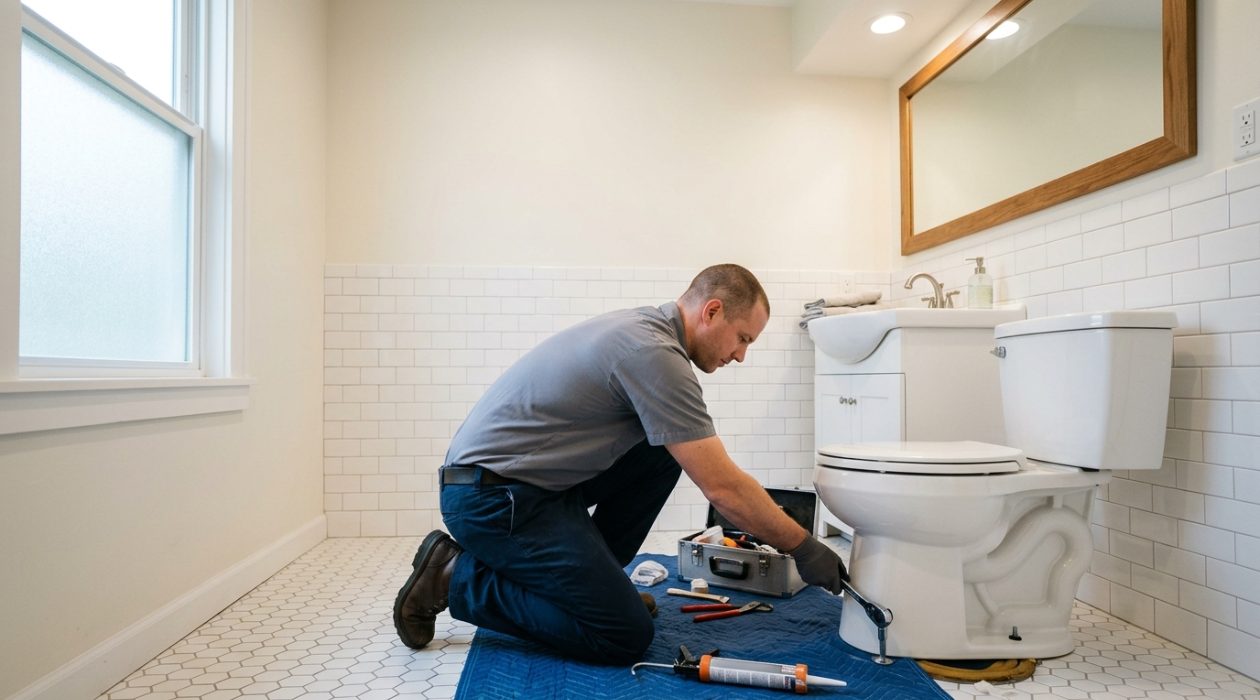
A toilet that runs intermittently is quietly the most expensive fixture in the house. One that rocks is doing damage to the floor you cannot see yet.
(970) 973-0235A toilet flapper that does not seal lets water trickle from the tank into the bowl continuously. The fill valve tops the tank back up, either constantly or in short bursts every few minutes, and the whole cycle is quiet enough that people live with it for months. A meaningfully leaking toilet can pass hundreds of gallons a day, more water than a family of four uses for everything else put together.
The tell is the phantom flush: the sound of the tank refilling when nobody has touched it. If you hear that, water is escaping the tank. There is a simpler test that costs nothing. Put a few drops of food coloring in the tank, do not flush, and come back in twenty minutes. Color in the bowl means the flapper or the flush valve seat is leaking, and it is the most common plumbing fault in any house.
The repair is almost always inexpensive. A flapper is a few dollars. A full fill-valve-and-flapper rebuild kit is not much more and takes half an hour. What makes it worth doing today rather than eventually is that the meter has been running the entire time you have been meaning to get to it.
The other reason: a fill valve that runs constantly is also pushing water through the overflow tube, and on some setups that means the tank never quite reaches its shutoff, so the valve never gets to rest.
Usually a same-visit fix with parts on the van.
The flapper is the rubber seal at the bottom of the tank. It hardens, warps or gets coated with mineral deposits until it no longer seats. This is the number one cause of a running toilet, and it is also the part most often damaged by in-tank cleaning tablets, which chew through rubber remarkably fast.
The fill valve is the tall assembly that refills the tank and shuts off at a set level. When it fails you get a toilet that runs forever, refills painfully slowly, or shuts off with a loud shudder in the pipes. Modern replacements are universal, quiet and cheap.
The flush valve is the seat the flapper closes onto. When its plastic rim gets scored or scaled, a brand-new flapper still leaks, which is the reason a flapper swap sometimes fails to fix anything. Replacing it means pulling the tank off the bowl.
The chain and handle cause more nuisance faults than their simplicity suggests. Too much slack and the flapper does not lift fully, giving a weak flush. Too little and the flapper cannot seat, giving a constant leak. A chain caught under the flapper is the single most common cause of a toilet that runs after being fine for years.
Any of these can be replaced individually, and a complete tank rebuild, all of it at once, still costs a fraction of a new toilet.
 Check the chain firstA chain caught under the flapper is the most common cause of a toilet that suddenly starts running.
Water on the floor around the base of a toilet is not a small problem, because the water reaching the floor is only the portion that did not go into the subfloor first.
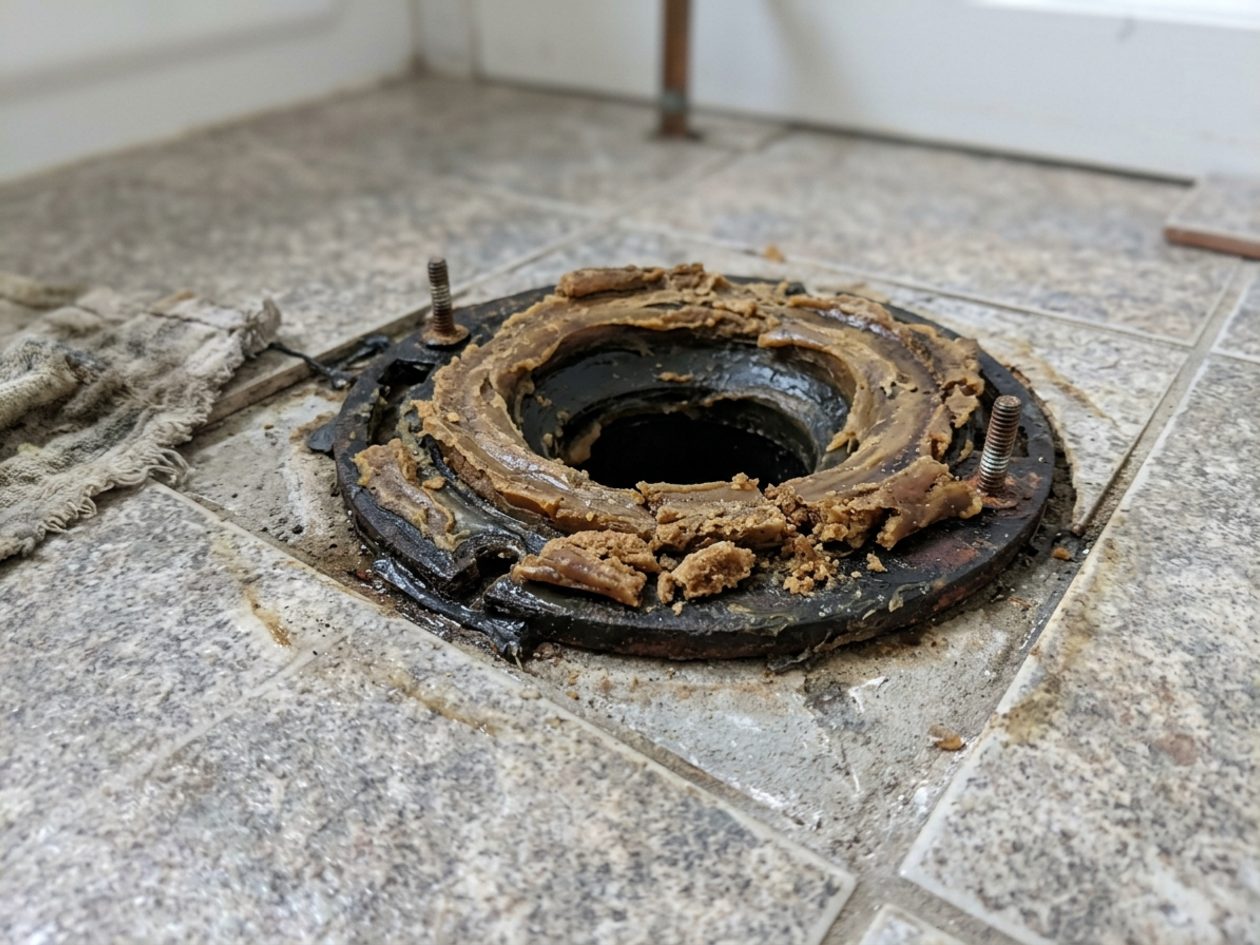
The usual cause is a failed wax ring, the seal between the toilet horn and the closet flange in the floor. It fails when the toilet rocks. Every rock breaks the wax seal a little further, and once it is broken, every flush sends a small amount of waste water into the subfloor rather than down the drain. There is often no visible puddle for a long time.
A toilet rocks for two reasons: an uneven floor, or a closet flange that has corroded, cracked, or sits below the finished floor level after someone tiled over the old surface. The fix is not to shim it and hope. Shimming an unlevel toilet without addressing the flange height just re-breaks the wax on a slower schedule.
The correct repair is to pull the toilet, inspect the flange, repair or replace it: flange repair rings handle most cases: set a new wax ring or a modern waxless seal, bolt down evenly, and check for movement before it is caulked. We also check the subfloor while it is exposed, because a flange that has been leaking for years usually sits on wood that has gone soft.
If your toilet rocks even slightly, it is worth pulling now rather than after the floor has to come up with it.
We inspect the flange and subfloor while it is off the floor.
Check the flange, not just the wax A new wax ring on a low or broken flange fails again within a year.
Usually mineral-blocked rim jets and siphon jet, low tank water level, or too much chain slack. Rarely the toilet design itself, though some early low-flow models genuinely underperform.
A repeatedly clogging toilet is not a coincidence. Either something is lodged in the trapway, the branch drain is restricted, or the vent is blocked and the bowl cannot siphon properly.
Air being pulled through the trap, which means a venting problem or a partial blockage downstream. If other fixtures gurgle when the toilet flushes, the issue is in the main line.
Cold supply water against warm humid air. Annoying and genuinely damaging to flooring over time. Solved with an insulated tank liner or a mixing valve on the supply.
Fill valve not fully closing, or a slow tank leak keeping it awake. The cheapest high-value repair in the house.
The refill tube has come out of the overflow, or the fill valve is partially blocked. A bowl that sits low loses its trap seal and lets sewer gas into the room.
Never pour caustic drain cleaner into a blocked toilet. It will not clear a solid obstruction in a trapway, it sits in the bowl as a hazard for the next person, it can craze porcelain, and it makes the eventual mechanical clearing genuinely dangerous for whoever has to reach in. This is the single worst-value product in the plumbing aisle.
Start with the right plunger. A flat cup plunger is for sinks; a toilet needs a flange plunger, the kind with a soft extension that seats into the trap outlet. Get a proper seal, then use steady firm strokes rather than violent ones; you are trying to move a column of water back and forth against the obstruction, not splash.
If plunging fails, a closet auger is the correct next tool. It is a short cable in a protective sleeve, designed to go around the trapway without scratching the porcelain the way a general drain snake will. Most stubborn clogs come out here.
What neither will move is a solid object. Toys, toothbrushes, cleaning wipes wrapped into a rope, and the disposable air freshener clip that fell off the rim are all things we regularly remove: usually by pulling the toilet and clearing it from the outlet side, which is faster and safer than fishing blindly.
And if the toilet clogs while other fixtures back up, stop working on the toilet. The problem is the main line, and clearing the bowl will not help.
Repeat clogs usually mean something further down the line.
Modern toilets use 1.6 gallons per flush, and high-efficiency models 1.28 or less. The bad reputation low-flow toilets earned in the nineties was real but is thoroughly out of date: current bowls are engineered around the lower volume rather than simply restricted, and a good one clears better than a 3.5-gallon toilet from 1985.
What actually matters when choosing: trapway size, where a fully glazed two-inch-plus trapway clogs far less than an unglazed smaller one. Bowl height, where comfort-height at around seventeen inches is easier for most adults than standard fifteen. Rough-in, the distance from the finished wall to the closet bolt centers: twelve inches is standard, but ten and fourteen exist and buying the wrong one is a wasted trip.
One-piece versus two-piece is mostly practical. One-piece units have no tank-to-bowl seam to leak and are far easier to clean, but they are heavier and cost more. Two-piece toilets are cheaper, easier to carry up stairs, and have a gasket that will eventually need replacing.
Skip pressure-assist for most homes. They flush powerfully and are genuinely loud: fine in a commercial building, startling in a bathroom next to a bedroom.
Whatever you choose, the install is where the value is: a level set, a properly seated seal, a flange at the right height, and even bolt torque. A good toilet badly set will rock and leak just like a bad one.
Setting a toilet looks simple and mostly is, but the failures all come from steps people skip.
We start by checking the flange height and condition. It should sit level with or slightly above the finished floor. Below it, and the wax cannot bridge the gap reliably: that needs a flange extender, not extra wax. Cracked or corroded flanges get a repair ring.
We replace the closet bolts every time. They cost almost nothing and the old ones are usually corroded. We set the seal: wax or a waxless gasket, which we prefer on uneven flanges because it can be repositioned without starting over, then lower the bowl straight down without twisting, because twisting is what breaks a wax seal before the toilet has even flushed once.
Then even torque, alternating side to side, snug and no more. Overtightening cracks porcelain, and a hairline crack at the bolt boss will leak eventually. We check for rock, shim with proper plastic shims if the floor demands it, and only then caulk, leaving a deliberate gap at the back so a future leak shows itself on the floor rather than hiding under the seal.
Finally a new quarter-turn supply stop and braided riser if the existing ones are old, and a flush test with dye to confirm the seal before we leave.
Old fixture hauled away, new stops and supply fitted as standard.
Straight down, no twist Twisting the bowl onto the seal breaks it before the toilet has flushed once.
Take the in-tank cleaning tablet out of your toilet. The chlorine-based ones destroy flappers, gaskets and fill valve seals; they are the reason a great many perfectly good toilets start running a year after someone started using them. Manufacturers void warranties over them.
And nothing goes down a toilet except waste and toilet paper. Wipes labeled flushable do not break down; they catch on the first rough spot in the line and gather everything that follows.
Valves, diverters and the ceiling stains that get blamed on the wrong fixture.
See details →Vanity drips, seized stops and slow pop-up drains, worth bundling into one visit.
See details →When a toilet clogs repeatedly, the branch line is usually the real problem.
See details →If flushing backs up a floor drain, stop plunging and call; that is the main line.
See details →To see what keeps catching, rather than clearing the same clog every few months.
See details →For soft flooring around a base with no visible water.
See details →Rental turnovers, where a running toilet has been running all term.
Area details →Old flanges on old floors, where the repair is the flange not the pan.
Area details →Original low-efficiency units worth replacing rather than rebuilding.
Area details →Straightforward swaps done same-day, at a price that makes sense.
Area details →Not on the list? We cover Greeley, Weld County and the northern Front Range, see every service area.
Put a few drops of food coloring in the tank, do not flush, and check the bowl twenty minutes later. Color in the bowl means the flapper or the flush valve seat is leaking. You can also listen for a phantom refill, the tank topping itself up when nobody has flushed. Both mean water is running continuously.
A badly leaking toilet can pass hundreds of gallons a day, which on a Greeley bill is very visible over a quarter. It is usually the largest single water loss in a house and one of the cheapest to fix, a flapper costs a few dollars and takes minutes.
The flush valve seat that the flapper closes against is scored or scaled, so new rubber cannot seal on it. That is a common outcome and it means replacing the flush valve, which requires taking the tank off the bowl. The other possibility is the chain: too short, or caught underneath the flapper.
Either the floor is uneven or the closet flange is broken, corroded, or sitting below the finished floor after tiling. Rocking breaks the wax seal, and once that is broken every flush puts a little waste water into the subfloor. Do not just shim it, the flange needs looking at.
It is a short visit and a very cheap part, but the toilet has to be pulled and reset, which is where the labor is. While it is up we inspect the flange and the subfloor, because a seal that has been leaking a while usually sits on wood that needs attention. We quote any extra before doing it.
If only that one toilet clogs and everything else drains normally, suspect the fixture: often an object lodged in the trapway, or a low-flow model with a narrow unglazed trap. If other fixtures gurgle or back up when it flushes, the problem is the branch or main line, and a camera inspection will show what keeps catching.
No. It will not clear a solid obstruction, it sits in the bowl as a hazard, it can damage porcelain and seals, and it makes mechanical clearing genuinely dangerous afterwards. Use a flange plunger, then a closet auger. If neither works, call before adding chemicals to the problem.
Early nineties models were, and they earned the reputation. Current 1.28 and 1.6 gallon toilets are engineered around the lower volume and a good one clears better than an old 3.5-gallon fixture. Trapway size and glazing matter far more than gallons per flush when choosing.
A straightforward swap is around an hour to ninety minutes including removing and hauling away the old fixture. It takes longer if the flange needs repair or extending, if the closet bolts are corroded into the floor, or if the shutoff and supply line need replacing, which we recommend doing at the same time.
Cold incoming water chills the porcelain below the dew point of humid bathroom air, and condensation forms on the outside. It is common here in summer. Fixes are an insulating liner inside the tank, better bathroom ventilation, or a small mixing valve that raises the supply temperature slightly. Worth solving, the drips damage flooring over time.
Running, rocking or clogging, each has a different answer.
Tank rebuilds, wax ring and flange repairs, and full replacements.
(970) 973-0235Answered 24 hours a day, seven days a week, every week of the year.