No hot water at all
Gas: pilot out, failed thermocouple, gas valve, or a flame sensor fouled with dust. Electric: tripped breaker, blown upper element, or a failed high-limit thermostat that has latched off for a reason.
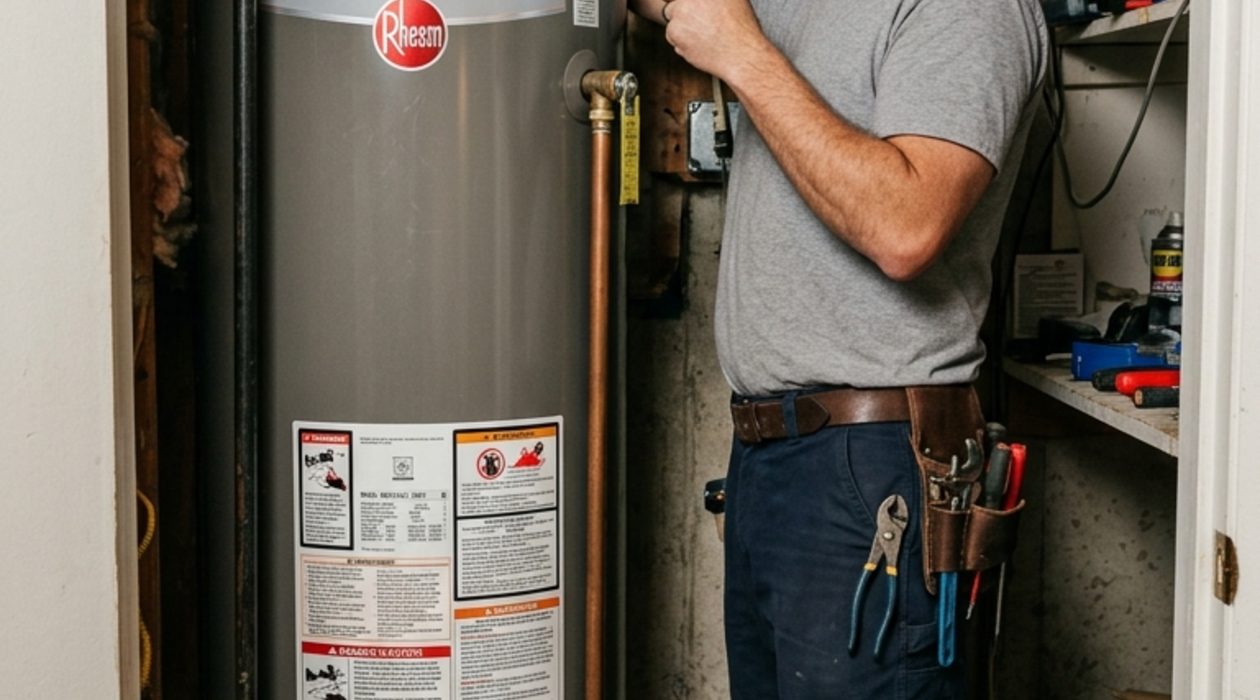
No hot water, not enough of it, rumbling from the tank, or a puddle underneath. Hard water is unusually tough on heaters here, and it decides whether yours is a repair or a replacement.
(970) 973-0235Water heaters are unusually communicative appliances. Most failures give weeks of warning, and the symptom narrows the cause considerably before anyone opens a panel.
Gas: pilot out, failed thermocouple, gas valve, or a flame sensor fouled with dust. Electric: tripped breaker, blown upper element, or a failed high-limit thermostat that has latched off for a reason.
Sediment stealing tank volume, a failed lower element, a broken dip tube, or a household that has simply outgrown a tank sized for two people.
Water boiling underneath a layer of mineral scale. The most common hard-water symptom in northern Colorado, and a direct signal about efficiency and remaining life.
Thermostat set low or failing, a crossed hot and cold connection, a mixing valve at fault, or on electric units one element gone while the other carries the load.
Trace it before you panic. Fittings, drain valve and the T&P discharge are repairable. The bottom seam of the tank is not, that’s a replacement.
A spent anode rod, internal corrosion, or a sulphate reaction in a tank running cool. Cold water clear but hot water discolored points squarely at the tank.
Northern Colorado’s water carries real dissolved mineral content, and a water heater is the one appliance in the house that concentrates it. Every gallon heated leaves a little calcium and magnesium behind, and it accumulates in the bottom of the tank as a hard gray crust.
The consequences compound. The scale layer occupies volume, so a 50-gallon tank stops behaving like one. It insulates the burner from the water, so the burner fires longer for the same result, you pay for that on the gas bill every month. It traps water underneath, which boils and pops, which is the rumbling you hear. And it holds heat against the tank bottom, accelerating the corrosion that eventually perforates the shell.
Tankless units aren’t exempt, they’re arguably more sensitive. Scale forms on the heat exchanger surfaces where the temperature differential is highest, and an unmaintained tankless unit in hard water can lose noticeable output within a few years. Descaling on schedule isn’t optional maintenance for these; it’s the condition on which the twenty-year life expectancy depends.
What actually helps. An annual flush, done properly rather than briefly. Checking and replacing the anode rod every few years. Setting the thermostat sensibly: usually around 120°F, which limits scale formation, saves energy and reduces scald risk. And for a lot of houses here, softening the incoming water, which protects the heater along with every fixture, valve and appliance downstream of it.
You can see it on the fixtures What’s on the aerator is also in the tank
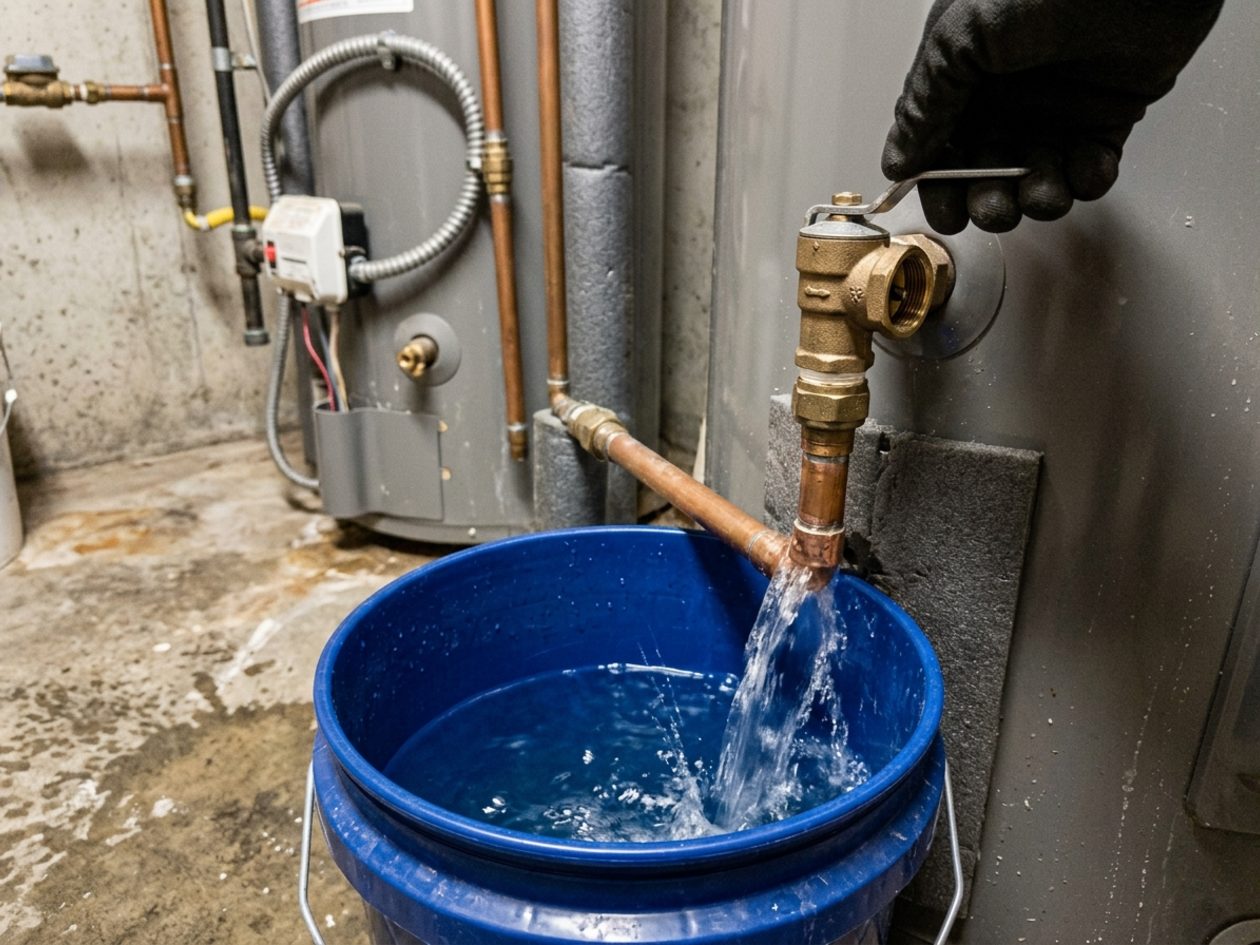
If water is coming from the bottom of the tank, shut the cold inlet and the gas or breaker before you call.
Under eight years with a repairable fault: repair. Over ten with a real fault: replace. In between, it comes down to the tank’s history: whether it has ever been flushed, whether the anode was ever changed, and whether it’s still the right size for the household.
A note on buying your own unit. Sizing, venting and altitude derating all matter at 4,600 feet, and an appliance bought online without those inputs is a common source of disappointment. It’s worth having the specification conversation before the purchase rather than after delivery.
The repair-or-replace decision is not really about the fault. It is about the fault plus the age of the tank, and the two together give a clear answer more often than people expect.
Worth repairing: a failed thermocouple or igniter on a gas unit, which is a modest part and an hour’s work; a failed upper or lower element on an electric unit, same logic; and a failed thermostat, gas control valve or T&P relief valve. All three are components bolted to a sound tank. On a heater under about eight years old, repairing any of them is straightforwardly the right call.
Usually replacement: a leaking tank, which means the glass lining has failed and the steel is corroding; there is no repair for that, and a weeping seam becomes a burst one. And a heater that has lost most of its capacity to sediment, where the bottom third of the tank is packed hard enough that the burner is heating sludge rather than water.
The age test that settles the borderline cases: past twelve years on a tank heater, spending more than about a third of replacement cost on a repair is usually money you will spend again within two years. Ask for the manufacture date off the serial number before you decide; it is on the label, and it is often older than the owner thinks.
Replacement sized, vented and derated for this altitude.
See details →Endless hot water, and an honest conversation about hard water.
See details →The annual job that decides how long the tank lasts here.
See details →Treating the cause rather than replacing the casualties.
See details →Hydronic systems in older Greeley houses.
See details →A tank leaking badly, at any hour.
See details →Rentals where hot water has to be back the same day.
Area details →Older tanks where the fault is a thermocouple, not the tank.
Area details →Repairs on units still worth repairing, honestly assessed.
Area details →Commercial hot water where downtime costs trading hours.
Area details →Not on the list? We cover Greeley, Weld County and the northern Front Range, see every service area.
On a gas tank, look at the pilot or the ignition status light. If the pilot is out, there’s a reason: a failing thermocouple, a dirty flame sensor, a draft, or a gas supply issue, and relighting it repeatedly without fixing the cause just delays the diagnosis. On an electric unit, check the breaker and then the reset button on the upper thermostat; a tripped high-limit reset almost always means a failed element or thermostat rather than a random event. If you smell gas at any point, leave the house, call the gas utility from outside, and don’t touch switches.
Nine times out of ten in this area, sediment. Hard water deposits a layer of mineral scale in the bottom of the tank, which physically occupies volume and insulates the burner from the water above it. A 50-gallon tank with several inches of scale behaves like a much smaller one and takes longer to recover. Other causes are a failed lower heating element on an electric unit, which typically gives you a short burst of hot then cold: a broken dip tube mixing incoming cold with the hot at the top, or a crossover at a mixing valve somewhere in the house.
Water trapped underneath the sediment layer boiling and forcing its way up through it. It’s the clearest audible symptom of scale build-up, and on the northern Front Range it’s extremely common. It’s not immediately dangerous, but it tells you the tank is working harder than it should, running less efficiently, and heading toward a shorter life, the sediment layer also accelerates corrosion of the tank bottom. Flushing helps if it’s caught reasonably early; a tank that has been rumbling for five years is often past the point where flushing achieves much.
Depends entirely on where the water is coming from, and this is the most important distinction on the page. Leaks at the cold inlet, the hot outlet, the drain valve, a union or the temperature-and-pressure relief pipe are fittings, and fittings are repairable. Water seeping from the seam at the bottom of the tank body means the steel shell has corroded through from the inside. That is not repairable at any price: the tank is done, and it will get worse, not better. Shut the cold inlet, kill the gas or breaker, and plan a replacement.
Manufacturer figures usually say eight to twelve years for a tank unit. With hard water and no maintenance, the shorter end of that is realistic here; with annual flushing and a replaced anode rod, plenty of tanks comfortably beat it. Tankless units last considerably longer: often twenty years, but only with regular descaling, and they’re less forgiving of neglect than a tank is. Age matters for decision-making: putting a large repair into an eleven-year-old tank rarely makes sense compared with putting that money toward the replacement you’ll be buying soon anyway.
It’s a sacrificial metal rod inside the tank that corrodes preferentially so the steel tank lining doesn’t. Once it’s consumed, the tank itself starts corroding, which is precisely how tanks fail. In hard water it depletes faster, so checking it every few years and replacing it when spent is one of the highest-value maintenance items available on a water heater, and it costs a fraction of a tank. Almost nobody does it. If your heater is five years old and has never been looked at, this is the thing to ask about.
Rusty or brown hot water, with cold water running clear, usually means corrosion inside the tank or a spent anode rod. A rotten-egg smell is typically a reaction between sulphates in the water and the anode rod, often accelerated by bacteria in a tank that runs at a low temperature; a different anode material and a sanitising flush usually resolve it. Cloudy or white water is normally dissolved air or fine mineral content and is harmless. Discolored water from both hot and cold points at the supply or the service line instead, which is a different investigation.
Yes, and it should never be ignored or plugged. The temperature-and-pressure relief valve is the tank’s primary safety device, it exists to prevent a pressure vessel failure. Occasional dripping can mean high household water pressure, a failed expansion tank, thermal expansion with no relief path, or a thermostat letting the tank overheat. It can also simply be a worn valve. Any of those needs a plumber, and the one response that’s genuinely unacceptable is capping the discharge pipe. If the valve is discharging repeatedly or the water is very hot, treat it as urgent.
Reasonable rules of thumb: under eight years old with a repairable fault, repair it. Over ten with a significant fault, replace it. Anywhere in between, weigh the repair cost against age, whether it has ever been flushed, whether the anode has ever been changed, and whether the tank is the right size for the household now. Also weigh access: if the heater is in a tight basement corner and the replacement will be awkward, doing it on your schedule beats doing it during an emergency at night. A tank leaking from the body isn’t a decision at all.
It does, and it’s a genuinely local factor. At roughly 4,600 feet there’s less oxygen available for combustion, so gas appliances need altitude-appropriate specification or derating, and venting has to be right. A unit sized and configured for sea level can underperform, run inefficiently, or fail to satisfy a household that it would have handled at low elevation. It matters most on tankless units, where the temperature rise across the unit is the whole design calculation. Any competent local installer accounts for this automatically, which is a good reason not to buy an appliance online and hand it to a plumber.
Tell us the age of the tank and where the water is coming from, that answers most of it.
Water heater repair and replacement across Greeley, Evans, Windsor, Milliken and Weld County.
(970) 973-0235Answered 24 hours a day, seven days a week, every week of the year.