Repiping & Galvanized Replacement
Galvanized supply replaced in copper or PEX, ideally while walls are open.
See details →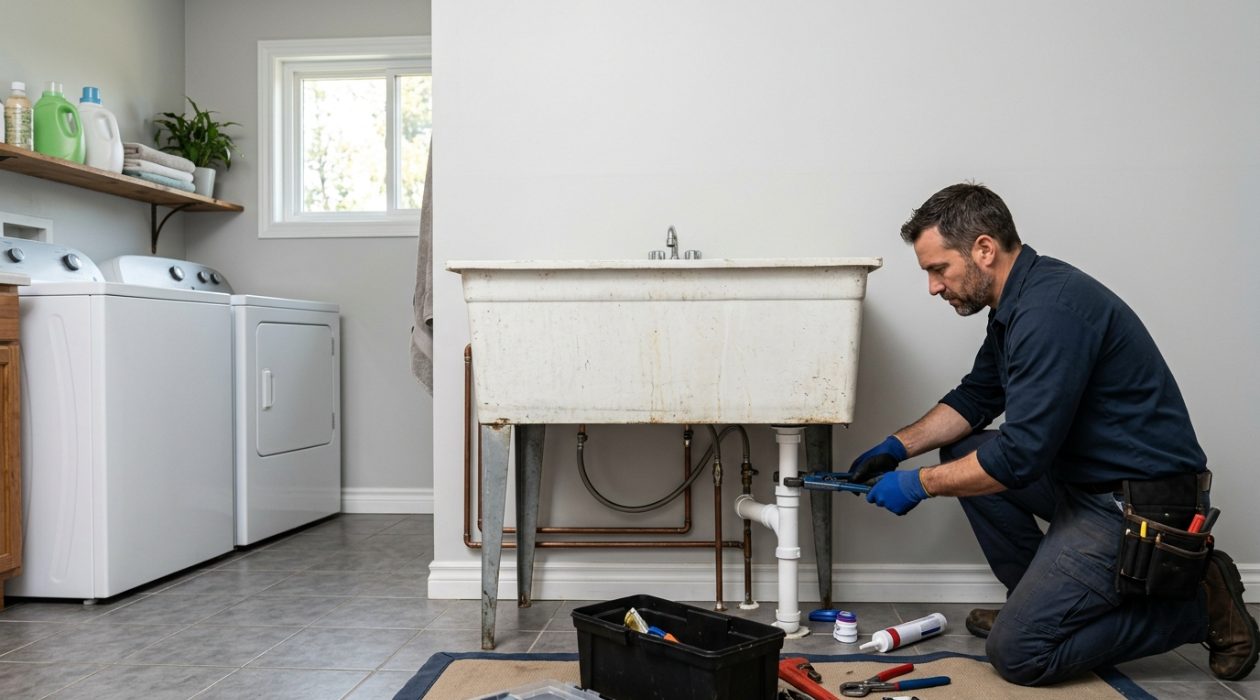
One of the older settlements in Weld County, with infrastructure to match at its center and acreage plumbing around it.
(970) 973-0235Platteville is one of the older communities in Weld County, and the housing near its center reflects that. When a house is a century old or close to it, the plumbing has almost certainly been through several eras: original installation, a mid-century update, a partial remodel in the eighties, and whatever the last owner did.
The consequence is that these houses rarely have one plumbing system. They have layers. It is common to find galvanized steel running into copper running into PEX, cast iron drainage tied into PVC with a rubber coupling, and a bathroom added at some point onto a vent stack that was never designed for it.
That is not automatically bad. Plenty of these houses work perfectly well. But it does mean that diagnosing a problem here starts with mapping what is actually present rather than assuming a standard arrangement, and it means that dissimilar-metal connections: galvanized to copper without a dielectric fitting: are worth looking for, because galvanic corrosion at those joints is a genuine and common failure.
The two big-ticket items in this housing stock are the same everywhere: galvanized supply that has rusted closed from the inside, and a clay sewer lateral with a century of tree roots to contend with. Both are predictable, and both are far cheaper to address on a plan than in a crisis.
We map what is there before recommending anything.
Galvanized steel supply pipe rusts from the inside out. The zinc coating protects it for a few decades, then the steel beneath begins to corrode, and the rust builds inward until the bore of a three-quarter-inch line is down to a fraction of its original diameter. There is no repair for that. You cannot clean it out and you cannot arrest it.
The symptoms are gradual and easy to misattribute. Brown or rusty water after the house has sat unused for a day or two. Poor pressure at upstairs fixtures. Flow that collapses the moment a second tap opens. A shower that goes cold when someone flushes. All of that is bore, not pressure.
The honest question is timing rather than whether. The best value moment to repipe is when walls are already open for another reason: a bathroom remodel, a kitchen, electrical work. Repiping into an open wall is dramatically cheaper than opening the wall for the repipe.
Partial repipes are legitimate too. Replacing the main runs and the most-used branches in copper or PEX, and leaving a short galvanized stub feeding something minor, is often a sensible allocation of money. What is not sensible is repiping in stages with no plan, which tends to cost more overall.
We will walk the house, tell you what is there, and give you options with numbers rather than a single figure.
Options with numbers, not a single take-it-or-leave-it figure.
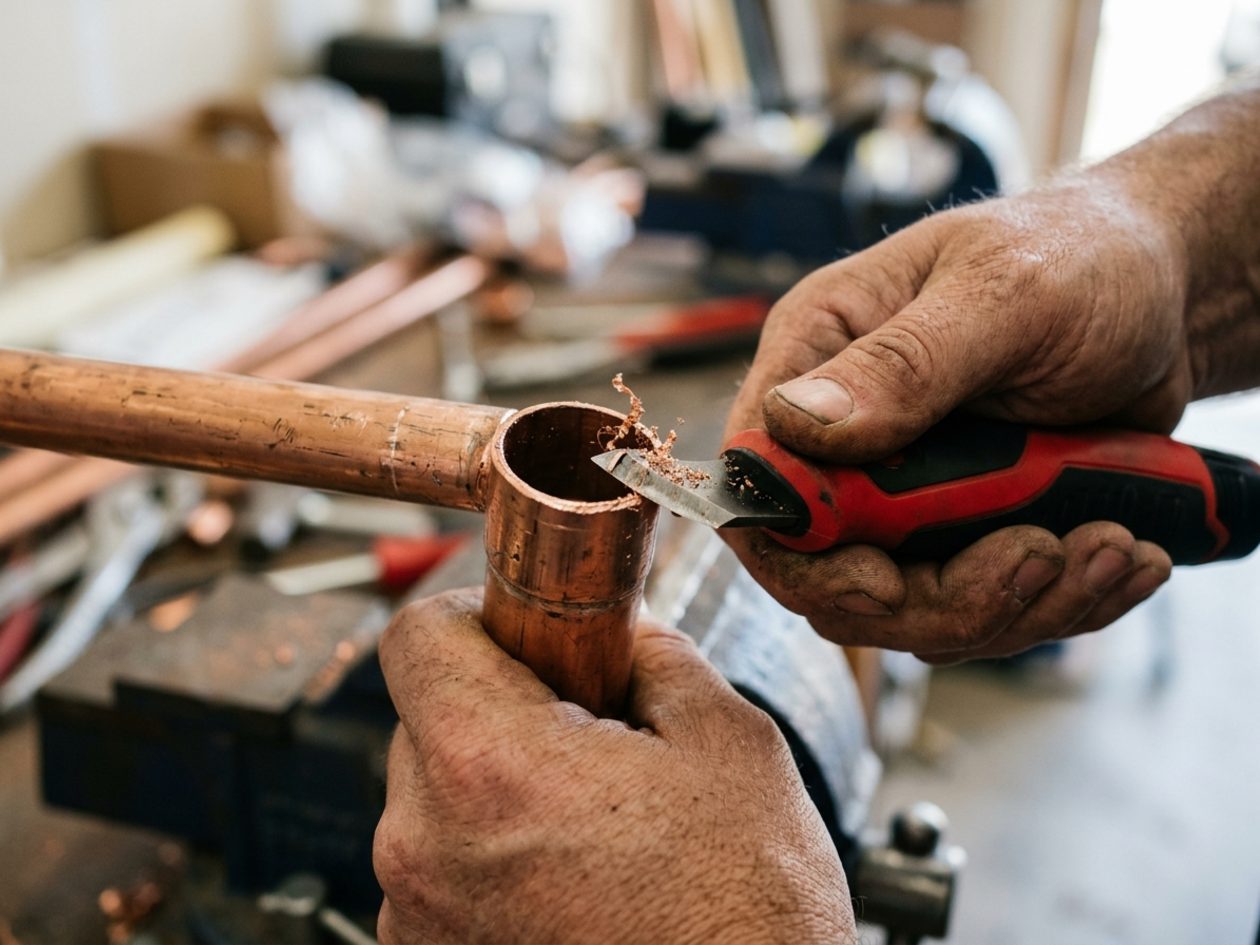 No repair existsRust builds inward until the bore is a fraction of original. Cleaning it out is not a thing.
Mature trees and clay laterals are the defining sewer combination in any old town, and Platteville has both in abundance.
Clay pipe does not corrode, which is why hundred-year-old laterals are still in service. What it does is sit in short jointed sections, and every joint is a potential entry. A root finds a joint already weeping a trace of moisture, threads through as a hair, and thickens inside the pipe where there is water and nutrient and nothing competing with it.
By the time it blocks, the mass inside is a wet rope. Cabling cuts a channel through it, which restores flow and reveals nothing about what remains. That is why the camera goes in after clearing rather than before: with the blockage gone, it can actually see the joint the roots came through and the condition of the pipe around it.
From there the options are honest. Sound clay with light intrusion can be maintained on an annual schedule indefinitely, and many owners of old houses do exactly that. Hydro jetting scours the walls properly rather than boring a channel. And where the pipe is cracked or offset, a liner or a pipe burst avoids trenching a garden that has taken a century to mature.
We do not quote a replacement without showing you the footage that justifies it.
Footage and a written finding before any recommendation.
Camera after clearing With the blockage gone you can see the joint that let the roots in. Before, you see a wall of root.
Properties on the rural edges may be on private wells and septic rather than the town system, which is a different discipline entirely: pumps, pressure tanks, water testing and house-side drainage.
Either is ordinary work for us. Tell us which you are when you call so we bring the right equipment and allow the right time.
Galvanized supply replaced in copper or PEX, ideally while walls are open.
See details →Clay laterals against a century of tree roots, cleared and then inspected.
See details →Footage of your actual line, so any recommendation comes with evidence.
See details →Lining and pipe bursting that avoids trenching a mature garden.
See details →Pumps and pressure tanks on rural properties outside the town system.
See details →Heater replacement in older houses, correctly sized and vented.
See details →Yes, for both scheduled and emergency work. It is a longer run than the Greeley suburbs, and we will give you an honest arrival window rather than an optimistic one. For planned work the distance makes no practical difference.
Look at exposed supply lines in the basement or crawlspace. Galvanized steel is dull gray, magnetic, and joined with threaded fittings rather than soldered ones. The functional signs are brown water after the house sits unused, weak pressure at upstairs fixtures, and flow that collapses when a second tap opens.
No. The rust builds inward from the pipe wall and there is no process that restores the bore or arrests the corrosion. Any product or service claiming otherwise is not being straight with you. Replacement is the only real answer, and the question is timing rather than whether.
While walls are already open for another reason: a bathroom or kitchen remodel, or electrical work. Running new pipe into an open wall is dramatically cheaper than opening a wall to run pipe. If you are planning any work that opens a wall, that is the moment.
Not at all, if it is planned. Replacing the main runs and the heavily used branches while leaving a short stub feeding something minor is often a sensible allocation of money. What costs more overall is repiping in unplanned stages, where each phase reopens work the last one did.
Galvanic corrosion at the junction. Two dissimilar metals in contact with water form a small cell and the joint corrodes from the inside, which produces a failure at the connection rather than in either pipe. A dielectric union or a brass transition fitting prevents it, and older layered plumbing frequently lacks one.
Roots through the joints in a clay lateral, in almost every case in a town of this age. Cabling clears a channel and the root mass rebuilds. A camera after clearing shows the joint they entered through and the condition of the surrounding pipe, which is what determines whether maintenance or repair is the right answer.
Yes, often. Vitrified clay does not corrode, which is why so many century-old laterals are still working. Its weakness is the joints, not the pipe body. Plenty of old laterals are sound pipe with root intrusion at a few joints, which is a maintenance situation rather than a replacement.
Usually a venting problem, and very common in houses where a bathroom was added at some point onto a stack that was never sized for it. Inadequate venting lets traps lose their seal, which allows odour in and produces gurgling elsewhere when a fixture drains. It is a real defect and it is fixable.
Properties in the town center are generally on the municipal system, while acreages on the rural edges are often on private wells with septic. The giveaway for a well is a pressure tank in a utility area or well house. Tell us which you are when you call so we bring the right equipment.
Old house? We map what is actually there before quoting anything.
Repiping, root work, camera inspections and rural water systems.
(970) 973-0235Answered 24 hours a day, seven days a week, every week of the year.