Before you buy
Standard home inspections don’t include the lateral, and a replacement is a five-figure surprise that becomes yours at closing. In the older neighborhoods this is the single most valuable add-on inspection available.
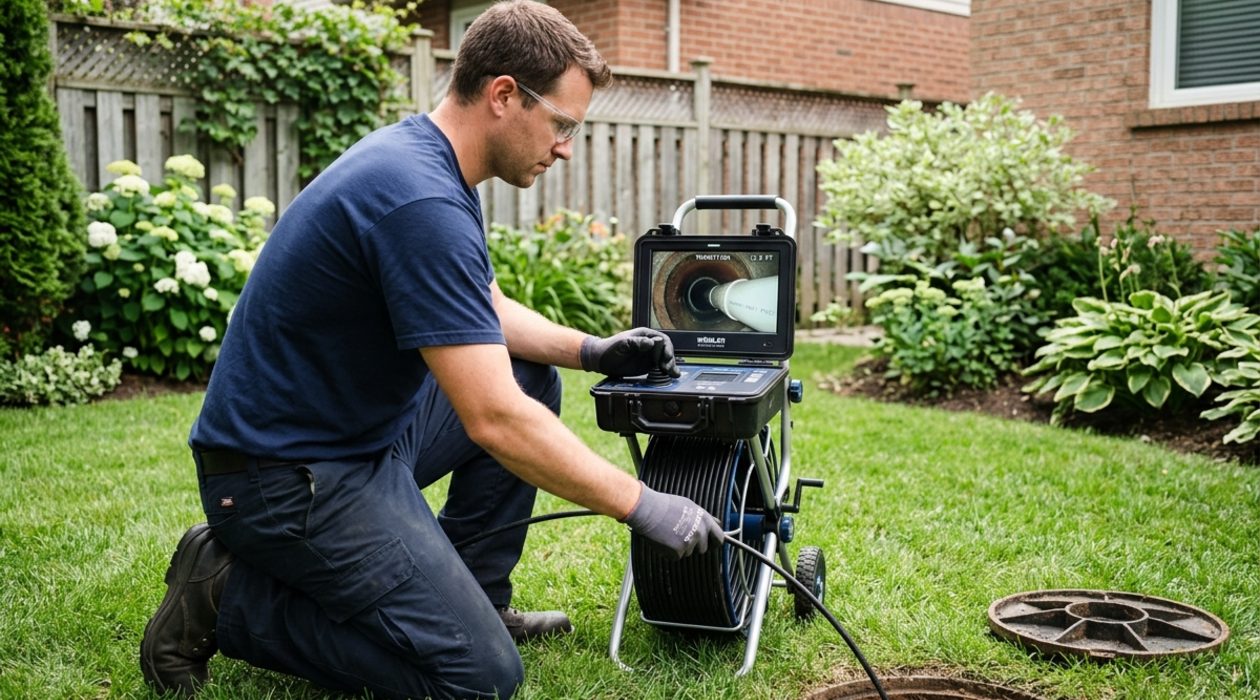
The only way to know what your lateral is made of, what shape it’s in, and where the trouble sits: before you spend money digging, jetting or negotiating on a house.
(970) 973-0235Standard home inspections don’t include the lateral, and a replacement is a five-figure surprise that becomes yours at closing. In the older neighborhoods this is the single most valuable add-on inspection available.
Clearing the line restores flow; it doesn’t tell you whether you had a soft blockage or a broken pipe. Without footage you’ll be paying to clear the same defect indefinitely.
Jetting, spot repair, lining, full replacement; these are very different bills. Choosing between them without seeing the pipe is guesswork with a large number attached.
The same drain, every few months, cleared each time. There is a reason, it’s visible on camera, and finding it usually ends a years-long cycle.
Once there’s drywall, carpet and a ceiling over the cleanout, everything below gets dramatically more expensive. Survey first, while access is easy.
Cottonwood, elm and silver maple are the three most reliable root offenders here. If any stand between your house and the street, you want to know what’s happening at those joints.
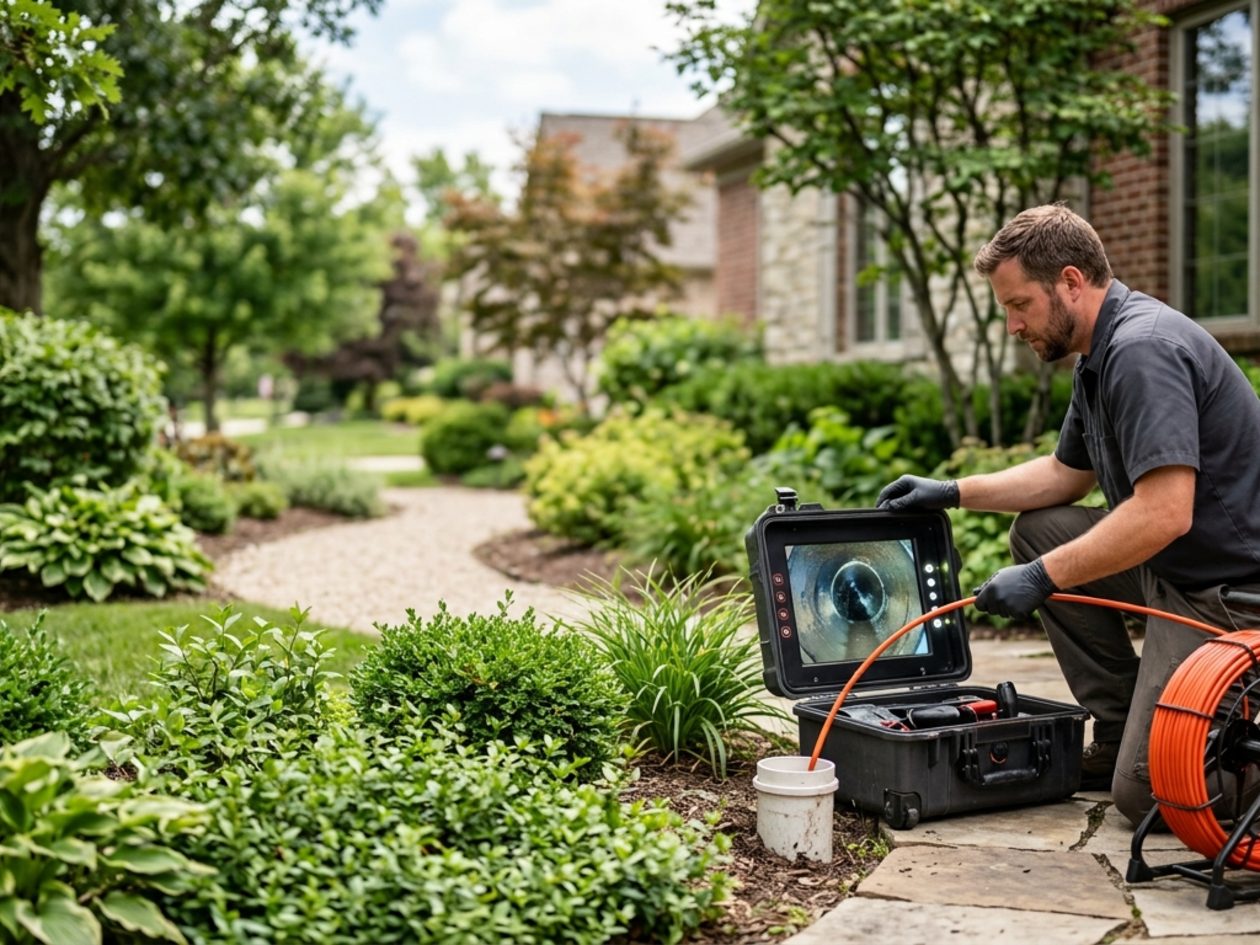
Material and age. Clay, cast iron, Orangeburg, PVC. This single fact frames every other decision, because each material fails in its own way and on its own timescale. It also tells you whether jetting is safe.
Root intrusion, and where it enters. Fine hair through a joint is one conversation; a mass filling the bore is another. What matters is the entry point: an open joint, a crack, a failed connection, because that’s what decides between managing the line and repairing it.
Offsets. Joints where sections have shifted out of alignment. The lip catches solids, and the gap lets roots and groundwater in. Common here, because expansive clay soil swells and shrinks with the seasons and pulls old joints apart.
Bellies. A sagged section holding standing water permanently. Solids settle there and build up. No amount of cabling fixes a belly: the pipe has to be re-laid to proper fall, and knowing it exists changes the whole repair plan.
Cracks, breaks and collapse. From ground movement, settlement, old excavation damage, or simply age. The camera shows severity and exact footage, which is what turns a trench into a targeted hole.
Grease and scale. How much, over what length, and how hard. This is what separates a jetting job from a repair job, and it’s the difference between a bill you can plan and one you can’t.
Connections and the tap. Where branches join, and how the lateral meets the city main. Failed connections at the tap are a known trouble spot, and one that’s worth identifying before anyone starts digging in the yard.
Buying a house? Book it before your inspection deadline, the lateral isn’t in a standard report.
Distance to the defect Which is what turns a trench into one targeted hole
It’s your pipe and your money. Recorded video with distance markers lets you compare quotes on equal terms, decide between lining and excavation with evidence, and hold onto proof of condition for a future sale.
A useful test of any quote. If someone recommends major excavation but won’t show you footage of the defect and its footage marker, get a second opinion. Confidence in a diagnosis and willingness to show the evidence go together.
A camera survey is only useful if you understand what it found, and the vocabulary is small enough to learn in five minutes. Ask the technician to narrate the footage as it plays rather than handing you a file and a verdict.
Distance readings are the backbone of the whole report. Every finding should be tied to a footage mark from a known starting point: the cleanout, usually. “Root intrusion at forty-two feet” is actionable. “Roots in the line” is not, because nobody can dig to it.
Offset joints mean two pipe sections no longer line up squarely. Minor offsets catch debris; severe ones are the beginning of a failure.
A belly is a low spot where the pipe has lost its fall and holds standing water. On camera it looks like the lens driving into a pond. Bellies do not clean out and cannot be fixed by lining: that section has to be dug and re-graded, which is why finding one changes the repair conversation entirely.
Scale and tuberculation are the rough mineral and corrosion build-up you see inside old cast iron. They narrow the bore and give everything passing through something to snag on.
Cracks, fractures and separations are structural. The question to ask is whether the pipe is still round and holding its shape, because a pipe that is cracked but not deformed can often be lined, while a deformed or collapsed one cannot.
Ask for two more things at the end: the location and depth of anything significant, marked on the ground or given as a measurement from the house, and a plain-language summary of what needs doing now versus what should simply be watched. A good report tells you both, and is honest about the difference.
A survey you can read is worth more than a verdict you have to take on trust.
When the finding is grease, scale or root hair rather than a defect.
See details →Spot repairs and full replacements, dug where the camera said.
See details →Lining and bursting that spare the driveway and the trees.
See details →Clearing the mass, then deciding how to stop it returning.
See details →The emergency that usually prompts the survey.
See details →Fixture and branch work inside the house.
See details →Pre-purchase surveys on houses with unknown clay laterals.
Area details →Multi-tenant properties where the same line blocks twice a year.
Area details →Bellies and offsets that explain a backup no clearing has fixed.
Area details →Long runs where distance to the defect decides the repair method.
Area details →Not on the list? We cover Greeley, Weld County and the northern Front Range, see every service area.
A self-levelling camera head on a flexible push rod, lit and transmitting to a monitor, traveling the inside of your line. You see the pipe material, the condition of the wall, every joint, and anything in the way: root masses, grease, scale, standing water, cracks, offsets where sections have shifted, and bellies where the pipe sags. A footage counter tells you how far along each finding sits, and a locator can mark the position on the ground above. You watch it live, and you should get a copy.
In Greeley’s older neighborhoods, it’s one of the highest-value inspections available and standard home inspections generally don’t include it. A sewer lateral replacement is a five-figure conversation, it’s the buyer’s problem the day after closing, and nothing about it is visible from inside the house. Fifty-year-old clay under three mature trees is not a defect you want to discover in your first spring. Ask for it specifically, before the inspection deadline.
Usually under an hour for a residential lateral once access is established. Longer if the line has to be cleared first: a camera can’t see through standing water or a solid blockage, so a heavily blocked line sometimes needs cabling before it can be surveyed. If there’s no accessible cleanout, add time for pulling a toilet or accessing through a roof vent, which is worth knowing before the appointment.
It makes the job straightforward, so it’s the first thing a plumber looks for: typically a capped four-inch pipe in the basement floor or wall near where the line leaves the house, sometimes outside near the foundation. Without one, access means pulling a toilet or going in through a roof vent, both of which are doable but slower. If your house has no accessible cleanout, having one installed is worth considering on its own merits: it makes every future inspection, cabling and jetting job faster and cheaper.
Two of the most consequential things a camera finds, and neither is visible any other way. An offset is a joint where the two pipe sections no longer line up, leaving a lip that catches solids and an opening that admits roots and groundwater: usually caused by ground movement, which the expansive clay soil around here supplies reliably. A belly is a section that has sagged below grade, so water and solids stand in it instead of flowing through. Bellies don’t clear themselves and cabling doesn’t fix them; they need the pipe re-laid to proper fall.
Yes, and this is where it pays for itself. The camera head carries a sonde, a transmitter, and a locator above ground picks up its signal to mark position and depth. So instead of trenching along a guessed route, the excavation is a targeted hole over a known defect at a known depth. On a driveway, a mature lawn or under a patio, the difference between “dig here” and “dig until we find it” is substantial in both cost and disruption.
Four, mostly, and each has a different future. Clay tile in pre-1960s houses: the barrel often survives well but every joint is a root entry point. Cast iron from roughly the same era through the 1970s: strong but corrodes from the inside, thinning the wall and building scale. Orangeburg: bituminised fiber, used in some mid-century construction: it deforms into an oval and delaminates, and it is at end of life wherever it still exists. PVC and ABS in modern builds: generally excellent, with problems at joints, from crushing, or from bad initial fall.
Once, for peace of mind and a baseline, if your house is pre-1970 or you have mature trees near the line. Not annually with no symptoms, that’s a service being sold rather than needed. The times it genuinely earns its place are: before buying, after any backup, before spending money on jetting or repair, before finishing a basement, and if you’ve just inherited a house whose plumbing history is unknown. A single survey with footage gives you a reference point for every decision afterwards.
You should, and it’s reasonable to ask up front. Recorded video with footage markers is your evidence: for deciding between repair options, for getting a comparable second quote, for a real estate negotiation, and for showing an insurer or a future buyer. A plumber confident in the diagnosis has no reason to withhold it. If someone recommends significant excavation but won’t hand over footage of the defect, that on its own is a reason to get another opinion.
Practically speaking, no. It’s a flexible rod pushed through the line at low force, and a competent operator can feel resistance and stops rather than forcing it. The one real limitation is that a camera cannot pass a solid blockage or a badly collapsed section: in which case the survey stops there, and where it stopped is itself the most useful piece of information you got. Occasionally a fully collapsed line needs excavating at the stopping point, and that footage is what tells the crew where.
Buying a house or had a backup? Say which, it changes what we look for.
Sewer camera inspection with recorded footage across Greeley, Evans, Windsor, La Salle and Weld County.
(970) 973-0235Answered 24 hours a day, seven days a week, every week of the year.