Pressure Regulator Repair
Regulators and expansion tanks in newer houses, past their service life.
See details →
New subdivisions on the edges, older housing at the center, and almost no overlap in what goes wrong.
(970) 973-0235Milliken has grown substantially in recent decades, and that growth sits alongside an older town center rather than replacing it. The result is two housing stocks with almost nothing in common plumbing-wise.
In the newer subdivisions, expect PEX supply, plastic drainage, a pressure reducing valve fitted at build, an expansion tank, modern venting and irrigation on every lot. Nothing rots. What happens instead is that equipment reaches its service interval: the regulator fails silently after ten to fifteen years, the expansion tank waterlogs, the water heater enters the back half of its life, builder-grade fixtures all give up within the same couple of years, and the irrigation backflow assembly has a legal annual test requirement most owners have never been told about.
In the older center, expect the Weld County classics: galvanized supply narrowing from the inside, clay or early cast iron laterals with root intrusion, cast iron stacks scaling internally, and original angle stops that seized decades ago.
Knowing which you are in narrows almost any problem before we arrive. If you are not sure of your build era, the supply pipe material in the basement answers it in seconds.
Newer or older, it narrows the diagnosis immediately.
The most common call from a newer Milliken house is not a failure. It is a backlog. The house is twelve years old, everything works, and nothing has been serviced because nothing feels old.
The pressure reducing valve is the biggest one. It has a diaphragm and a spring, it fails silently at ten to fifteen years, and when it does the house runs at full street pressure. Nothing dramatic happens: instead every seal in the building starts wearing out early, water hammer becomes routine, and the water heater relief valve begins to weep. A five-minute gauge check on a hose bib settles it.
The expansion tank is the companion item. With a regulator fitted the house is a closed system, so heated water needs somewhere to expand. When the tank bladder fails it waterlogs and does nothing, and pressure climbs whenever the heater runs. The tell is a reading that is fine in the morning and high in the evening.
The water heater is on a ten-to-fifteen-year clock, and on this water annual flushing genuinely extends it. A rumbling heater is sediment insulating the tank bottom from the burner and cooking the steel above it.
And the irrigation backflow assembly needs a test every year, filed with the district. That one is a legal requirement, not a recommendation.
Pressure, expansion tank, heater and fixtures in one visit.
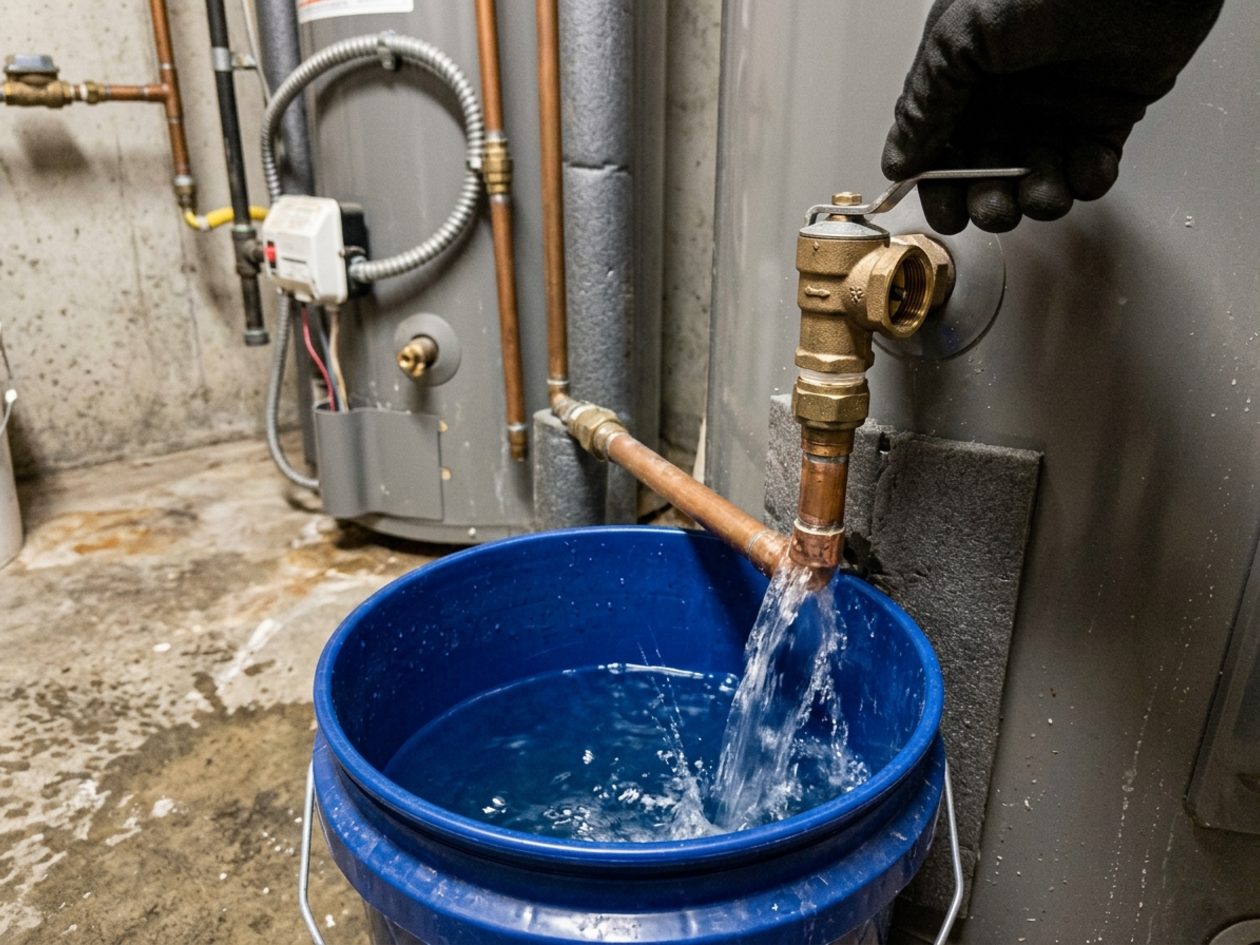 Fine in the morning, high at nightThat pressure pattern is a waterlogged expansion tank, not a failed regulator.
The two big items in the older half of town are entirely predictable, which is exactly why they should be planned rather than survived.
Galvanized supply rusts closed from the inside and there is no repair. Brown water after the house sits unused, weak upstairs pressure, and flow that collapses when a second tap opens are all bore rather than pressure. The cheapest moment to repipe is while walls are already open for another reason, so if you are planning a bathroom or kitchen, that is the moment.
Clay sewer laterals are jointed every few feet and mature trees find those joints. Cabling clears a channel; a camera after clearing shows the joint the roots came through and the state of the pipe. Sound clay with light intrusion is a maintenance schedule. Cracked, bellied or offset pipe is a repair, and a liner or pipe burst usually avoids trenching the garden.
The third, less discussed item is original angle stops. Multi-turn shutoffs from decades ago seize when left untouched, and the handle either refuses to move or snaps off, which turns a five-minute cartridge job into a shut-off-the-house repair. We replace them with quarter-turn ball valves during any fixture work, and it is the cheapest insurance in an old house.
Supply, lateral, stops and heater in one visit.
Cheapest insurance available A seized stop turns a five-minute repair into a whole-house shutdown. Swap them during any fixture work.
Newer or older, if you have a sprinkler system it needs an autumn blowout that drains the backflow assembly itself rather than just the lateral lines, a slow controlled charge-up in spring, and a backflow test every twelve months.
Those two visits a year prevent the most expensive avoidable failure in any irrigated town: a brass backflow preventer split by the first hard freeze.
Regulators and expansion tanks in newer houses, past their service life.
See details →Heaters reaching the back half of their life, replaced on your schedule.
See details →Galvanized supply in the older center, replaced in copper or PEX.
See details →Clay laterals against mature trees, cleared and then inspected.
See details →Winterization that drains the backflow assembly, not just the laterals.
See details →Annual testing, filed with the district for you.
See details →Yes, for scheduled and emergency work across both the newer subdivisions and the older town center. Dispatch is answered around the clock and we will give you a realistic arrival window on the phone.
Look at the supply pipe in the basement or crawlspace. PEX: flexible plastic tubing, often red and blue, means recent construction. Copper means anywhere from the sixties onward. Dull gray magnetic steel with threaded fittings means galvanized, and an older house. That single observation narrows almost any diagnosis.
Probably several things, none of them dramatic. The pressure reducing valve is near the end of its life, the expansion tank may have waterlogged, the water heater is into its back half, and the irrigation backflow assembly needs an annual test. One visit covers all of it.
Screw a gauge onto an outside hose bib with everything in the house off. Above eighty PSI on a house that has a regulator means it is no longer regulating properly, and the house is running at full street pressure. It is the single most useful five-minute check available to a homeowner.
A waterlogged expansion tank rather than a failed regulator. With a regulator fitted the house is a closed system, so water expanding as the heater runs has nowhere to go. When the tank bladder fails, pressure climbs through the day. An expansion tank is an inexpensive fix.
Sediment on the tank bottom. Minerals settle over the burner, insulate the water from the flame, and the steel above overheats. The rumble is water boiling under that layer. Annual flushing prevents it; a tank that has gone a decade without flushing may have a layer that cannot be drained out.
No. It rusts inward from the pipe wall until the bore is a fraction of its original diameter, and there is no process that restores it or arrests the corrosion. Replacement is the only answer, and the best value moment is while walls are already open for other work.
In the older part of town, roots through the joints of a clay lateral. Cabling clears a channel and the mass rebuilds. A camera after clearing shows the joint they came through and the condition of the pipe, which is what determines whether you need maintenance, a liner, or a replacement.
Do not force it, old multi-turn stops snap and the stems shear. We isolate at the main, replace it with a quarter-turn ball valve, and then carry on with the original repair. It adds very little cost and it means the next repair does not require shutting off the whole house.
If the system is connected to the municipal supply, yes, a test every twelve months with the report filed by the deadline on your notice. The tester we send can usually repair a failed assembly on the same visit, and files the paperwork for you.
Not sure of your build era? The basement pipe answers it in seconds.
Pressure, heaters, repiping, sewer work and irrigation across Milliken.
(970) 973-0235Answered 24 hours a day, seven days a week, every week of the year.