A significant belly
Lining reproduces existing geometry, so a sagging pipe becomes a smooth sagging pipe that still holds standing water. Correcting fall means excavating and re-laying.
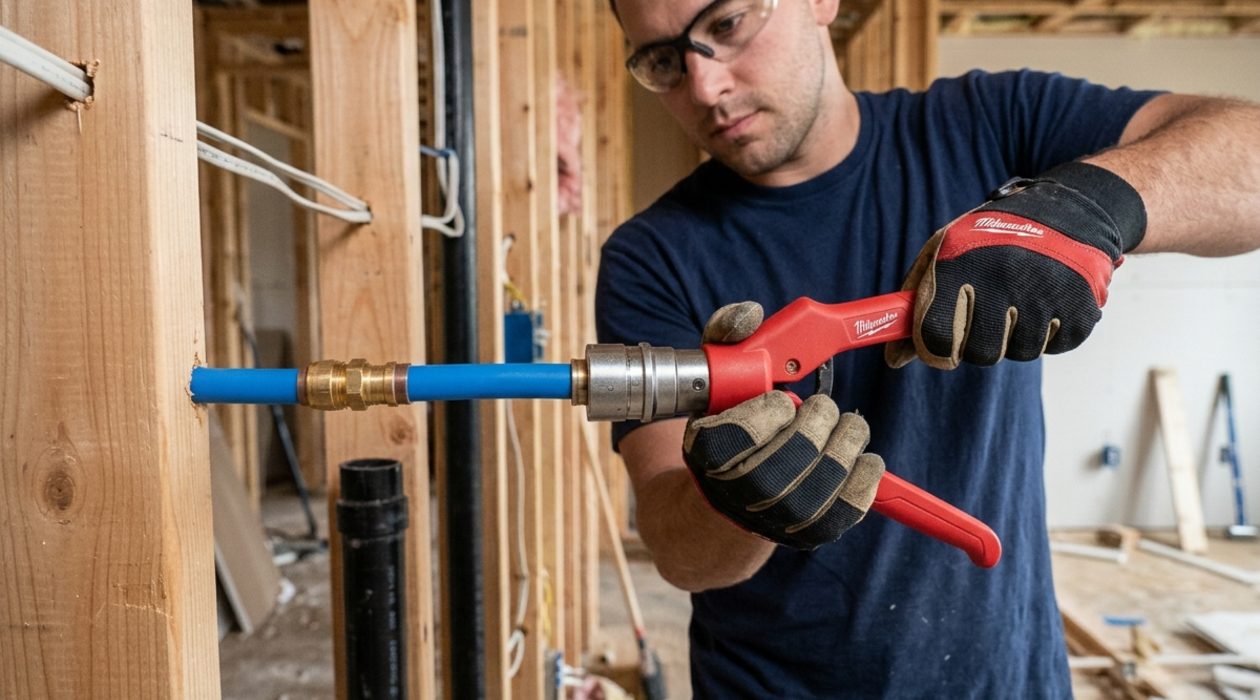
A new pipe inside the old one, or pulled through its path, installed from two small pits instead of a trench across the front yard. Where it fits, it fits well. Where it doesn’t, we’ll say so.
(970) 973-0235They get grouped together as “trenchless,” but they solve different problems and have different requirements. Which one applies is decided by the camera survey, not by preference.
A resin-saturated sleeve inserted into the cleaned pipe and cured in position, forming a continuous jointless pipe inside the old one.
A new pipe pulled along the existing route while a bursting head fractures the old pipe outward into the surrounding soil.
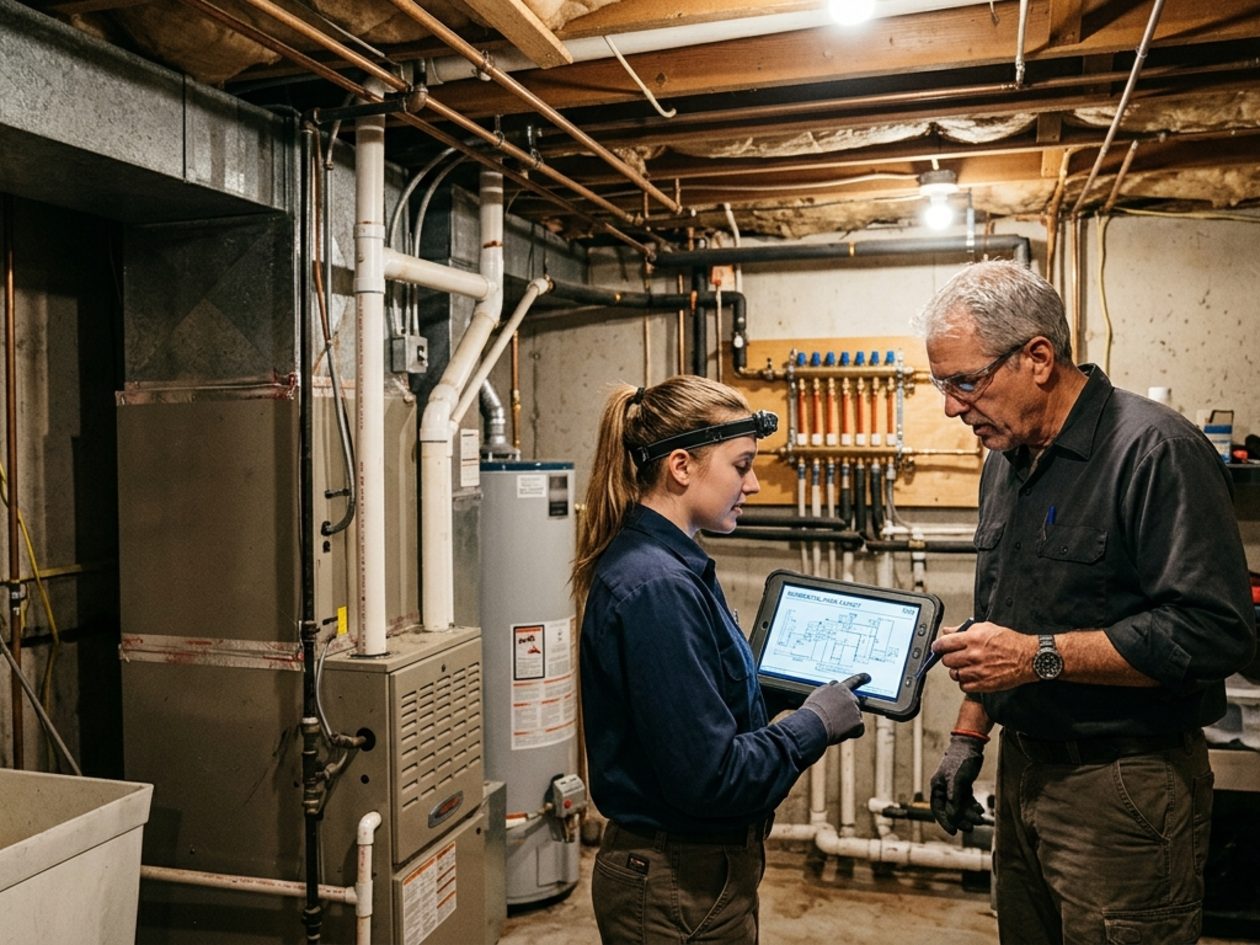
The case for trenchless is rarely about the pipe. It’s about everything between the pipe and the sky.
Ask for open-cut and trenchless side by side, restoration included. That’s the only fair comparison.
It’s marketed hard, and it genuinely is excellent in the right situation. These are the situations where it isn’t.
Lining reproduces existing geometry, so a sagging pipe becomes a smooth sagging pipe that still holds standing water. Correcting fall means excavating and re-laying.
There has to be a host pipe to line, and a path to pull through. A completely collapsed section usually needs opening up, at least at that point.
Orangeburg that has gone oval, or clay crushed out of round, may not accept a liner or a bursting head cleanly.
If the line needs to run somewhere else: a better route, a new connection point, a different depth, trenchless follows the old path by definition.
A short run under plain lawn with nothing built on it. Open-cut is often faster, cheaper and perfectly appropriate. Trenchless here is paying for a benefit you don’t need.
Bursting displaces soil outward. Where gas, water, fiber or electrical services run close alongside, that may rule it out on safety grounds.
A reasonable expectation: a contractor offering trenchless should also be willing to price the open-cut alternative and explain why they recommend one over the other for your specific line. “Trenchless is always better” is a sales position, not an engineering one. The camera footage, the surface conditions and the total cost including restoration should all point the same way before you commit.
Greeley’s two most common lateral problems, root intrusion and joints pulled apart by expansive clay movement, are both joint problems. A continuous liner has no joints to enter or separate. That’s not marketing; it’s the specific reason lining performs well on this soil.
Worth confirming before signing. Permits and inspection. Who restores the access pits. Whether branch connections are reinstated and camera-verified. And a final camera pass with footage handed to you: on trenchless work especially, that recording is the only way to see what you paid for.
The pitch for trenchless is usually framed as a straight price comparison against open-cut, and that framing is misleading in both directions. Per foot of pipe, lining or bursting is often the more expensive method. The saving is not in the pipe work; it is in everything that sits on top of the pipe and would otherwise have to be removed and rebuilt.
So the honest way to compare two quotes is to make sure both include restoration. A dig quote that stops at “backfill and rough grade” is not finished work. Somebody still has to replace the driveway slab, relay the sidewalk to city specification, rebuild the retaining wall, re-sod the lawn and put the mature landscaping back, and mature landscaping cannot actually be put back, only replaced with something younger. Ask each contractor to itemize restoration, then compare totals.
Where trenchless wins clearly is under hard surfaces and established planting. A lateral running beneath a concrete driveway, a finished patio, a garage slab, a street crossing or a row of forty-year-old trees is exactly the case the method was invented for. Two access pits instead of a sixty-foot trench means the surface stays intact, the job finishes in a day or two rather than a week, and there is no second contractor to schedule afterwards.
Where it wins less clearly is an open side yard with nothing on it but grass. If the machine can reach the run, the soil is workable and the only casualty is turf, open-cut is frequently the better value, and it lets the crew see and correct grade problems directly, which no liner can do.
One more thing worth pinning down: permits and inspection. Trenchless work on a sewer lateral is still permitted work, and it should still be inspected and camera-verified on completion. Ask to see the post-installation footage before final payment, the same as you would after a dig.
Ask every quote to include full surface restoration; it is the only way the two methods compare fairly.
The survey that determines whether trenchless is even possible.
See details →Spot repairs and open-cut, priced side by side.
See details →The problem lining solves most directly.
See details →Cleaning the host pipe before a liner goes in.
See details →What tends to prompt the whole investigation.
See details →Inside-the-house drain work.
See details →Mature landscaping and old street trees you do not want to lose.
Area details →Narrow lots where open-cut means the whole front garden.
Area details →Long runs under driveways and hard surfaces.
Area details →Established gardens over laterals that need lining rather than replacing.
Area details →Not on the list? We cover Greeley, Weld County and the northern Front Range, see every service area.
Replacing or rehabilitating a buried pipe without excavating its full length. Instead of a continuous trench from the house to the street, the work is done from small access pits, usually one near the foundation and one near the connection at the main. Two techniques dominate. Lining cures a resin sleeve inside the existing pipe, creating a new jointless pipe within the old one. Pipe bursting pulls a new pipe through the old path while fracturing the original outward. Both leave what’s above the pipe largely untouched.
Not always on the plumbing line item, and often yes on the total. The installation itself can cost more than open-cut trenching. What changes the arithmetic is restoration: replacing a concrete driveway, resetting pavers, rebuilding a patio, re-establishing a mature lawn and repairing severed sprinkler lines are real costs that mostly disappear with trenchless. On a line running under a driveway, a patio or a landscaped front yard, trenchless is frequently the lower total. Under a plain stretch of grass, open-cut may genuinely be the better value.
No, and this is the honest limit of the method. Lining needs a host pipe that still holds a usable shape: the liner conforms to what’s there, so it reproduces existing geometry. A fully collapsed section, a severely deformed Orangeburg line, or a pipe with a significant belly is not a lining candidate: cure a liner into a sagging pipe and you get a smooth, permanent, sagging pipe. Correcting fall requires excavation. Multiple sharp bends and certain connection configurations can also rule it out. The camera survey is what settles it.
Cured-in-place liners are generally designed for a service life in the region of fifty years, comparable to new pipe. The structural advantage is that a liner is continuous and jointless, and since joints are where roots enter and where ground movement pulls things apart, removing them addresses the two most common local failure modes directly. Longevity depends on the installation: surface preparation, resin mix, cure control and a final camera pass all matter.
Slightly, and it rarely matters. A liner takes up some wall thickness, so a four-inch line loses a small amount of internal diameter. In practice flow usually improves, because the new surface is smooth and continuous where the old one was rough, scaled and interrupted by joint lips and root stubs. Hydraulically, a smooth slightly-narrower pipe generally outperforms a rough wider one. The exception is a line that was already marginally undersized, which is worth checking on the survey.
It’s commonly used in these conditions, and suitability comes down to the specifics: soil density, depth, the existing pipe material, and what else is buried nearby. Clay tile fractures cleanly, which suits the method well. What needs care is proximity: other utilities, foundations and large tree roots near the path all have to be accounted for, which is what the locate and survey stage is for. Where bursting isn’t appropriate, lining or a targeted open-cut is.
Yes, but pits rather than a trench. Typically one access pit near the house and one at the far end near the connection to the main, each a few feet across. On a lining job there may be only one if access is available through an existing cleanout. Compared with a trench running the length of the front yard, the footprint is small, though it’s honest to say those pits are still real holes in real ground and need proper backfill and restoration.
Lining a residential lateral is often a single day: clean and camera the line, measure, prepare and insert the liner, cure it, reinstate any branch connections, final camera pass. Pipe bursting is usually one to two days including the access pits. Both are materially faster than an open-cut replacement of the same run, and the house is generally usable again the same day, though you’ll be asked not to use drains during the cure window.
It should be, exactly as open-cut work is. Sewer work almost always requires a permit, and inspection protects you; it means someone with no financial stake verified the result, and it means the work exists on the record when you sell. Utility locates remain mandatory before any excavation, including access pits. A contractor proposing to skip permits on trenchless work because “there’s hardly any digging” is a contractor to decline politely. Worth confirming with Greeley’s building division which permit class your rehabilitation method falls under: that changes the inspection points, not whether you need one at all.
Per foot of pipe, usually not, lining and bursting tend to cost more than laying new pipe in an open trench. The saving comes from what you avoid destroying. Once a quote includes replacing a concrete driveway, relaying a sidewalk to city specification, rebuilding a wall and replacing mature landscaping, trenchless frequently comes out ahead under hard surfaces and established planting. Across an open lawn with clear machine access, open-cut is often the better value, and it lets the crew correct grade problems a liner cannot fix. Insist that both quotes include full restoration before you compare the totals.
Tell us what’s above the line: driveway, trees, patio, and we’ll tell you if trenchless helps.
Trenchless lining and pipe bursting across Greeley, Evans, Windsor, Milliken and Weld County.
(970) 973-0235Answered 24 hours a day, seven days a week, every week of the year.