Water Softener Installation
The condition on which tankless life expectancy depends here.
See details →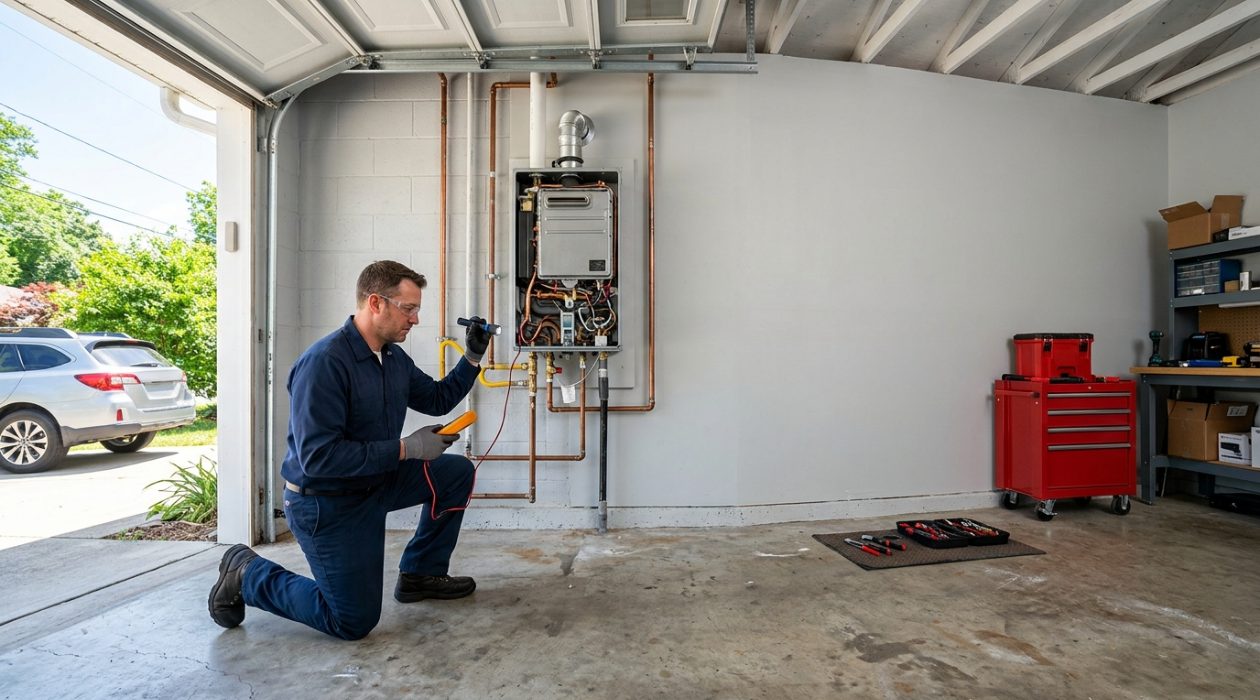
Endless hot water and a wall instead of a cylinder: genuinely good, in the right house. Here that means sizing for cold Colorado inlet water and being honest about what hard water does to a heat exchanger.
(970) 973-0235A tankless unit doesn’t hold hot water; it makes it as you draw it. Its capability is therefore expressed as a flow rate at a given temperature rise, so many gallons per minute, raised so many degrees. Both halves matter, and the second half is where Greeley differs from the brochure.
Incoming supply water here runs cold, and in winter it can arrive in the forties. Getting that to a comfortable 120°F is a substantially bigger lift than in a warm-climate house where the inlet might already be twenty degrees higher. The same model, in the same configuration, delivers meaningfully less simultaneous hot water in a Colorado January than its headline rating suggests.
The practical consequence: sizing has to be done against local winter inlet temperature and your actual peak demand, how many fixtures genuinely run at once on a bad morning. A unit sized on an annual average, or on a manufacturer’s optimistic rating, is exactly how households end up with lukewarm showers in the month they most wanted hot ones.
Add altitude to that. At 4,600 feet gas appliances need altitude-appropriate specification, and on a tankless unit, where the burner is doing a great deal of work in a short time, getting that wrong shows up directly as lost output.
Tell us how many showers and appliances run simultaneously on a weekday morning.
 Endless, not unlimitedDuration is unlimited; flow rate is not
This is the part of the tankless pitch that often goes unmentioned locally, and it’s the one that decides whether you get twenty years or six.
The honest version: a tankless unit installed in untreated Greeley water, with no descaling schedule and no service valves, will disappoint you, and the disappointment arrives as reduced output and fault codes rather than a dramatic failure. Either commit to the water treatment and the maintenance, or fit a good conventional tank and spend the difference on something else. Both are respectable choices; only one of them is a surprise.
Two tankless quotes on the same house can differ enormously, and it’s almost never the appliance. It’s these:
Ask specifically whether gas upsizing, venting, condensate and service valves are included.
If upsizing the gas line is difficult, if venting routes are awkward, if nobody will keep a descaling schedule, or if there’s no actual hot-water complaint to solve: a good conventional tank is the better buy, and the difference is better spent on a softener or a repipe.
Where tankless clearly wins. Large households wanting genuinely continuous hot water. Tight mechanical spaces. Removing a tank from above finished living space. And owners planning to stay long enough for a twenty-year appliance to matter.
Tankless is usually sold on two numbers: endless hot water and lower running cost. Both are real, and neither is the whole picture. If you are weighing the change, it helps to look at the full ownership period rather than the installation day, because that is where tankless earns its money, or fails to.
Lifespan is the strongest argument. A well-maintained tankless unit commonly runs twenty years, against ten to twelve for a tank. Over the period in which you would buy two tanks and pay to install both, you buy one tankless. That comparison holds up even against a higher initial cost, but only if the maintenance actually happens.
Maintenance is not optional here. Descaling roughly annually is the price of the longer life, and in this part of Colorado, with the hardness we have, skipping it is the single fastest way to ruin the investment. Scale coats the heat exchanger, efficiency drops, the unit starts short-cycling and throwing error codes, and eventually you replace the most expensive component in the box. Budget for the service the way you would budget for an oil change, and have the isolation valves fitted at installation so the job is quick and cheap forever after.
Softening changes the arithmetic. Pairing a tankless unit with a softener is not upselling in a hard-water area; it is what makes the twenty-year figure plausible. Factor the softener into the comparison honestly, along with the salt, and it may still win.
Running cost savings are real but modest. Eliminating standby loss matters most in a household with low to moderate hot water use and long gaps between draws. A large family running hot water constantly saves proportionally less, because standby loss was a smaller share of their bill to begin with. Anyone quoting you a dramatic percentage without asking about your usage pattern is guessing.
Recovery of the extra cost is slow. Be skeptical of short payback claims. The honest case for tankless is longevity, endless supply, and the recovered floor space, with lower bills as a genuine but secondary benefit. If you plan to move within a few years, a good tank is usually the better financial decision.
Ask for isolation valves at installation, they make every future descale faster and cheaper.
The condition on which tankless life expectancy depends here.
See details →Conventional tanks, sized and vented for altitude.
See details →Annual descaling and the service that keeps output at spec.
See details →Upsizing the supply line a tankless burner needs.
See details →Faults, error codes and lost output.
See details →Whole-house treatment beyond softening.
See details →Large homes with simultaneous demand that a tank cannot keep up with.
Area details →Retrofits where venting and gas supply both need rethinking.
Area details →New builds where tankless was specified but never sized for altitude.
Area details →Acreage properties on hard water, where descaling has to be planned for.
Area details →Not on the list? We cover Greeley, Weld County and the northern Front Range, see every service area.
Endless in duration, yes: it heats water as it flows, so there’s no tank to empty. Not unlimited in rate, though, and that distinction is where disappointment usually comes from. A tankless unit delivers a certain number of gallons per minute at a certain temperature rise. Exceed that and everything gets cooler rather than running out. So it will run a two-hour shower, but it may struggle with two showers plus a dishwasher unless it was sized for that.
Because temperature rise is the whole sizing calculation. A tankless unit is rated to raise water by a certain number of degrees at a given flow rate. Incoming supply here is genuinely cold, especially in winter when it can arrive in the forties, and lifting that to a usable 120°F is a much bigger lift than in a warm climate. The same unit that comfortably serves a house in Texas can underperform here in January. Sizing has to use local winter inlet temperature, not an average.
It’s the single biggest risk to them here, and it deserves a blunt answer. Scale forms on the heat exchanger where the temperature differential is highest, and because a tankless unit has narrow passages rather than a big tank, a modest amount of scale has a disproportionate effect: reduced output, error codes, eventually a failed exchanger. Tank heaters tolerate neglect by comparison; they just collect sediment in the bottom and carry on badly. A tankless unit in untreated hard water without descaling is a false economy.
In this area we’d treat softening or scale treatment as part of the tankless conversation rather than an optional extra. It protects the heat exchanger, keeps output at specification, extends the unit’s life toward the twenty-year figure that justifies the purchase price, and incidentally protects every fixture and appliance downstream. If softening isn’t practical, then a rigorous descaling schedule becomes non-negotiable rather than advisable, and that should be understood before you buy.
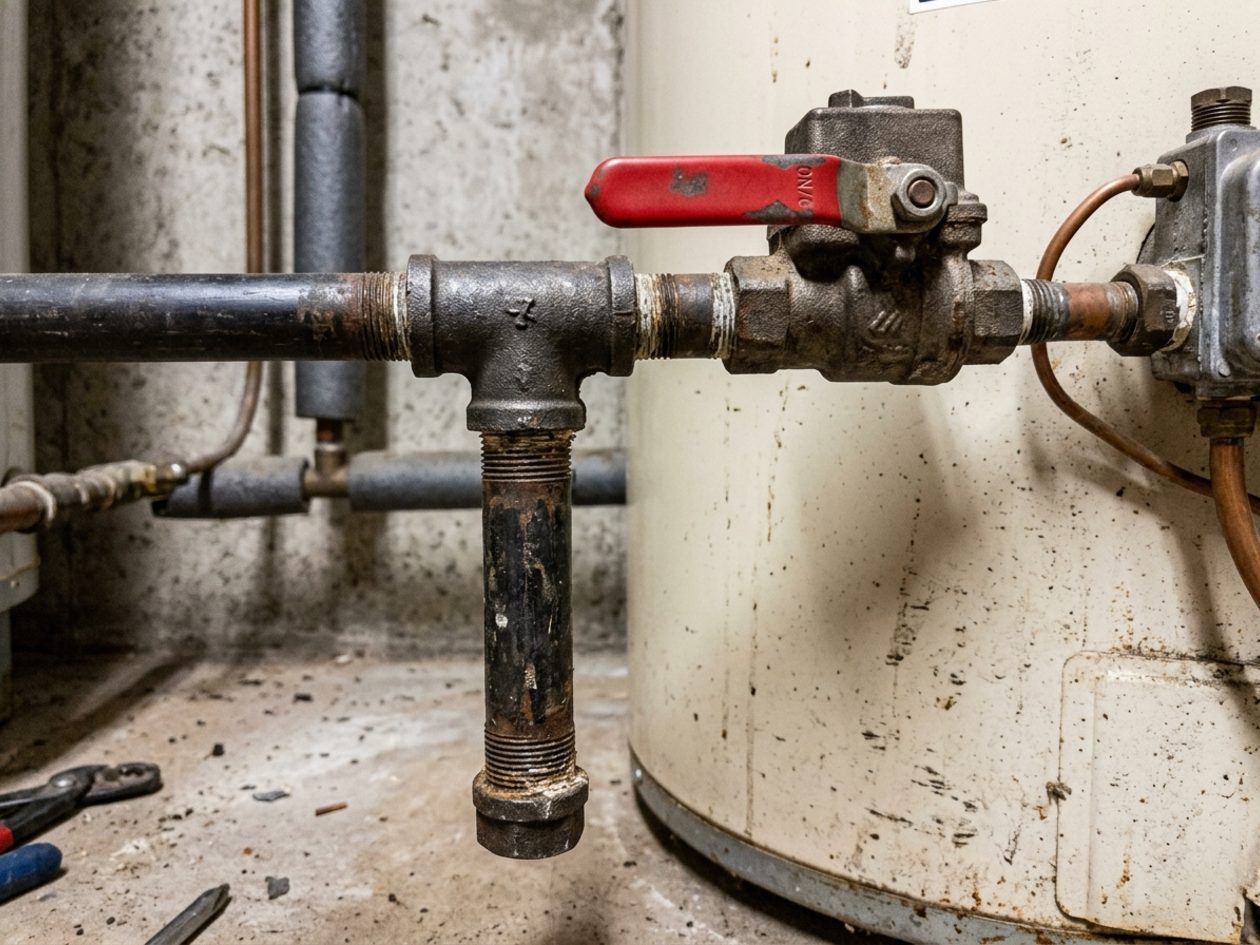
More than most people expect, and it’s the reason quotes vary so widely. A gas tankless unit typically needs a larger gas supply line than a tank heater, because its burner input is much higher when firing. It needs its own dedicated sealed venting in stainless or approved plastic, not the old flue. Condensing models need a condensate drain. Most need an electrical supply for controls. And service valves should be fitted so future descaling is straightforward rather than a plumbing job each time.
Generally yes on standby losses, there’s no tank of water being kept hot around the clock, and the savings are real but rarely dramatic. The honest summary is that tankless makes most sense for the benefits it actually delivers: continuous hot water, a long service life, and a much smaller footprint. If the sole motivation is a lower gas bill, the payback period against a good conventional tank can be long, particularly once the gas line, venting and water treatment are in the total.
A lot, and for some houses this is the deciding factor. A wall-mounted unit roughly the size of a small suitcase replaces a cylinder occupying several square feet of floor. In a small basement, a utility closet, or a house where the mechanical room is doing three jobs, reclaiming that floor area has genuine value, and it removes the flooding risk of a tank sitting on a finished floor.
Yes, and unlike a tank heater they don’t tolerate being ignored. Annual descaling with a circulating pump and an approved solution, plus inlet filter cleaning and a venting check. In hard water without softening, some units want this more often than annually. Budget for it as a recurring item from the start: the twenty-year life expectancy is conditional on it, and the most common cause of premature tankless failure is a maintenance schedule nobody kept.
That brief cold slug partway through a shower when the unit cycles between draws. Modern units with buffer tanks and better modulation have largely addressed it, and correct sizing plus a recirculation strategy where appropriate handles the rest. It’s worth raising with an installer, because it’s much easier to design around at specification stage than to solve afterwards. Also worth knowing: tankless units have a minimum activation flow, so a very low trickle may not fire the burner at all.
No, and we’d rather say so than sell one. A tank heater is often the better answer where the gas supply can’t easily be upsized, where venting routes are difficult, where the budget is best spent elsewhere, where nobody will keep up the descaling, or where the household simply has no hot water complaint to solve. Tankless earns its place where continuous supply genuinely matters, where space is tight, or where a long service life with proper maintenance suits how long you plan to stay.
Ask us to size it on winter inlet temperature, that’s the number that matters here.
Tankless water heater installation across Greeley, Evans, Windsor and the Weld County communities.
(970) 973-0235Answered 24 hours a day, seven days a week, every week of the year.