Spot excavation
A targeted hole over a located defect. Cut out the failed section, replace with new pipe and correct couplings, backfill and compact properly, camera to confirm. Minimal disruption when the defect is discrete.
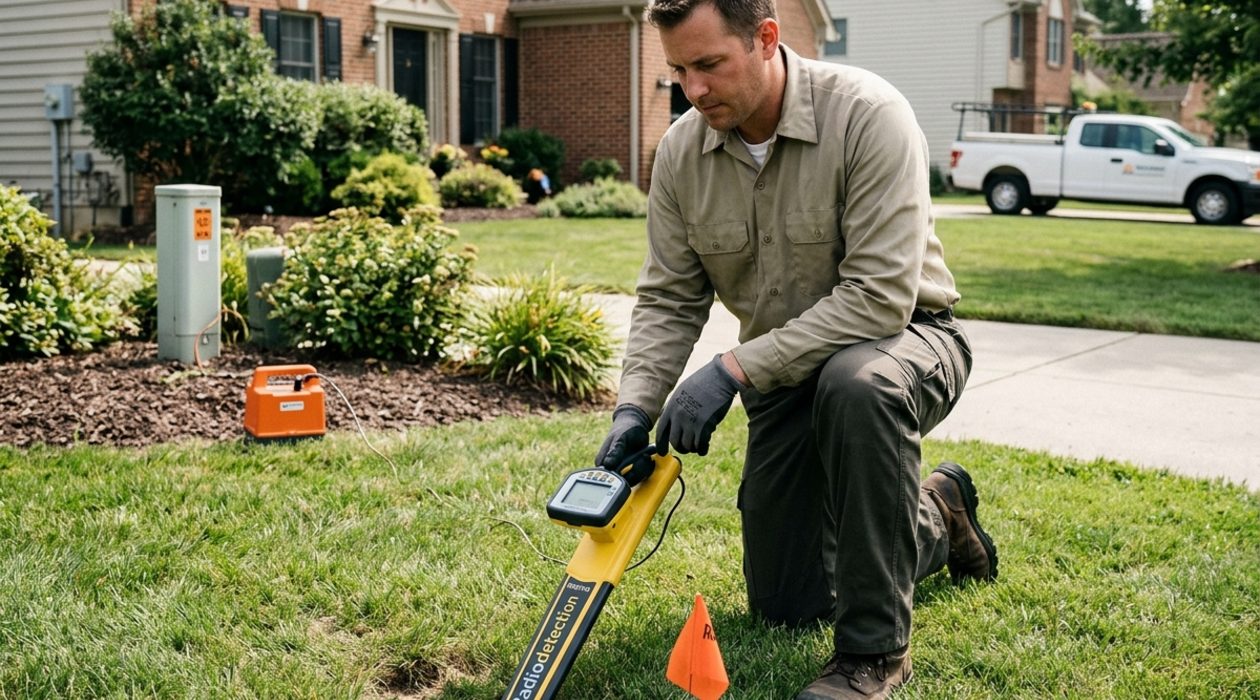
When the camera shows a collapsed joint, an offset or a line at the end of its life, clearing it again is money spent twice. Spot repairs and full replacements: permitted, inspected, and verified on camera at completion.
(970) 973-0235This is the only question that matters, and it should be answered by footage rather than by instinct. Get it wrong in one direction and you pay for a replacement you didn’t need. Get it wrong in the other and you excavate twice in three years.
A spot repair is right when the camera shows a discrete defect with sound pipe on both sides: one crushed length where something heavy crossed the yard, a single joint that has failed, a break at a known footage. The pipe elsewhere is intact, the material has life left, and there’s no reason to disturb it.
A full replacement is right when the material itself is finished. Orangeburg, wherever it survives, is at end of life by definition, it deforms and delaminates and cannot be relied upon. Clay tile with root intrusion at multiple joints will keep producing new failures, because every joint is a candidate. Cast iron with wall thinning along its length has no good sections to preserve.
And sometimes the answer is neither. A line with intact material but poor fall, a belly holding water permanently, doesn’t need new pipe so much as the existing pipe re-laid to grade. A line whose only problem is grease needs jetting. An honest scope tells you which of these four you’re in, with the footage to back it.
If you already have camera footage from another company, bring it, a second read on the same evidence is entirely reasonable.
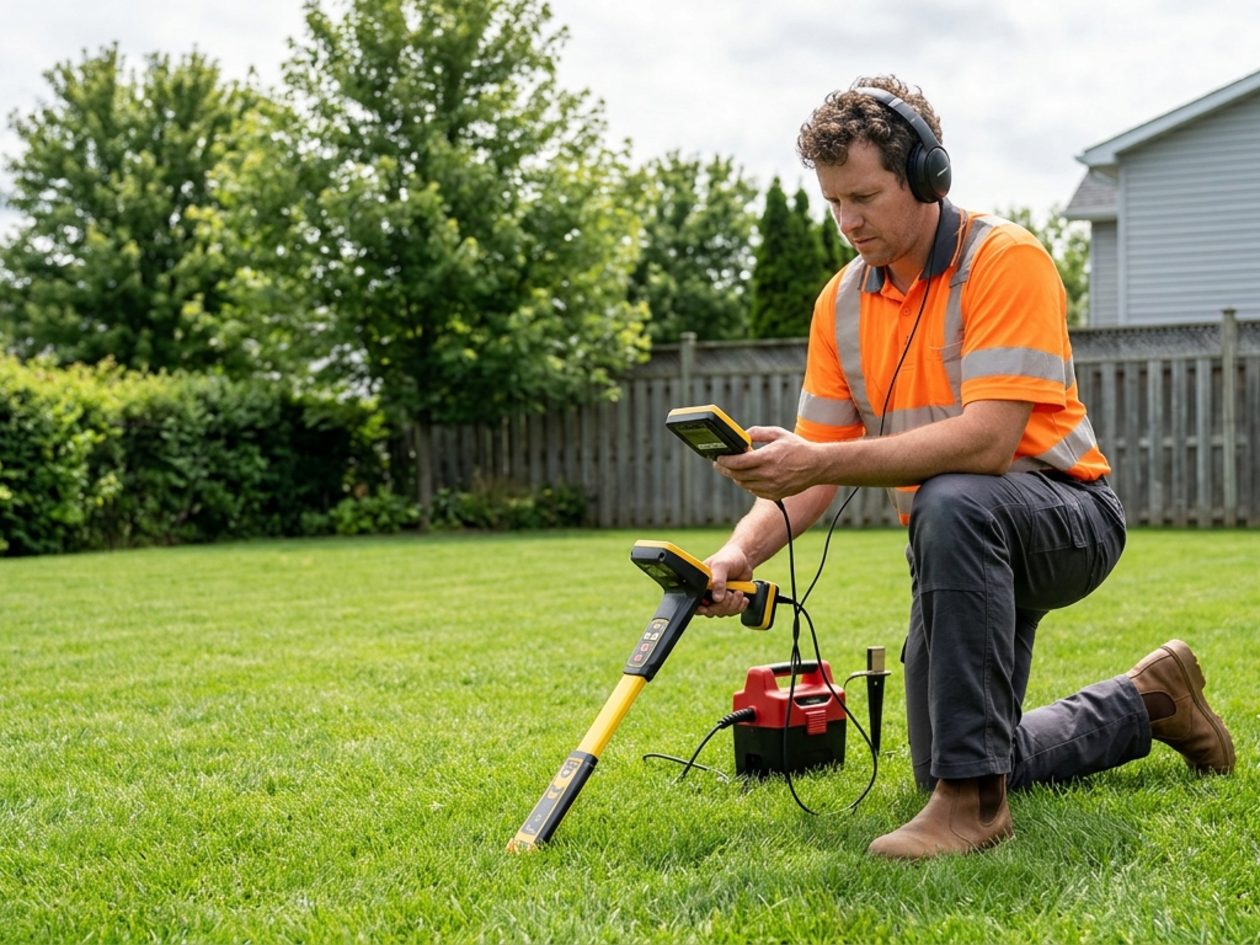 Ask to see what came outThe removed section settles most arguments
Each has a situation where it’s clearly correct and situations where it isn’t. Any quote should say which one and why.
A targeted hole over a located defect. Cut out the failed section, replace with new pipe and correct couplings, backfill and compact properly, camera to confirm. Minimal disruption when the defect is discrete.
Trench the full run and lay new pipe on prepared bedding at correct fall. The most disruptive option and still the right one where fall must be corrected, the line has collapsed, or the route needs changing.
A resin liner cured inside the existing pipe, creating a continuous jointless pipe within a pipe. Excellent against root intrusion because it removes the joints. Needs a host pipe that still holds its shape.
A new pipe pulled through the old one, fracturing the original outward as it goes. Replaces the pipe entirely from two access pits, leaving driveways and lawns largely intact.
What a good quote contains: the camera footage and the footage marker of the defect. Which method, and why that one. Length and depth of excavation, and exactly what surfaces will be disturbed. Who restores concrete, asphalt, sod and sprinkler lines, and whether that’s included or extra. Permits and inspection. Utility locates. And a final camera pass at completion. If a number arrives without those, you can’t compare it against anything.
Camera and sonde establish the defect, route and depth. Utility locates are called and honored. Permits are pulled so the work gets inspected by someone with no stake in the bill.
Open only what the method requires. New pipe bedded on prepared material at correct fall, with proper transitions where it meets existing pipe or the tap at the main.
Compaction in lifts so the ground doesn’t settle into a trench line next spring. Surfaces restored as quoted. Final camera pass, and the footage handed to you.
A trench backfilled loosely settles, and a settled trench across a lawn or driveway is a visible, permanent reminder. Proper backfill in compacted lifts costs a little more time on the day and saves a return visit and a scar you’ll look at for years.
One question worth asking every bidder. “Who puts my sprinkler system and sod back, and is it in this number?” The answers vary enormously, and it’s usually the largest hidden difference between two quotes that otherwise look alike.
Sewer work is one of the larger unplanned bills a homeowner faces, and it is bought under pressure, often with a fouled basement and two days of quotes. A short list of questions separates a complete proposal from a number on a page.
Have you seen the line on camera, and can I have the footage? A quote written without an inspection is a guess. The footage also gives you a baseline if anything is disputed later.
Exactly which section are you replacing, and how did you locate it? You want a distance from a known point and a marked location on the ground, not “the sewer line”. Digging in the wrong place is expensive and entirely avoidable.
Does this price include restoration? Backfill is not restoration. Ask specifically about the driveway, sidewalk, sod, and any planting, and about who is responsible if the trench settles next spring.
Who pulls the permit, and will the work be inspected? Lateral work is permitted work. A contractor who suggests skipping it is asking you to carry the risk when you sell the house.
How will the trench be compacted? This is the item that separates a lasting repair from a driveway that cracks in two years, and it is almost never itemized. Ask how it is done and in what lifts.
What is the warranty, and on what exactly? Distinguish between a warranty on the pipe, on the workmanship, and on the surface restoration. They are frequently different lengths from different parties.
A contractor who answers all six clearly and in writing is usually the one to hire, even at a slightly higher number. The cheapest sewer quote is very often the one that quietly leaves restoration and compaction for you to discover later.
Ask for the camera footage, the marked dig location, and restoration itemized separately.
The evidence any repair decision should rest on.
See details →Lining and bursting, when the surface matters.
See details →Managing a root-prone line rather than replacing it.
See details →When the finding turns out to be deposit rather than defect.
See details →The symptom that starts most of these conversations.
See details →The other buried line under the same moving clay soil.
See details →Original clay with root-opened joints along the whole run.
Area details →Older laterals under a high water table, where infiltration is the problem.
Area details →Repairs at the tap, where ownership boundaries need settling first.
Area details →Commercial connections on lines never sized for current use.
Area details →Not on the list? We cover Greeley, Weld County and the northern Front Range, see every service area.
Cleaning addresses what’s in the pipe; repair addresses the pipe itself. The signals that point at structure rather than debris: backups that return within weeks of being cleared, several fixtures slow at once, sewage smells in the yard, a patch of lawn that’s unusually green or soggy, a depression in the ground along the line’s route, or a camera that stops partway and can’t continue. Repeated clearing of the same spot is the clearest financial signal, at some point you’ve paid for the repair several times over without getting it.
Across most Colorado municipalities the property owner owns and maintains the lateral, the pipe from the house to the connection at the public main, while the city maintains the main. In practice that usually includes the buried run under your front yard and often under the sidewalk or verge. It’s worth confirming the exact boundary for your address before work is scoped, because it determines who pays for what at the tap. Greeley’s water and sewer department will confirm the boundary for your address, and that call is worth making before you accept a scope of work.
A spot repair replaces one failed section: typically a single collapsed joint, a crushed length, or a break at a known footage. It’s the right answer when the camera shows sound pipe either side of a discrete defect. A full replacement re-lays the whole run, and it’s the right answer when the material is at end of life throughout: Orangeburg anywhere, clay with multiple failing joints, cast iron thinned along its length. The camera decides this, not a preference, and a spot repair on a line that needs replacing just relocates the next failure.
Sometimes, and less often than people assume. Where the defect is discrete and accessible, a targeted excavation over a located point is a modest hole rather than a trench. Where the whole run needs replacing, trenchless methods: lining the existing pipe, or bursting a new one through the old path: can often be done from access pits at each end, leaving the driveway, patio and mature trees intact. Open-cut is still the right answer in some situations, particularly where fall has to be corrected or the pipe has collapsed entirely.
A spot repair is typically one day: excavate, cut out, replace, backfill, and a camera pass to confirm. A full open-cut replacement of a residential lateral is usually one to three days depending on length, depth, surface material and what has to be restored. Trenchless lining is often a single day. Add time for permits and utility locates, which are non-negotiable and worth waiting for, hitting a gas or fiber line during a sewer dig turns a bad week into a much worse one.
Sewer work almost always requires one, and that’s in your interest rather than an obstacle. A permit brings inspection, which means the work is verified against code by someone with no stake in the invoice, and it protects you at resale, unpermitted sewer work is a genuine problem in a property transaction. Utility locates are separate and mandatory before any excavation. A contractor who suggests skipping either is telling you something useful about how they work. Ask your contractor to show you the permit issued for your job; if you would rather see the process and the current fee schedule first-hand, Greeley’s building division publishes both.
They exploit rather than break. A root finds an existing weakness: an open clay joint, a hairline crack, a loose connection, because that’s where moisture and nutrient escape. Once inside, it thickens over years, and a root under sustained growth pressure will lever a joint apart or split a crack wider. So roots rarely cause the first defect but frequently turn a minor one into a failure. Removing the roots without addressing the entry point is why root problems recur on a schedule.
More than most factors. Expansive clay soil takes on water and swells, then shrinks as it dries, and that cycle repeats seasonally. Rigid pipe with jointed connections: clay tile and cast iron especially: has limited tolerance for that movement, so joints pull into offsets and sections settle into bellies. It’s a large part of why laterals here develop alignment problems rather than simply wearing out, and it argues for continuous, flexible modern pipe when a line is replaced.
Usually not the pipe itself. Most standard policies exclude the buried service line as a maintenance item, and cover the resulting water damage only if you carry a sewer backup endorsement, which is commonly an optional add-on rather than part of the base policy. Some carriers offer separate service line coverage. It’s worth reading your declarations page before you need to, and keeping camera footage and invoices regardless. Your carrier is the authority here, not us.
Modern PVC laid at correct fall on properly compacted bedding is generally expected to last many decades, well beyond most owners’ tenure. The variables that shorten it are all installation quality: inadequate bedding, incorrect fall, poor compaction, and joints that aren’t made properly. Which is the argument for permits, inspection and a camera pass at completion. A cured-in-place liner has a comparable design life and has the advantage of being jointless, which removes the root entry points that caused the original problem.
Have footage from an inspection? Tell us the footage marker and what it showed.
Sewer line repair and replacement across Greeley, Evans, Windsor, Johnstown and the Weld County communities.
(970) 973-0235Answered 24 hours a day, seven days a week, every week of the year.