One fixture
The trap or that fixture’s branch. Hair and soap in a bath or shower, grease in a kitchen sink, lint and detergent scale in a laundry line. Usually cleared through the trap or a nearby cleanout in well under an hour.
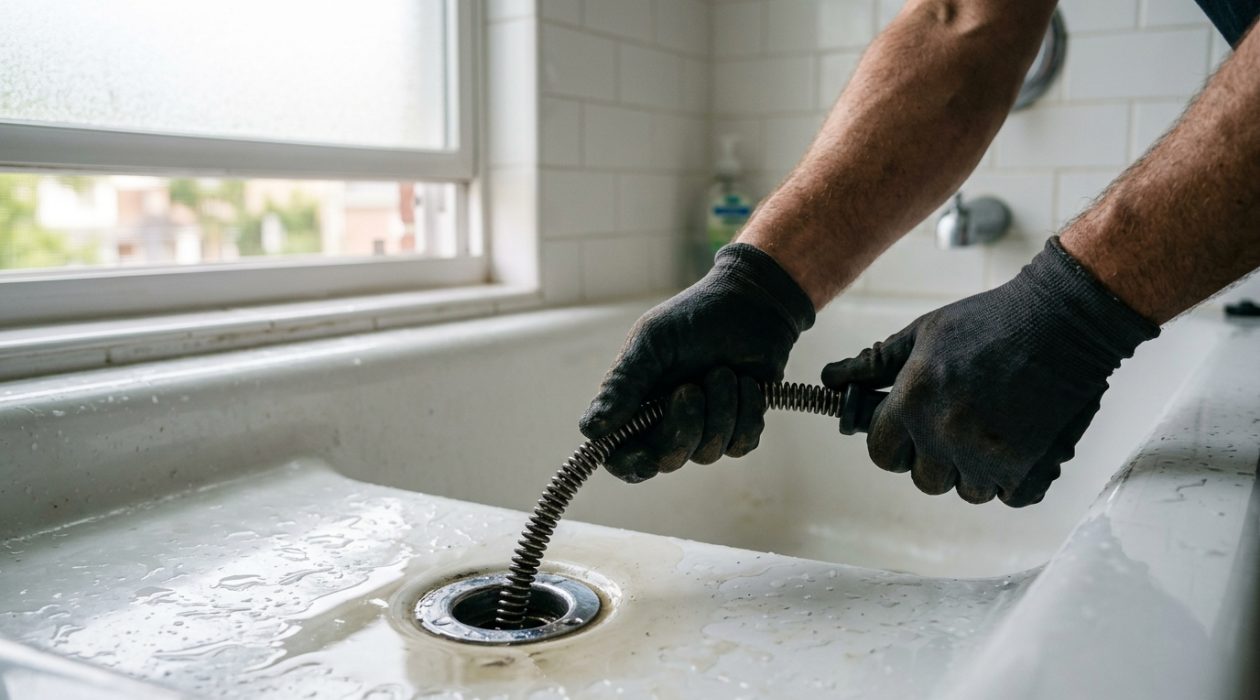
A sink that empties slowly, a shower that pools around your feet, a laundry standpipe that overflows. We clear it, and tell you which of those is a five-minute job and which is your sewer lateral warning you.
(970) 973-0235This one question separates a quick fixture job from a main-line problem. Run each fixture in turn before you call, it genuinely shortens the visit.
The trap or that fixture’s branch. Hair and soap in a bath or shower, grease in a kitchen sink, lint and detergent scale in a laundry line. Usually cleared through the trap or a nearby cleanout in well under an hour.
The shared branch serving that group, commonly the bathroom group or the kitchen and laundry run. Cleared from a cleanout so the whole branch is done rather than the first few feet of one arm.
That’s the main line, and it’s a different conversation: roots, a settled joint or grease out in the lateral. Gurgling at a basement drain when you run water upstairs is the classic tell.
Kitchen sink. Grease, and everything grease catches. Fat leaves the sink as a warm liquid and solidifies where the water cools, coating the pipe wall a little more with every wash. Coffee grounds, rice, pasta and fibrous peel then bind to that film. This is why kitchen lines reblock progressively further from the sink each time, and why hot water is a delay rather than a cure.
Bathroom sink. A dense felt of hair, toothpaste and soap scum, usually caught right at the pop-up stopper assembly or in the P-trap. Often clearable in minutes once the stopper linkage is pulled. If it returns quickly, the branch beyond the trap is holding material and wants a proper cabling.
Shower and tub. Hair again, plus soap combining with hard-water minerals into a gray wax that coats the pipe. Northern Colorado water makes this noticeably worse than it is at low mineral content. Tub drains add a linkage mechanism behind the overflow plate that collects material and sometimes seizes altogether.
Laundry standpipe. Lint, detergent scale and fabric fiber. Washing machines discharge fast, so a standpipe reveals a partial restriction long before a sink would: an overflow at the standpipe usually means a half-blocked branch, not a fully closed one. Worth acting on early, because the overflow lands on a floor rather than in a basin.
Basement floor drain. The lowest opening in the house, which makes it the messenger for main-line problems rather than a blockage in its own right. Its trap also dries out when nothing uses it, letting sewer gas up, a cup of water down it monthly solves that for free.
Toilet. Almost always an object rather than a build-up: wipes, cotton products, a toothbrush, a child’s toy. A closet auger clears most; anything that has passed into the branch needs finding rather than pushing further along.
The debris is the diagnosis Hair, grease, lint or root hair, each means something different
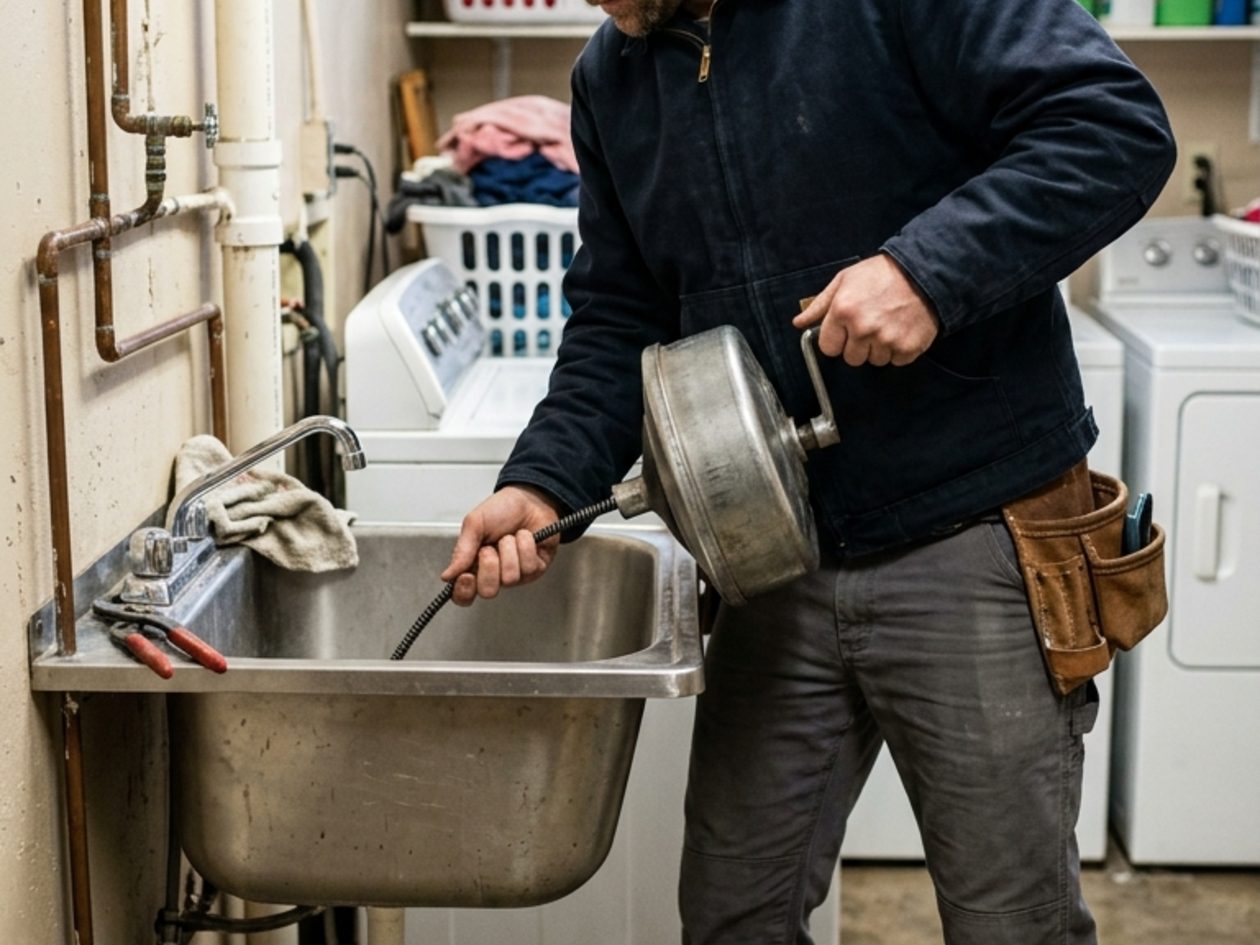
There’s a meaningful difference between restoring flow and cleaning a drain. Punching a channel through a grease deposit gets water moving today; removing the deposit is what stops you booking the same job next quarter.
Mention it if you’ve poured chemical cleaner down, it matters for the plumber’s safety.
Then the blockage isn’t the problem, something is causing it. A vent that can’t breathe, a low spot holding water, a crushed section, or roots at a joint. One camera inspection usually ends a multi-year cycle of drain cleaning.
A fair warning about cheap clearing. Anyone can push a cable until water moves. If nobody ever tells you why the drain blocked, you’re buying the same hour of work repeatedly. Ask what came out and what it means.
A cable clears a blockage. It does not tell you why the blockage formed, and on a line that has blocked before, that is the more useful question. Running a camera immediately after the clear is the cheapest time to ask it, because the line is open and clean enough to see.
Three findings change what you do next. Scale or grease coating the full circumference means the line is narrowing everywhere, not blocked at one point, cabling will reopen it every few months until the deposit is scoured out properly. A belly, where the pipe has sagged and holds standing water, will collect solids at the same spot indefinitely; no amount of clearing changes the grade. Root hair at a joint tells you the joint is open, which means it will keep letting roots in and letting groundwater out.
Against that, a camera that shows clean pipe with a single soft blockage now gone is worth knowing too: it means this was a one-off, and you can stop worrying about the line. On a repeat-offender drain, ask for the camera before you agree to a maintenance schedule, a schedule treats a symptom that may have a fixable cause.
Water coming up instead of going down at the lowest fixture.
See details →Scouring grease and scale off the pipe wall rather than boring through it.
See details →Why the same drain keeps blocking, answered with footage.
See details →Jams, hums and leaks at the sink flange.
See details →Slow tub drains, seized linkages and valve work.
See details →Cottonwood and elm roots in clay-tile joints.
See details →Shared kitchens and heavy-use bathrooms in converted rentals.
Area details →Older branch lines with cast-iron sections that scale rather than clog.
Area details →Kitchen lines carrying more grease than the fall can handle.
Area details →Mixed-use kitchens where a blocked line stops trading.
Area details →Not on the list? We cover Greeley, Weld County and the northern Front Range, see every service area.
We’d rather you didn’t. Caustic cleaners work on hair and soap in a short fixture line, but they sit in standing water doing very little in anything larger, and they generate heat that can soften ABS and PVC or damage old cast iron and rubber gaskets. They also create a genuine hazard for whoever opens the trap afterwards, tell the plumber if you’ve used any. Repeated use is the real problem: it treats the symptom monthly instead of finding out why a drain that worked for fifteen years suddenly doesn’t.
Worth working out before anyone arrives, because it changes the job entirely. If one fixture is slow and everything else is fine, the blockage is in that fixture’s trap or branch: a small, quick job. If several fixtures on the same floor are slow, it’s the branch line they share. If fixtures on different floors are affected, or the lowest drain in the house gurgles when you run water upstairs, it’s the main line, and that’s a different page. Run each fixture in turn and note what happens; that two-minute test saves real time.
Grease, almost always. Cooking fat goes down warm and liquid, then congeals on the pipe wall a few feet along where the water has cooled. Every subsequent wash adds a little more, the bore narrows year by year, and eventually something fibrous: coffee grounds, rice, celery strings, catches on it and the line closes. Hot water and detergent feel like they help because they move the grease further down, which is exactly why the reblockage keeps happening slightly further from the sink each time.
It grinds, it doesn’t digest. What comes out the other side is finely divided organic matter that behaves a lot like sediment, and in a line that already has grease on the walls it gives that grease something to bind. Disposals are fine for incidental scraps and plate residue; they are not a food-waste chute. Starchy and fibrous material: pasta, rice, potato peel, celery, onion skin: causes more blockages than anything else people put down them, and coffee grounds are the single most reliable way to silt a kitchen branch.
Often, yes, and for a single slow fixture it’s a reasonable first move. A cup plunger on a sink with the overflow blocked off, or a small hand auger through the trap, clears a great many hair and soap clogs. Two cautions. Don’t plunge after pouring chemical cleaner, you’ll splash it. And if the same drain needs it every few weeks, stop treating it as a chore and have someone find out what’s actually restricting the line, because recurring blockages at one fixture usually mean a venting fault, a belly in the pipe, or damage rather than debris.
Air being pulled through a trap because the drain can’t breathe properly. Every drain needs a vent to the roof so water can flow and air can replace it; when a vent is blocked: by a bird’s nest, leaves, frost in winter, or a builder’s offcut left forty years ago, the water has to steal air from the nearest trap instead. Gurgling, slow drainage across several fixtures, and sewer smells often arrive together, and they point at venting rather than at a blockage. It also matters because a siphoned trap lets sewer gas into the room.
Access, tooling and diagnosis. A drain machine carries a much longer cable with interchangeable heads: a retrieving head for hair, a cutter for roots, a bulb for grease, and it can be driven from a cleanout rather than through a fixture, which means the whole branch gets cleared rather than the first three feet. On a recurring problem, a camera afterwards shows whether the line is sound. And an experienced plumber reads the debris that comes back out: hair, grease, root hair and scale each point to a different cause and a different fix.
Yes, and they’re worth mentioning specifically because they behave differently. A laundry standpipe deals with a large volume very fast, so it shows a partial restriction long before a sink would, an overflowing standpipe often means the branch is half blocked with lint and detergent scale rather than fully clogged. Basement floor drains are the lowest opening in the house and their traps dry out when unused, which is a common source of smells; a cup of water down an unused floor drain every month is free and effective.
Strainers in every sink and shower, emptied rather than rinsed. Grease into a can and the bin, never the drain. No wipes, no cotton products, no dental floss, floss knits into a net that catches everything else. Run plenty of cold water with the disposal and give it a few seconds after the grinding stops. Once a month, a kettle of hot water down the kitchen drain late in the evening helps keep a light film moving. And if a drain has ever backed up badly, take the hint and have the branch looked at rather than waiting for the second time.
When it’s more than one fixture, when it comes back within weeks of being cleared, when the lowest drain in the house is involved, or when clearing it produces root hair or broken pipe material. Those all point past the branch line and out toward the lateral, and in Greeley’s older neighborhoods a slow basement drain is frequently the first symptom of root intrusion at a clay joint under the front yard. A camera inspection settles it, and it’s a great deal cheaper than repeatedly clearing a line that has a structural problem.
Tell us which fixtures are slow and whether anything gurgles, that usually locates it.
Drain cleaning across Greeley, Evans, Windsor, Eaton, Kersey and the surrounding Weld County communities.
(970) 973-0235Answered 24 hours a day, seven days a week, every week of the year.