Sprinkler Blowout & Winterization
Winterization that drains the backflow assembly, not just the laterals.
See details →
A long-established core with substantial new development around it, straddling two counties and two completely different plumbing profiles.
(970) 973-0235Johnstown has grown fast on its edges while keeping an older core, and it sits on the Weld and Larimer county line, which occasionally matters for permitting and for which district a backflow report goes to.
For plumbing purposes the split is the important part. The older core is the familiar picture: galvanized supply narrowing from the inside, clay or early cast iron laterals with mature trees over them, cast iron stacks scaling internally, and shutoffs that have not turned in thirty years.
The newer development is the opposite: nothing has decayed, but nothing has been serviced either. Pressure reducing valves at the end of their life, waterlogged expansion tanks, water heaters entering their back half, builder-grade fixtures reaching the end together, and irrigation backflow assemblies that have never been tested despite an annual legal requirement.
The one thing both halves share is irrigation. Lots here are generous, systems are large, and the autumn blowout and spring startup matter more to a household budget than anything happening indoors.
Tell us which half you are in and roughly when the house was built. That narrows almost any problem before we arrive.
Build era narrows the diagnosis before we arrive.
Every spring we replace backflow prevention assemblies that split over the winter, and nearly all of them were preventable for the cost of doing one job properly in October.
A backflow assembly on an irrigation line is brass, outdoors, and holds water. If water is still in the body when the first hard freeze arrives, the brass splits. That is it. The assembly then either fountains the moment the system is charged in spring, or fails its annual test in a way that requires replacement rather than a rebuild.
The critical detail is that a blowout has to drain the assembly body itself, opening the test cocks to let the water out, not just clear the lateral lines with compressed air. That step is the one most often skipped, including by people charging for the blowout. Ball valves should be left at forty-five degrees so no water sits against a closed seat.
Spring is the mirror image. Crack the main isolation valve a fraction of a turn and wait several minutes while air escapes before opening fully. Opening wide on an empty system slams water into closed zone valves and cracks fittings, blows heads off risers, and occasionally finishes off the assembly that survived the winter.
And the annual test is a legal requirement with a real deadline. We test, repair on the spot where we can, and file with the correct district for your side of the county line.
Backflow test filed to the correct district.
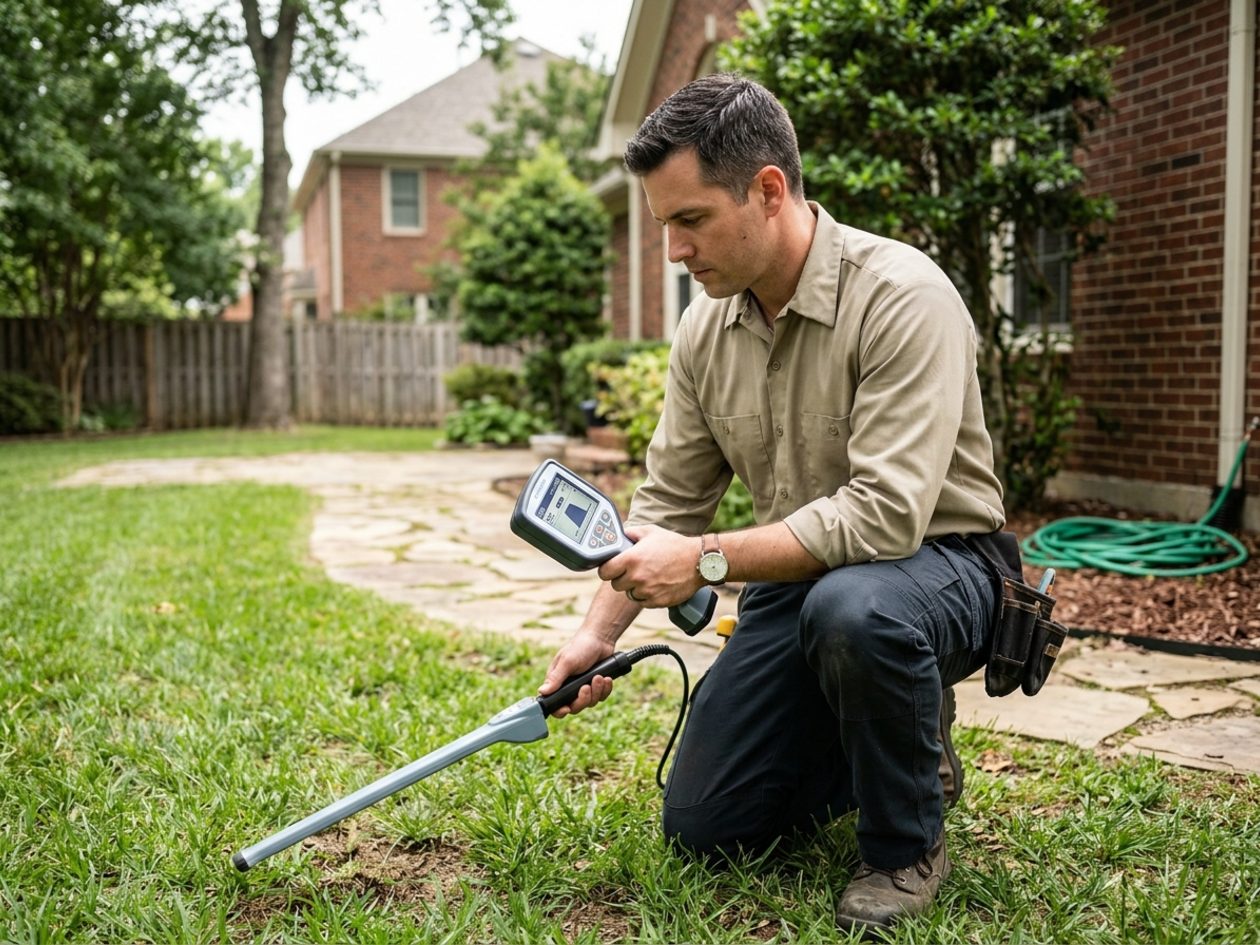 One October nightWater left in the brass body is what splits it. Draining the assembly is the whole job.
A tank water heater lasts roughly ten to fifteen years. It is one of the few things in a building with a predictable end date, and yet almost every heater we replace is replaced in an emergency.
The warning signs are reliable and worth knowing. Rust-colored hot water. Moisture or corrosion at the base. A relief valve that weeps. Temperature that has become inconsistent. And a rumbling or popping sound, which is sediment on the tank bottom insulating the water from the burner and overheating the steel above it. Any two of those together on a heater past twelve years is a planning conversation.
The reason to plan is cost and choice. A heater replaced on a weekday, on your schedule, with a model you selected, costs less than one replaced at nine on a Sunday evening. And a tank failure is not a drip; it is the full contents on the floor plus continuous supply until somebody closes a valve, which in a finished basement is an insurance claim.
The maintenance that genuinely extends life is annual flushing and a periodic anode rod check. The anode is a sacrificial rod that corrodes so the tank does not, and on hard water it can be consumed in three to five years. Replacing one is inexpensive and can add years, but only if it is done before the tank itself starts corroding, which is why it is a maintenance item rather than a repair.
Age, condition and a straight answer on timing.
Consumed in three to five years Once the anode is gone the tank starts corroding. Almost nobody replaces one in time.
Johnstown straddles Weld and Larimer, which occasionally affects permitting and always affects which district a backflow report is filed with. We handle both and will file to the right one for your address.
For emergencies, the run depends on the hour and on I-25 more than on the mileage. We will give you an honest window rather than an optimistic one.
Winterization that drains the backflow assembly, not just the laterals.
See details →Controlled spring charge-up with zone-by-zone repairs.
See details →Annual testing, filed to the correct county district.
See details →Planned replacement before a tank fails over a finished floor.
See details →Annual flushing and anode checks, the maintenance that extends tank life.
See details →Regulators and expansion tanks in newer houses, past their service life.
See details →Yes, both the older core and the newer development, for scheduled and emergency work. Travel time depends more on the hour and on I-25 than on the mileage, and we will give you an honest arrival window rather than an optimistic one.
Occasionally, for permitting, and always for backflow reporting: the test report goes to the district serving your address, and Johnstown straddles Weld and Larimer. We handle both and file to the correct one, so it is not something you need to work out yourself.
Before the first hard freeze, generally the second half of October, though it varies year to year. Book early: every crew in the region is booked solid in the final fortnight, and the year you leave it late is the year the freeze arrives early.
Because the blowout cleared the lateral lines but did not drain the assembly body. That is the step most often skipped. The test cocks have to be opened to let the water out of the brass, and the ball valves left at forty-five degrees so nothing sits against a closed seat. Compressed air through the laterals alone does not do it.
Slowly. Crack the main isolation valve open a fraction of a turn and leave it for several minutes while air escapes, then open fully. Opening wide on an empty system slams water into closed zone valves: that surge is what cracks fittings, blows heads off risers, and finishes off assemblies that survived the winter.
Ten to fifteen years for a tank unit, longer with annual flushing and a replaced anode rod, shorter on hard water with no maintenance. If yours is past twelve and showing any two warning signs, it is time to plan rather than wait.
A sacrificial metal rod inside the tank that corrodes so the steel does not. On hard water it can be consumed in three to five years, after which the tank itself begins corroding. Replacing one is inexpensive and can add years to a heater, but only if it is done before corrosion has started.
If it sits anywhere that water would damage: a finished basement, above living space, then yes. A tank failure is the full contents on the floor plus continuous supply until a valve is closed. Planned replacement costs less, happens on a weekday, and lets you choose the unit.
The pressure reducing valve fitted at build has most likely failed. They have a diaphragm and a spring and they quit silently at ten to fifteen years, at which point the house runs at full street pressure and every seal in it starts wearing early. A gauge on a hose bib settles it in five minutes.
Eventually, yes, it rusts closed from the inside and there is no repair. The question is timing. The cheapest moment is while walls are already open for another reason, so if you are planning a bathroom or kitchen remodel, that is when to do it.
Two counties, two districts. We file to the right one.
Irrigation, water heaters, pressure and repiping across Johnstown.
(970) 973-0235Answered 24 hours a day, seven days a week, every week of the year.