Sprinkler Blowout & Winterization
Winterization that drains the backflow assembly, not just the laterals.
See details →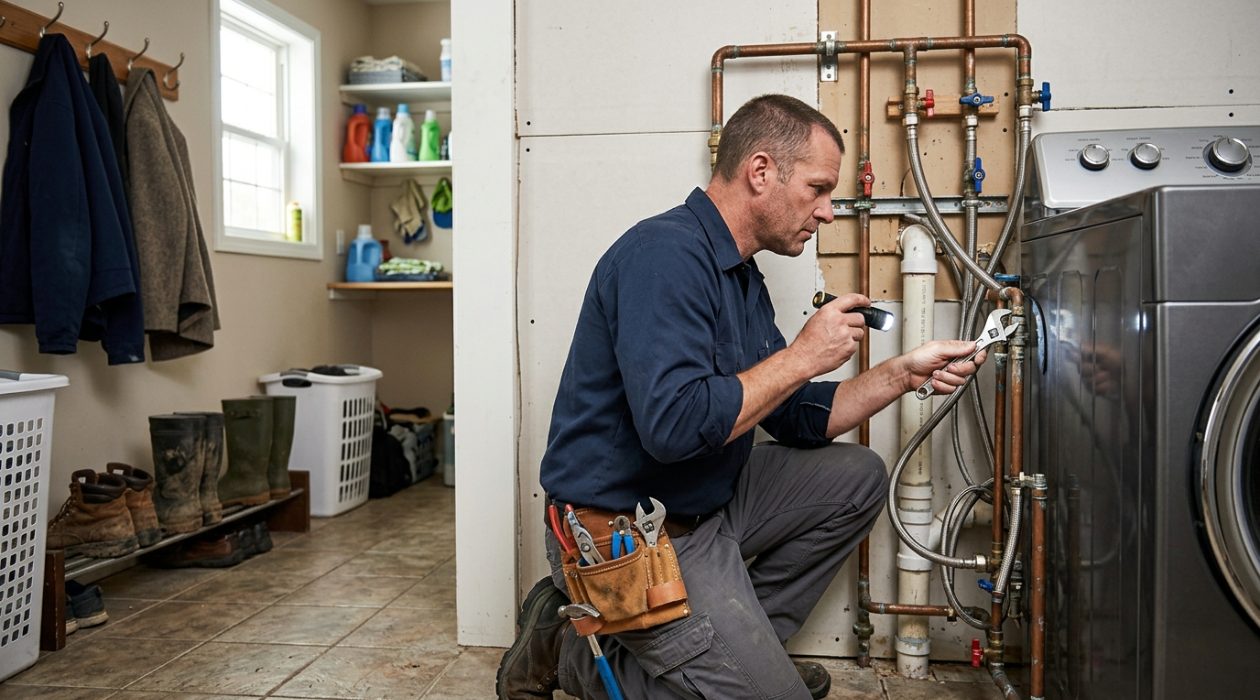
A town of recent construction and large irrigated lots. The work here is scheduled maintenance, not decay.
(970) 973-0235Timnath is one of the newest towns we cover, and virtually all of its residential plumbing is modern: PEX supply, plastic drainage, pressure reducing valves as standard, and often a tankless heater or a whole-home treatment system.
That produces a very particular kind of call. Not a failure, a backlog. The house is twelve years old, everything works, and nothing has ever been serviced because nothing feels old enough to need it.
The items on that backlog are consistent. A tankless heater that has never been descaled and is beginning to throw temperature faults. A pressure reducing valve past its ten-to-fifteen-year life, silently letting the house run at full street pressure. An expansion tank with a failed bladder. A softener with bridged salt that has not regenerated in a year. An irrigation backflow assembly that has never been tested despite an annual legal requirement.
One visit clears the whole list, and it costs a fraction of what any one of those failing properly would.
Everything checked in one visit.
Lots here are generous and heavily irrigated, and the sprinkler system typically contains more pipe, more valves and more failure points than everything inside the house combined.
The autumn blowout is the whole game. A system that keeps water in its backflow assembly over winter loses that assembly to the first hard freeze, and replacing a split brass preventer is the single most expensive avoidable spring cost in any irrigated town. The blowout must drain the assembly body itself, not just the lateral lines; that is the step most often skipped.
Spring is a slow, controlled charge-up. Cracking the main isolation valve a fraction of a turn and waiting several minutes for air to escape prevents the surge that cracks fittings and blows heads off risers.
And the annual backflow test is a legal requirement with a real deadline, filed with the relevant district. We file the report for you, which is why doing it at startup is one visit rather than two.
Drip zones in planting beds deserve a specific mention because they are always neglected. A clogged emitter produces no visible symptom at all until the shrub it feeds starts dying.
Backflow testing and filing on the same visit.
 More pipe than the houseOn a lot this size the irrigation system is the largest plumbing installation on the property.
Newer houses in this area are built with a pressure reducing valve because municipal supply pressure routinely exceeds what residential fixtures are designed for. That valve does its job invisibly for a decade or so and then stops, also invisibly.
When it fails open, the house runs at full street pressure. Nothing dramatic happens. What happens instead is that faucet cartridges start failing early, toilet fill valves wear out, appliance inlet solenoids give up, supply risers age faster, the water heater relief valve begins to weep, and water hammer becomes routine.
Testing is a five-minute job with a screw-on gauge at a hose bib, everything in the house off. Above eighty PSI on a house that has a PRV means the valve is not regulating.
The related item is thermal expansion. With a PRV fitted the house is a closed system, so heated water has nowhere to expand. Without a working expansion tank, pressure climbs every time the heater runs, which is why a reading that is normal in the morning and high in the evening points at the tank, not the valve.
Both are modest repairs with an outsized effect on how long everything else lasts.
Static and dynamic readings, written down.
Five minutes, one number Above eighty PSI on a house with a regulator means the regulator has quit.
Spring: irrigation startup, backflow test, pressure reading. Autumn: sprinkler blowout, hose bibs drained, tankless descale or water heater flush.
For a house of this age and specification, that is genuinely the whole maintenance program, and it prevents almost everything that would otherwise become an emergency.
Winterization that drains the backflow assembly, not just the laterals.
See details →Controlled spring charge-up with zone and drip repairs.
See details →Annual testing, filed with the district for you.
See details →The annual descale that decides whether you get seven years or twenty.
See details →Regulators and expansion tanks past their service life.
See details →Treatment systems checked, serviced, or honestly ruled out.
See details →East, with the same construction era and irrigation profile.
Plumbers here →West, where the older core is a completely different job.
Plumbers here →North-east, newer still and growing fast.
Plumbers here →Yes, for both scheduled and emergency work. It is a straightforward run from Greeley, and travel time depends mostly on the hour and on I-25. We will give you a realistic window rather than an optimistic one when you call.
That is the most common assumption here and the reason we get called. The building is new; the equipment inside it started its service intervals on the day it was commissioned. A tankless heater, a pressure regulator, an expansion tank, a softener and an irrigation backflow assembly in a ten-year-old house are all overdue if nobody has touched them.
Annually on this water. Scale insulates the heat exchanger and the unit compensates by working harder until it starts reporting temperature or flow errors, usually around year five in a house that has never had it done. Owners almost always read that as a defective unit.
Before the first hard freeze, generally the second half of October. Book early: every crew in the region is booked solid in the last fortnight, and the year you leave it late is the year the freeze arrives early. Make sure whoever does it drains the backflow assembly, not just the lateral lines.
If your irrigation is connected to the municipal supply, yes, a test every twelve months with the report filed by the deadline on your notice. The tester we send can repair a failed assembly on the same visit in most cases, and files to the correct district.
Screw a gauge onto an outside hose bib with everything in the house off. Above eighty PSI on a house that has a regulator means it is no longer regulating. Also worth checking morning and evening, a reading that climbs through the day points at a failed expansion tank rather than the valve.
The bang when a fast-closing appliance valve stops a moving column of water. It gets much worse as pressure rises, so it often appears for the first time when a pressure regulator fails. The fixes are bringing the pressure back to a sane level and fitting arrestors near the offending appliances.
Worth testing rather than assuming. Hardness in this area is real but the case is weaker than it is further east in Weld County. We can test during any visit and give you the actual number, then explain what a softener would and would not do for you.
Almost certainly clogged emitters, chewed tubing, a failed drip-zone pressure regulator, or a packed inline filter. Drip is the most neglected part of any irrigation system precisely because a failed emitter looks identical to a working one. It needs someone to run the zone and physically inspect along the run.
Yes, and for a house with this much equipment it is the efficient way to own it. Tankless descale, softener and filter check, pressure and expansion tank, irrigation startup and backflow test. One appointment, one invoice, and a written note of what was found.
New house, never serviced? That is the most common call here.
Tankless, pressure, treatment and irrigation maintenance in Timnath.
(970) 973-0235Answered 24 hours a day, seven days a week, every week of the year.