Water Heater Installation
Planned replacement before a tank fails over a finished floor.
See details →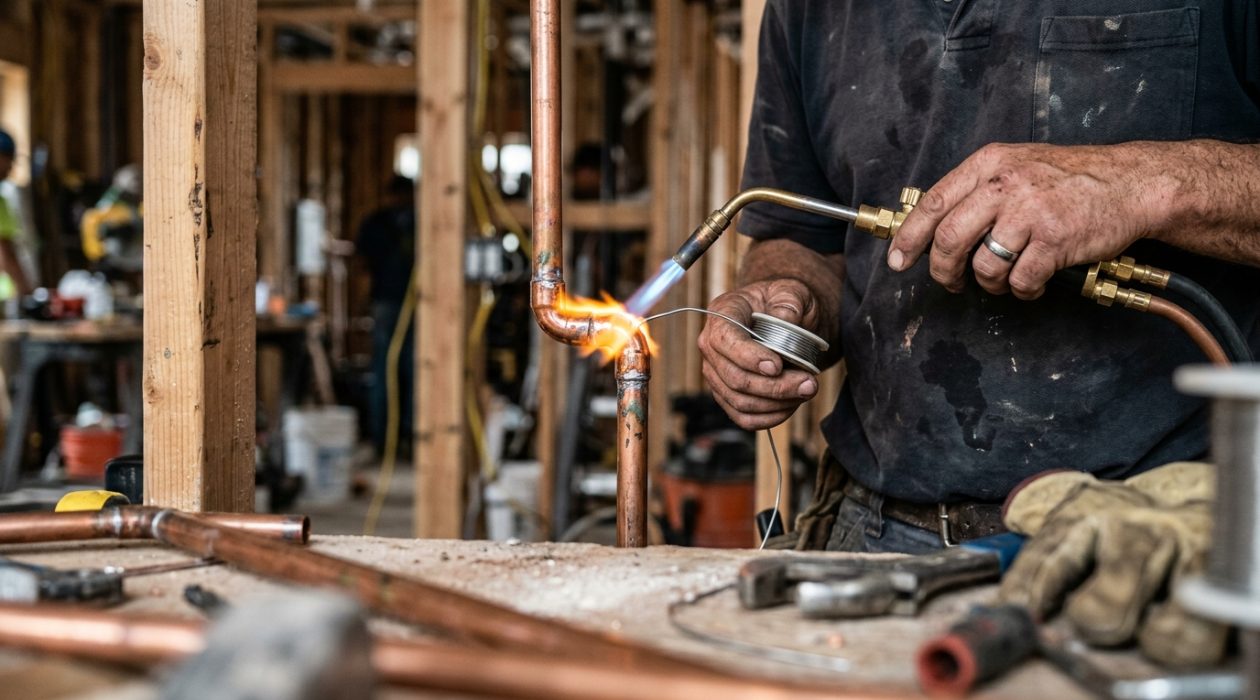
A long-established core, decades of steady growth around it, and plumbing that reflects every one of those eras.
(970) 973-0235Unlike towns that went up in a single burst, Loveland has grown more or less continuously, which means the housing stock is genuinely mixed rather than split into two clear halves. Streets near the center carry pre-war and mid-century houses; the ring around them adds every decade since; the newer edges are recent construction.
That matters when diagnosing, because the era of a house is the single best predictor of what has gone wrong. A 1940s house near downtown is a galvanized supply and clay lateral conversation. A 1970s ranch is water heaters, cast iron stacks and seized angle stops. A 2005 build is pressure regulators, expansion tanks and irrigation backflow.
The practical implication for a homeowner is simple: find out when your house was built and what it was plumbed with. Those two facts narrow almost any problem before anyone arrives.
The other Loveland-specific factor is proximity to the foothills. Properties on the western edge see harder freezes and more wind, which pushes the winter failure rate up noticeably compared to the flats.
Tell us the era of the house. It narrows everything.
Colder nights and more wind closer to the foothills mean freeze calls here run higher than on the eastern flats. The vulnerable spots are consistent: supply lines in exterior walls on north and west elevations, pipes running through unheated garages or crawlspaces, and outdoor hose bibs with hoses left attached.
Prevention is cheap and genuinely effective. Disconnect every hose in autumn without exception: a hose left on a frost-free sillcock traps water in the stem and splits it inside the wall, which is the most common freeze repair we make anywhere. Open cabinet doors under sinks on exterior walls on the coldest nights. Let a vulnerable tap run a pencil-thin stream. Keep the garage door shut if plumbing runs through that wall.
If a line does freeze: never a torch or open flame. Warm gradually with a hair dryer or space heater, and open the tap so melting water has somewhere to go.
The important thing to understand is that a frozen pipe leaks nothing. The split is already there; the ice is plugging it. Everything happens at once when it thaws, which is why the moment to shut off the main and call is before the thaw, not after.
Safe thawing and repair. Do not use a flame.
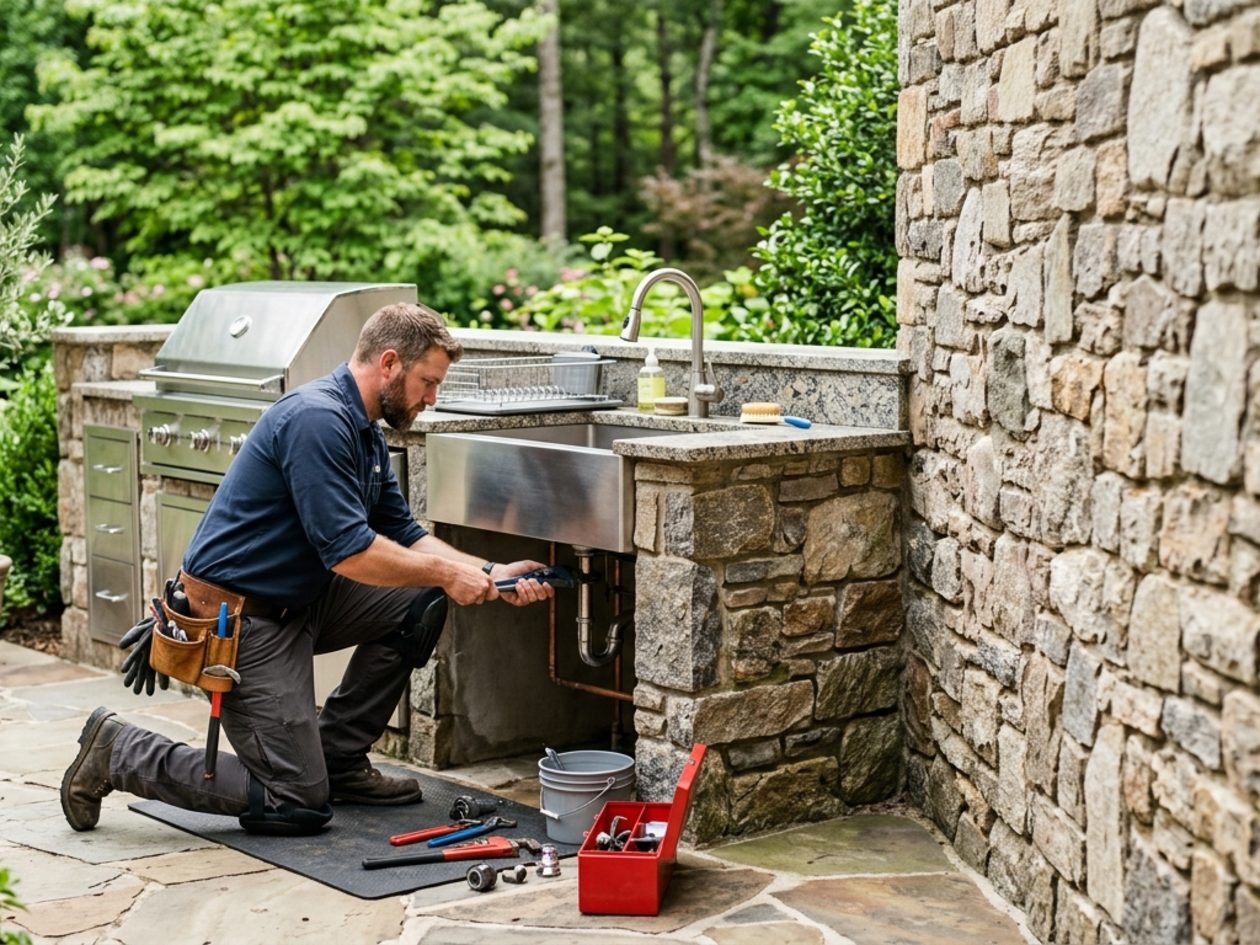 The thaw is the eventA split pipe leaks nothing while frozen. Shut the main off before it releases, not after.
A tank water heater has a service life of roughly ten to fifteen years. It is one of the few things in a house you can genuinely put a date on, and yet almost every heater we replace is replaced in an emergency.
The warning signs are reliable. Rust-colored hot water. Moisture or corrosion around the base. A relief valve that weeps. Inconsistent temperature. A rumbling sound, which is sediment on the tank bottom insulating the water from the burner and cooking the steel above it. Any two of those together, on a heater past twelve years, is a planning conversation rather than a repair one.
The reason to plan is money and choice. A heater replaced on a weekday, on your schedule, with a model you selected, costs less and goes better than one replaced at 9pm because a tank let go over a finished floor. And a tank failure is not a leak; it is the full contents on the floor plus continuous supply until someone closes a valve.
The maintenance that actually extends life is annual flushing and a periodic anode rod check. Both are inexpensive; neither is done in most houses.
Age, condition and a straight answer on timing.
A weeping relief valve Sometimes the valve, often pressure or thermal expansion. Never something to ignore.
Loveland is a comfortable run for planned work: heaters, sewer inspections, repipes, irrigation, and the drive makes no practical difference to a scheduled appointment.
For overnight emergencies we will give you an honest arrival window rather than an optimistic one, and if a closer crew would genuinely reach you faster we will say so.
Planned replacement before a tank fails over a finished floor.
See details →Flushing and anode checks, on the schedule that gets a tank past ten years.
See details →Safe thawing and repair, higher demand on the western edge every winter.
See details →Frost-free sillcocks split inside walls by a hose left on in October.
See details →Establishing the condition of older laterals near the town center.
See details →24/7 dispatch with an honest arrival window.
See details →North up the corridor, with a sharper old-core and new-edge split.
Plumbers here →East on the Weld and Larimer line, mixed old core and new build.
Plumbers here →North-east, newer subdivisions with heavy irrigation.
Plumbers here →Yes, regularly. For scheduled work: heaters, sewer inspections, repipes, irrigation, the drive makes no practical difference. For overnight emergencies we will give you an honest arrival window, and if someone closer would genuinely reach you faster we will tell you.
Colder nights and more wind closer to the foothills. The vulnerable spots are the same everywhere: exterior walls on north and west elevations, unheated garages and crawlspaces, hose bibs with hoses attached, but the margin is thinner, so they go on nights that would be survivable further east.
Never use a torch or open flame. Warm the area gradually with a hair dryer or space heater and open the tap so melting water can escape. If you cannot find the frozen section, or you suspect it has already split, shut the water off at the main and call before it thaws.
Not necessarily. A frozen pipe leaks nothing because the ice is plugging the split. Everything releases at once during the thaw. If a section froze hard, the safe assumption is that it may be damaged, and the right moment to shut off the main and get it looked at is before it warms up.
Ten to fifteen years for a tank unit, longer with annual flushing and a replaced anode rod, shorter on hard water with no maintenance. If yours is past twelve and showing any two warning signs: rusty hot water, moisture at the base, a weeping relief valve, rumbling, inconsistent temperature; it is time to plan.
If it sits above or near anything that water would damage, yes. A tank failure is not a drip; it is the full contents on the floor plus continuous supply until a valve is closed. Planned replacement is cheaper, happens on a weekday, and lets you choose the unit.
Sediment on the tank bottom. Minerals settle over the burner, insulate the water from the flame, and the steel above overheats. The rumble is water boiling under that layer. Annual flushing prevents it. A tank that has gone a decade without flushing may have a layer that cannot be drained out.
Disconnect every hose, that one step prevents most freeze damage. If your bibs are standard rather than frost-free, close the interior shutoff, open the outside bib to drain the section between them, and leave it open all winter. Insulated covers help, but only on a bib that is already drained.
Yes, and it is the one hose bib symptom we treat as urgent. It almost always means a frost-free sillcock has split inside the wall behind the valve seat, so pressurized water pours into the wall cavity whenever it runs. Stop using it and call.
Older properties near the center typically have clay laterals, with the joint and root vulnerability that comes with them. Newer areas are plastic. A camera inspection is the only way to know what condition yours is in, and it is worth doing once on any house of that era so you know what you own.
Freeze season? Disconnect the hoses. It prevents most of it.
Water heaters, freeze work, sewer inspections and 24/7 dispatch.
(970) 973-0235Answered 24 hours a day, seven days a week, every week of the year.